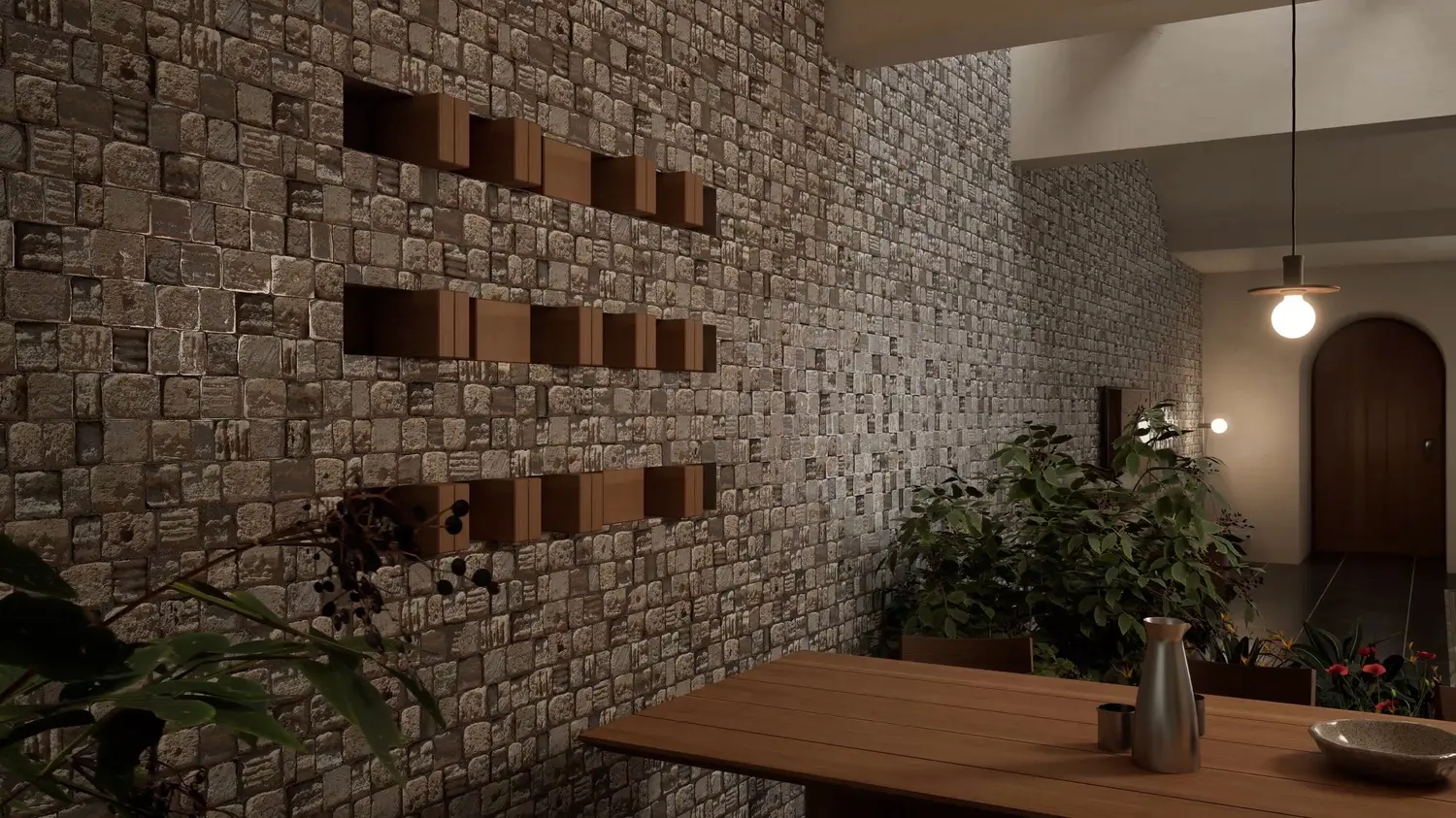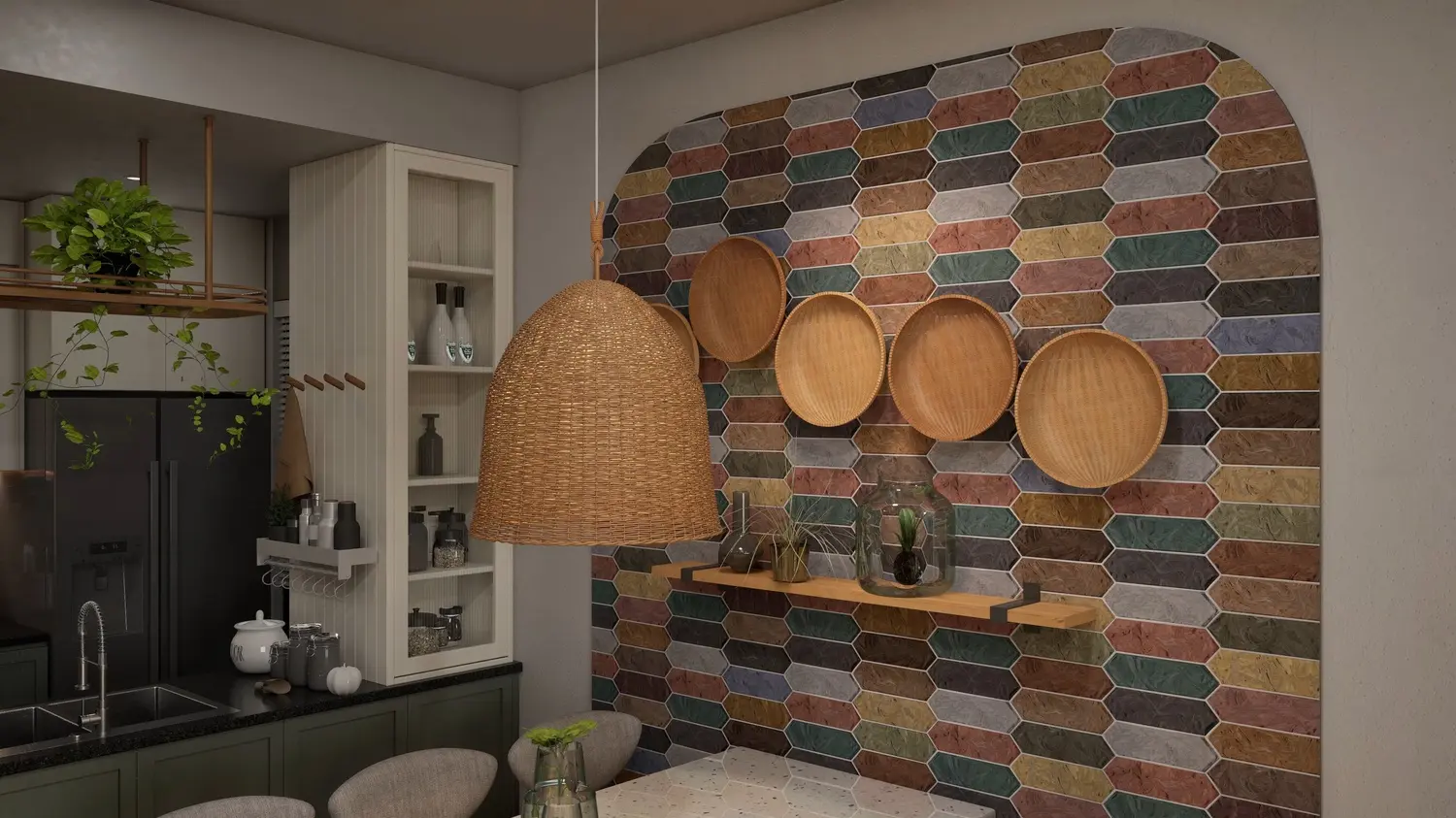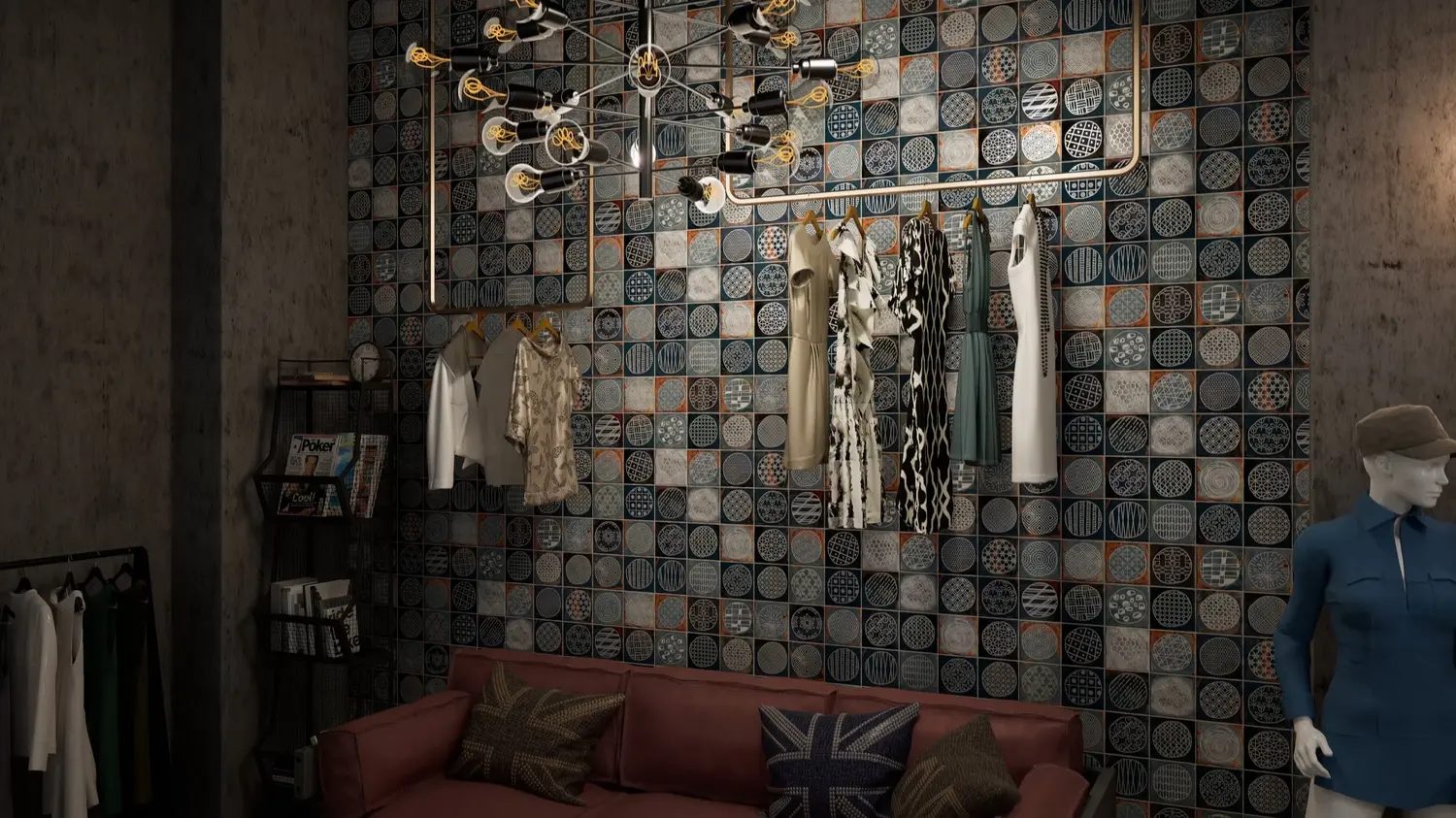

Terracotta tiles: designs and ideas for walls
Terracotta brings the warmth of fired clay to a wall. Real terracotta is porous and needs sealing; terracotta-look ceramic tiles keep the colour and the texture and wipe clean. Here are the designs and how to use them.
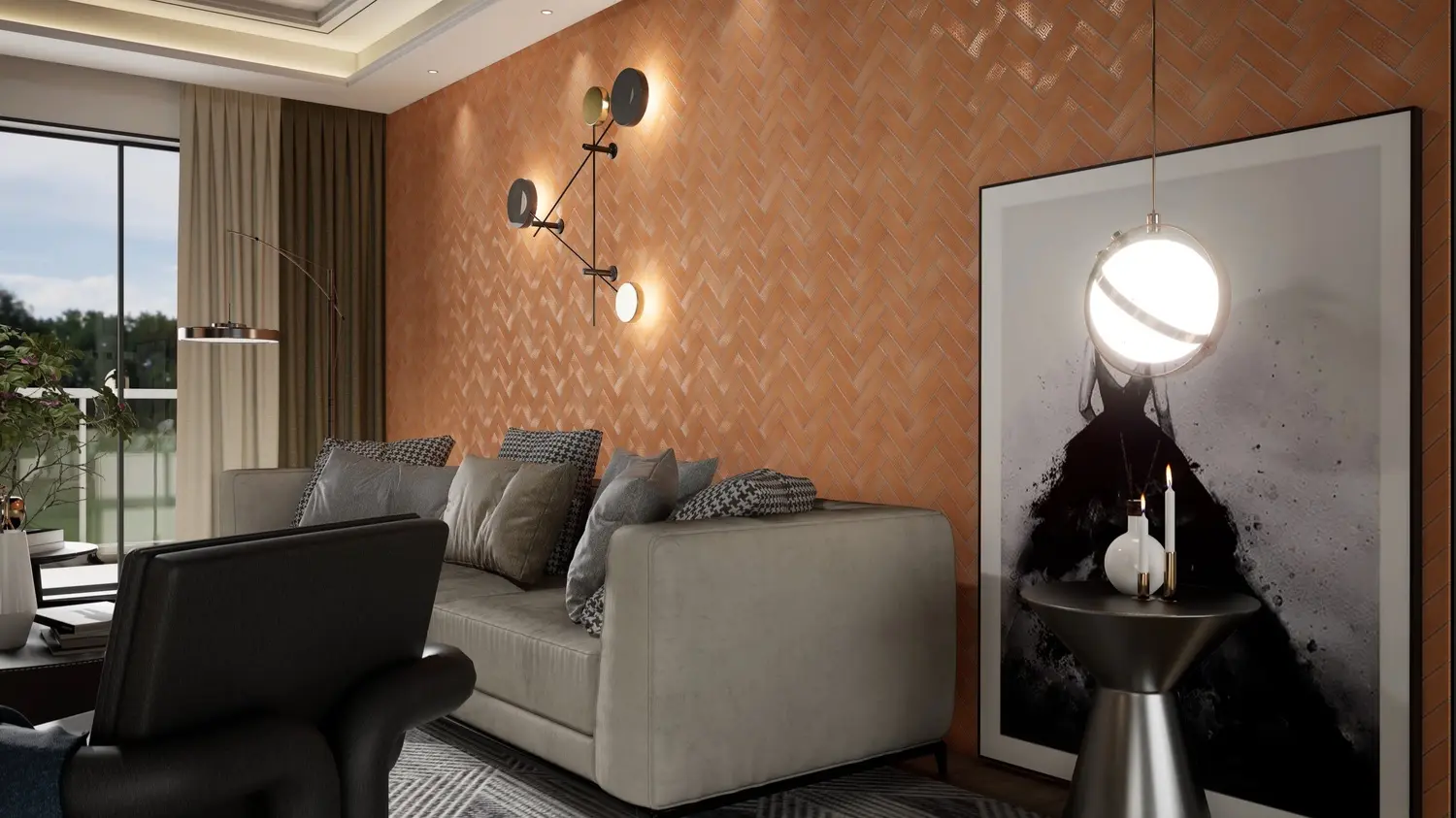
Terracotta is clay fired at a fairly low temperature, left unglazed. Its orange, peach and rust tones have been used on floors and walls for thousands of years, and they are back in living rooms, kitchens and cafes because they make a room feel warm and handmade.
Real terracotta or terracotta-look ceramic
| Real terracotta | Terracotta-look ceramic | |
|---|---|---|
| Surface | Unglazed, porous | Glazed, printed |
| Sealing | Needs sealing, then resealing | Not needed |
| Stains and salts | Can absorb oil and show white salt marks | Wipes clean |
| Colour | Varies by batch | Even within a batch, with printed variation |
| On walls | Heavy, thick tiles | 7.5 to 9.5 mm thick |
For a kitchen backsplash, a bathroom or a TV wall, the look matters more than the clay, and a glazed tile is far easier to keep.
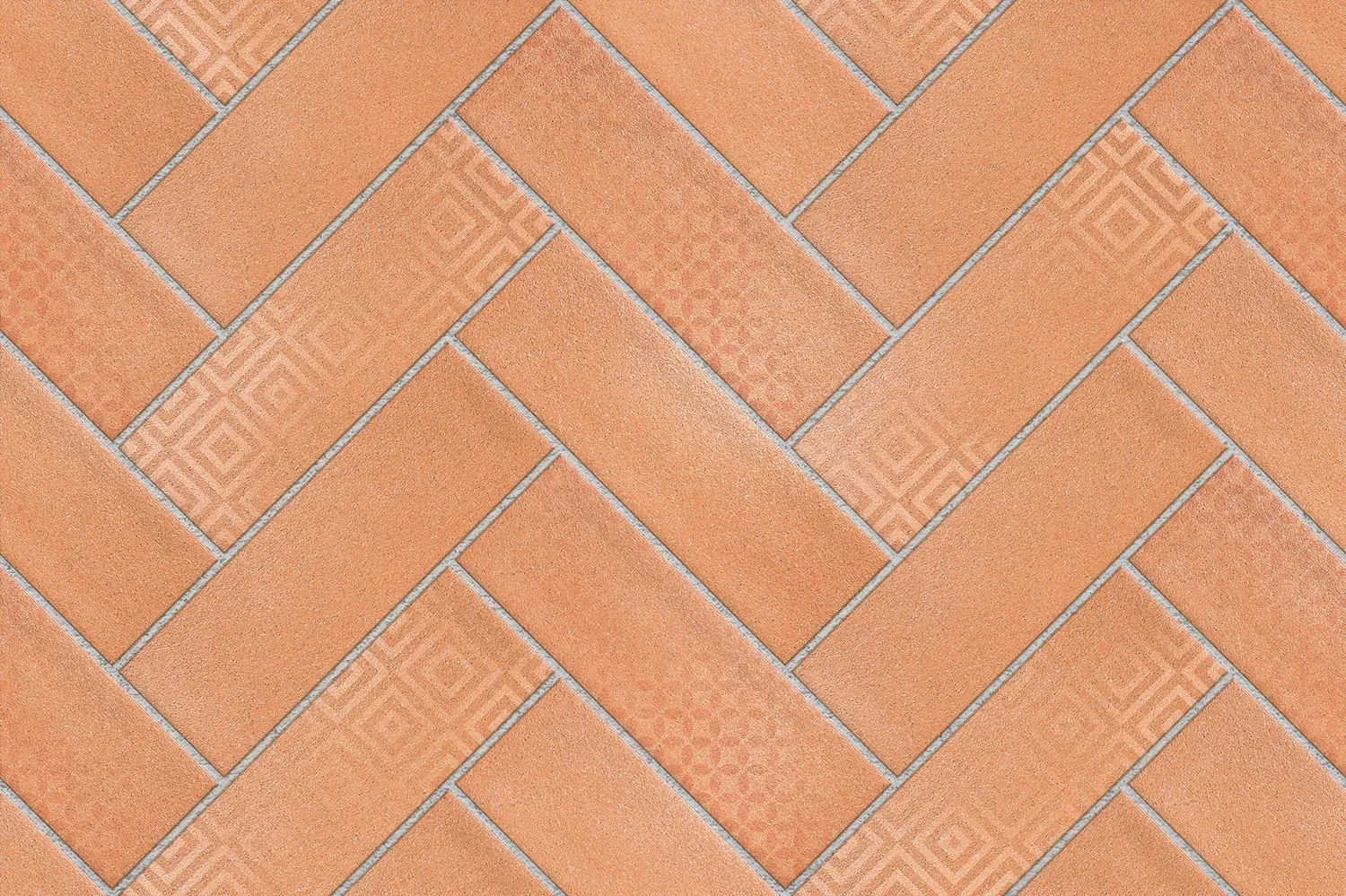
Terracotta herringbone
A herringbone of clay bricks printed onto one 300 × 450 mm tile: the pattern without laying hundreds of small pieces.
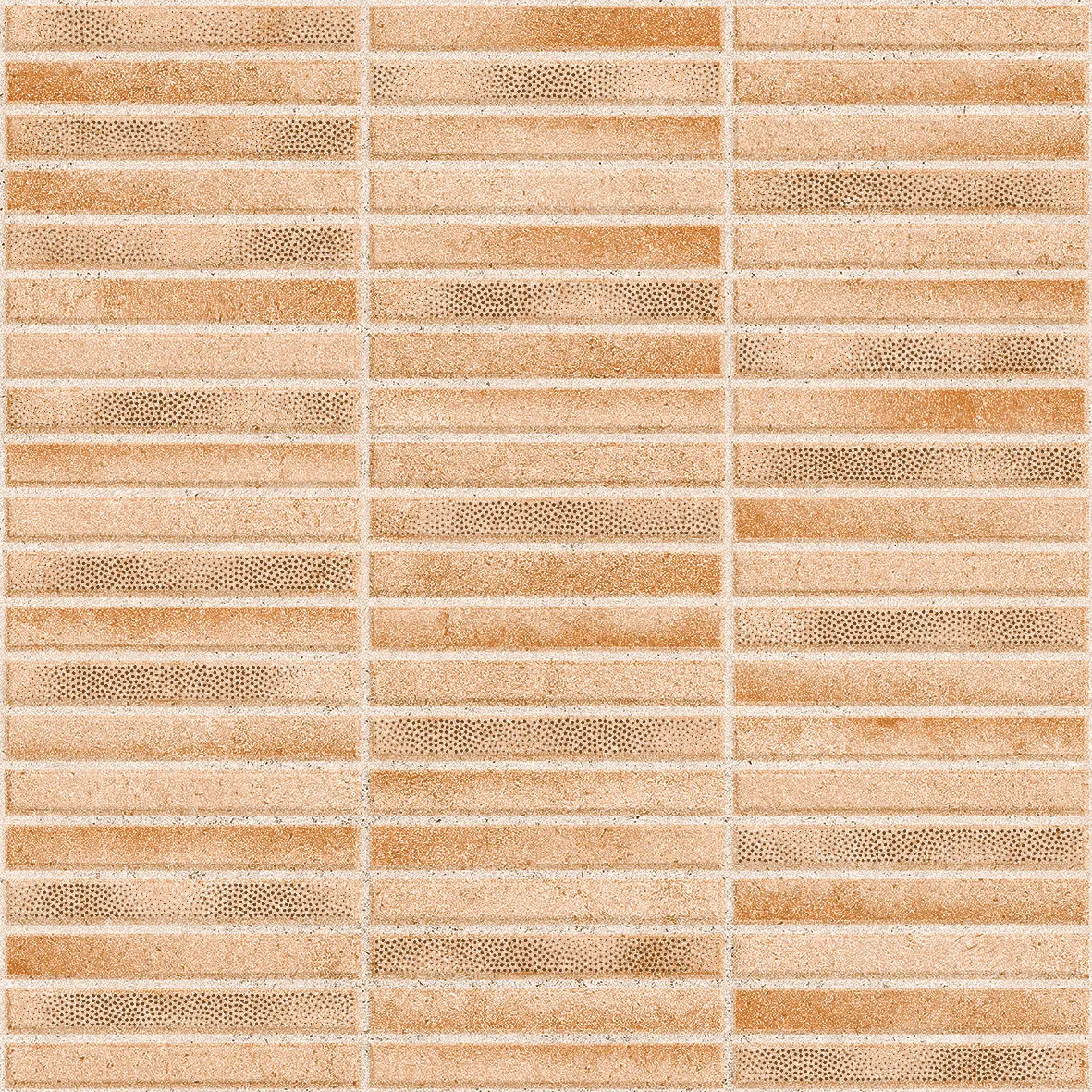
Strips and soft brick
Thin stacked strips in peach, sand and soft terracotta, for a calmer, handmade look.
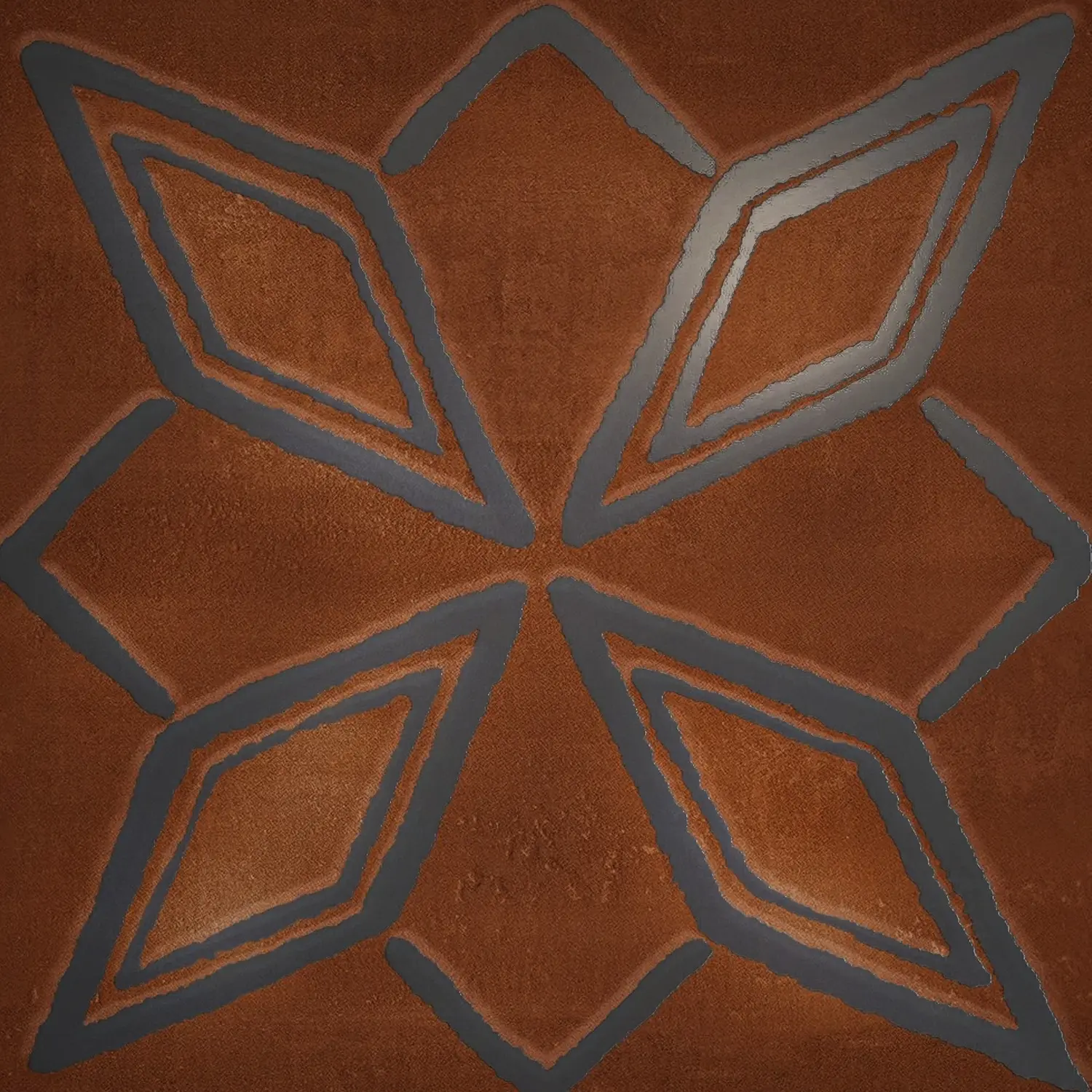
Rust terracotta
A deep rust-terracotta tile, plain or with a grey star and lattice pattern, for a whole wall in one warm colour.
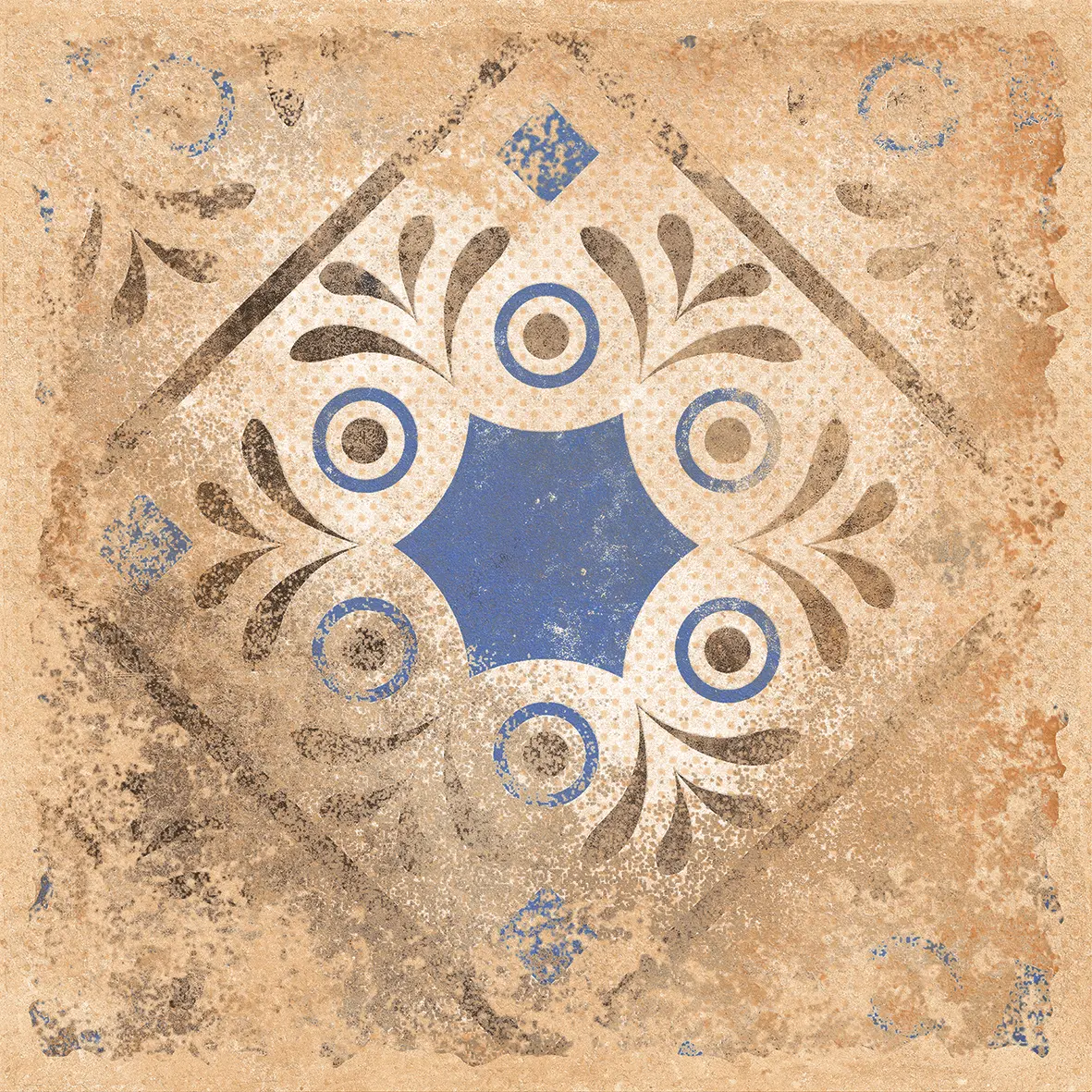
Aged terracotta patterns
Moroccan medallions on sun-faded terracotta and sand.
Terracotta in pooja rooms and outdoors
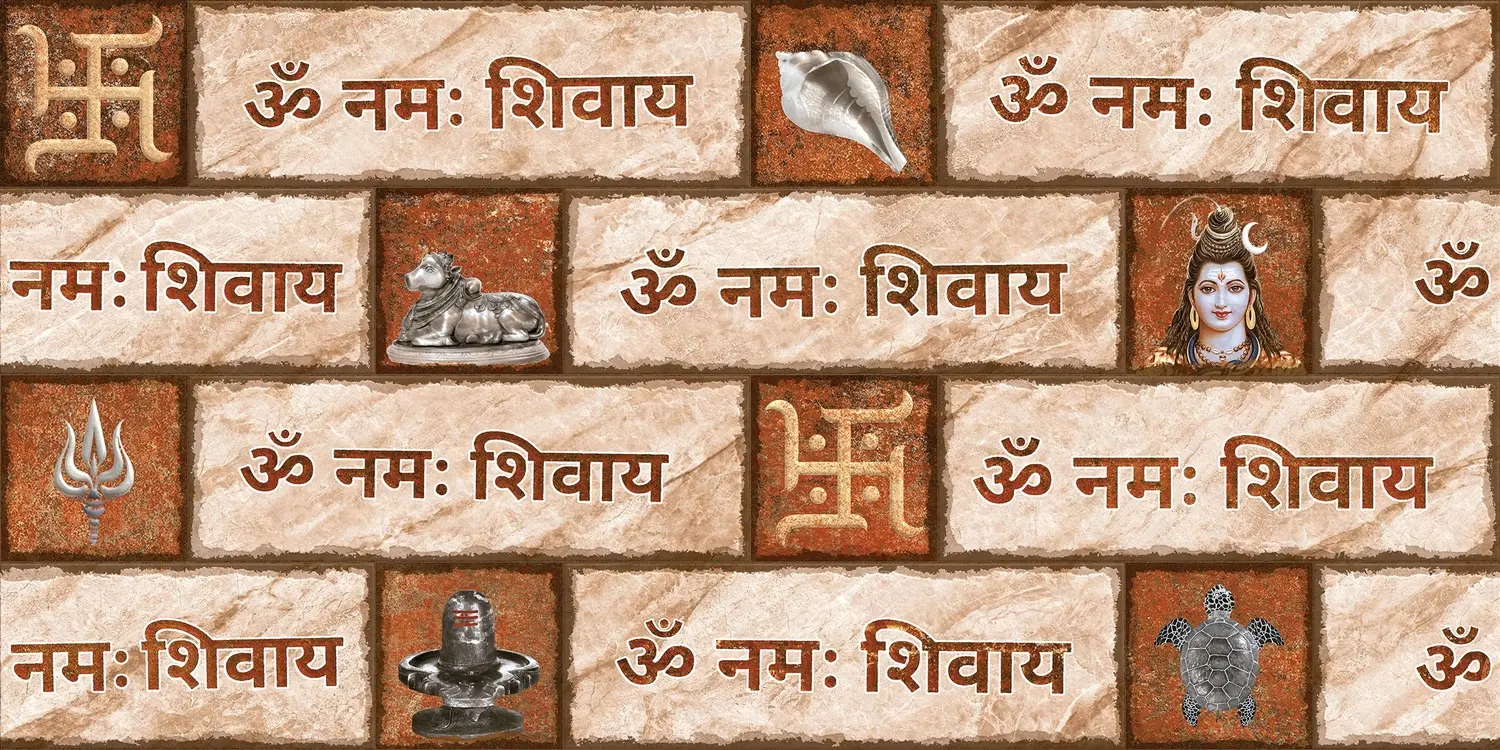
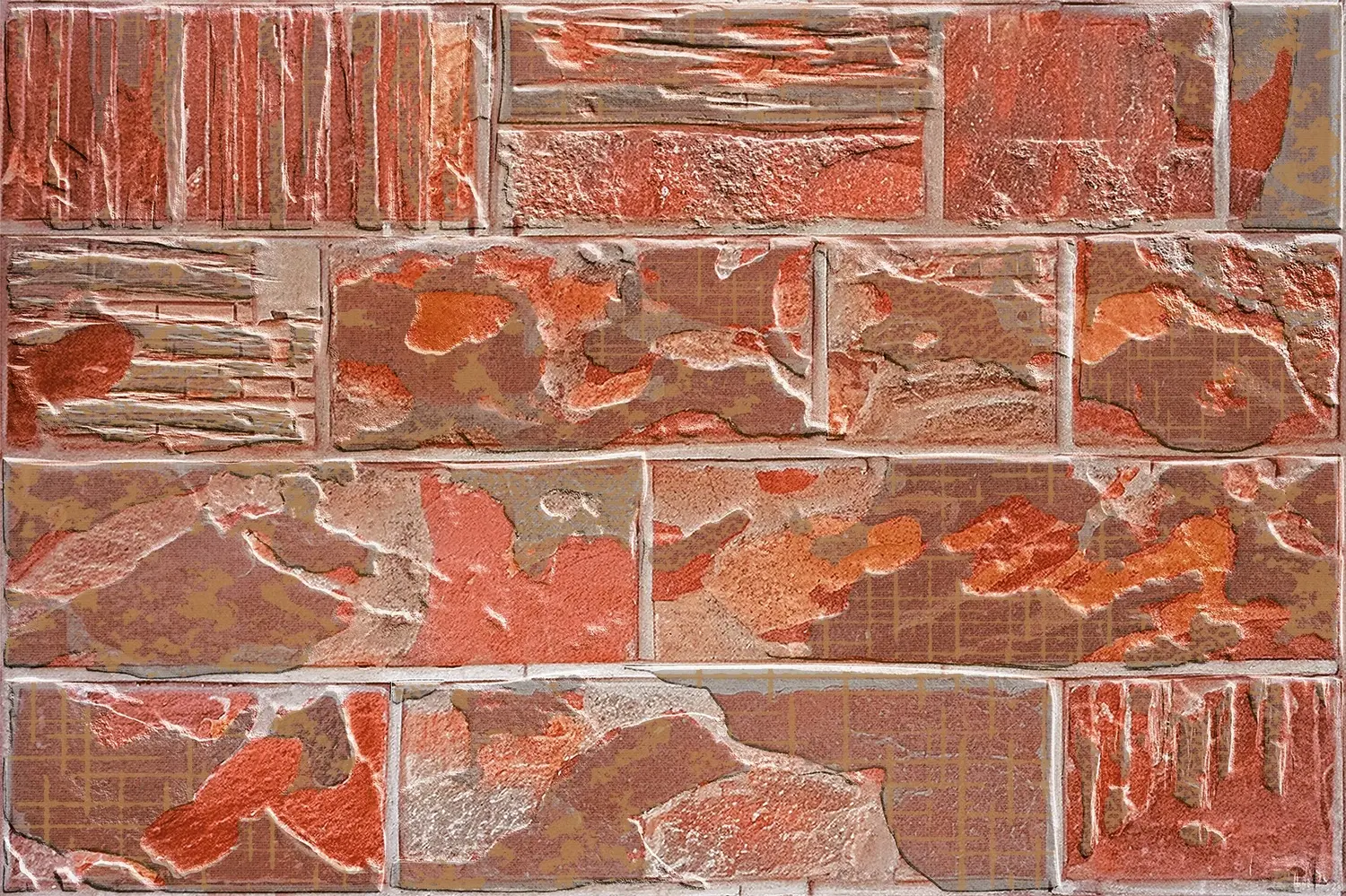
Terracotta brick blocks carrying Om Namah Shivaya, and red sandstone blocks for terrace walls.
Colours that go with terracotta
- Sage and olive green. The classic partner; see the sage herringbone of Greva Art.
- Off-white and cream. Plain walls around a terracotta feature keep it fresh.
- Wood and cane. Warm materials repeat the clay tone.
- Black metal. Lamps, frames and taps sharpen the look.
- Blue. Navy or dusty blue accents, as in Burn Mont Art.
Lighting and grout
Warm white light (around 2700 to 3000 K) brings out terracotta; cool white makes it look dull. Choose a grout in a sand or terracotta shade, not bright white, so the joints do not draw a grid across the wall.
See more warm and natural looks in stone, brick, marble and mosaic look tiles.