
Herringbone, hexagon and geometric tiles: printed patterns for walls
Herringbone, hexagon and picket walls usually mean hundreds of small tiles and many cuts. Printed onto a rectangular tile, the same patterns fix as fast as any wall tile. Here is how they compare and how to lay them.
Geometric patterns are everywhere in contemporary interiors: herringbone, hexagons, picket shapes, chevrons and thin stacked strips. Laid with small individual tiles, they take a skilled installer, many cuts and a lot of grout. Printed onto a rectangular tile, they go up like any wall tile.
Printed pattern or laid small tiles
| Small shaped tiles | Pattern printed on a rectangular tile | |
|---|---|---|
| Fixing | Many pieces, cuts at every edge | Fixed like any 300 × 300 or 300 × 450 mm tile |
| Grout | A joint around every piece | Joints only between tiles |
| Cleaning | More grout to clean | Less grout |
| Depth | Real joints and edges | Printed joints; rustic finishes add texture |
| Changing the layout | Any layout | The layout printed on the tile |
Real small tiles give real shadows. A printed pattern gives the look at the pace of a normal job, with less grout to keep clean, which suits kitchens, bathrooms and commercial walls.
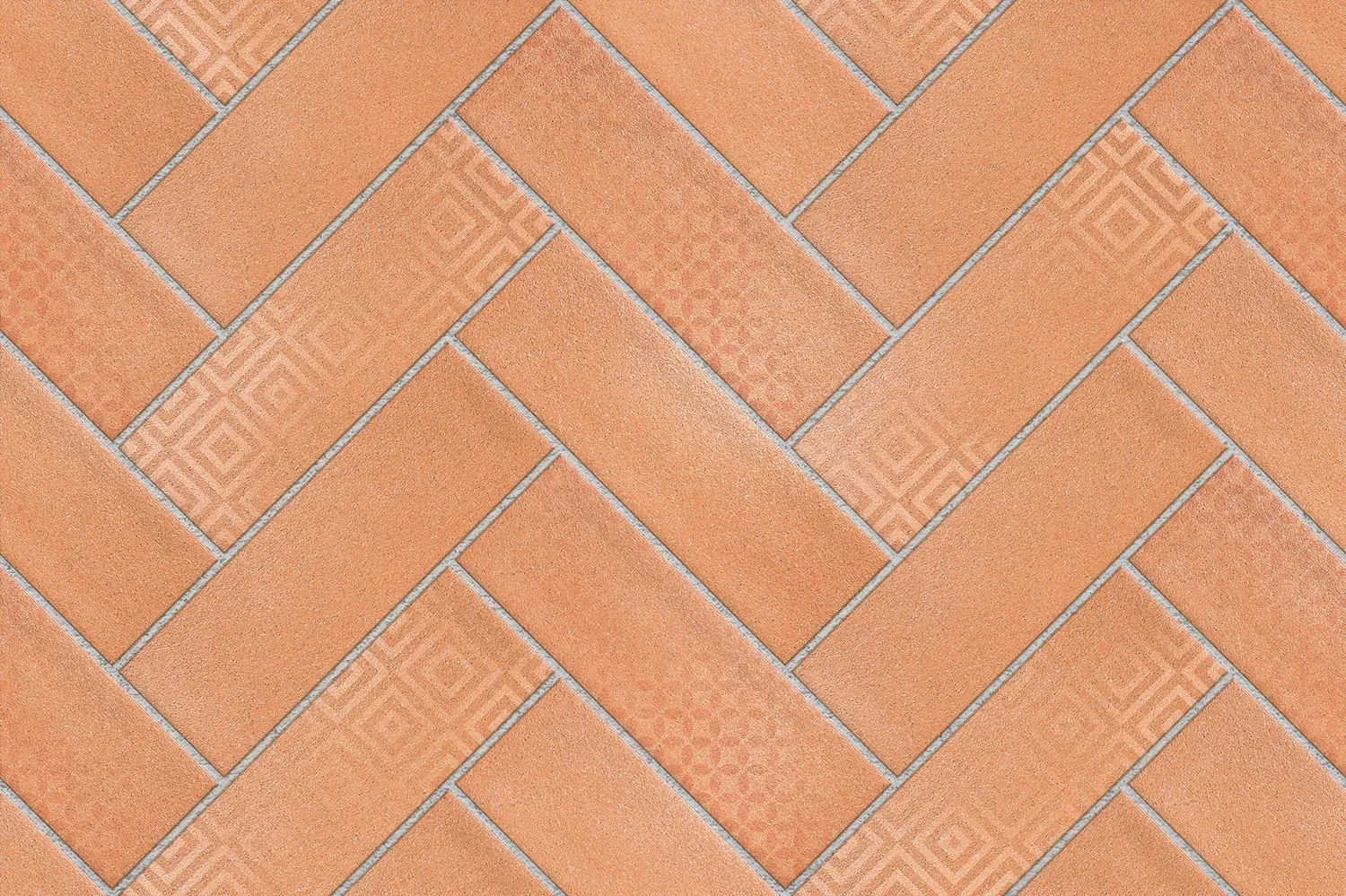
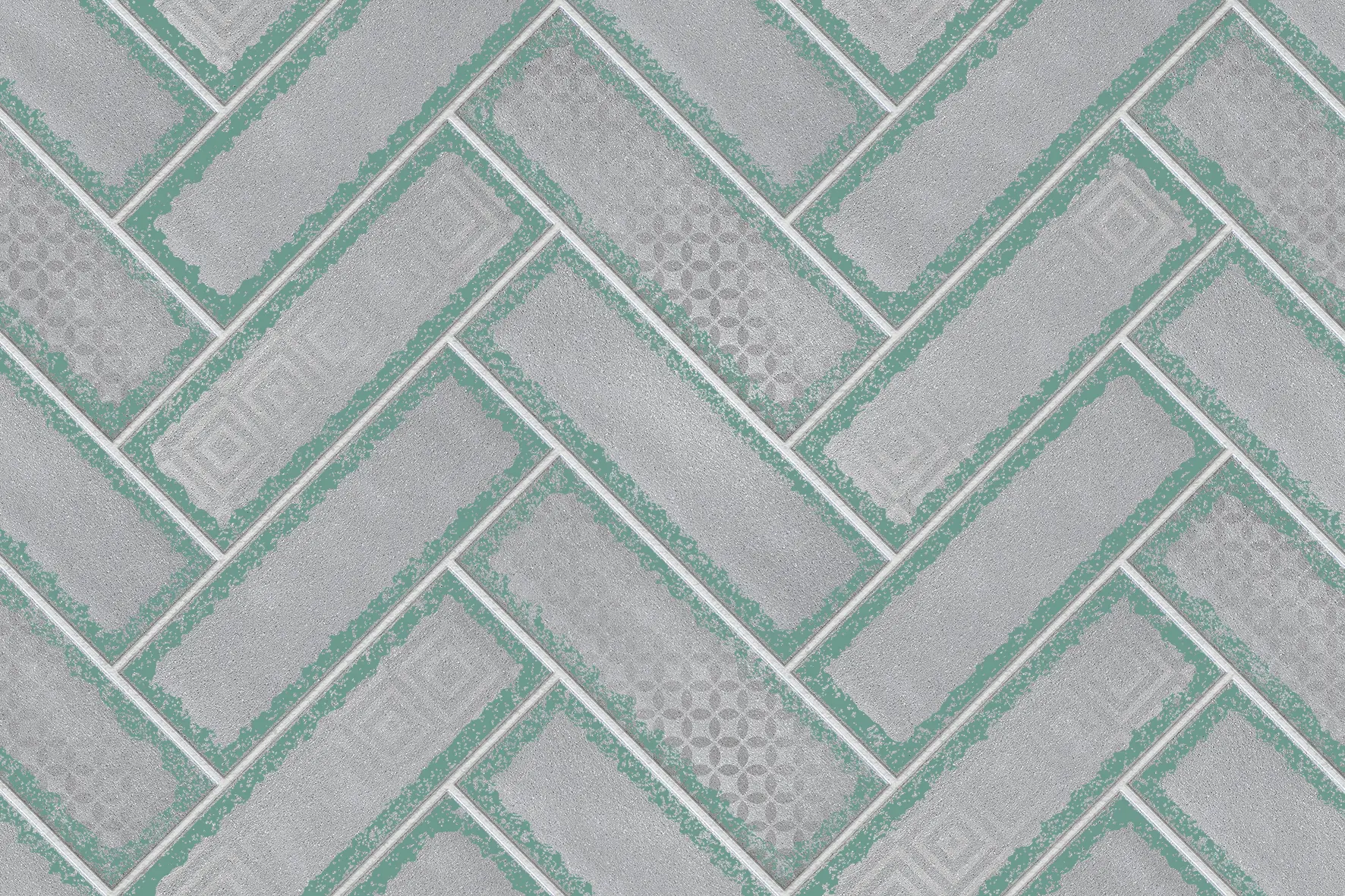
Herringbone
Terracotta for warmth, sage green for a calmer, contemporary room.
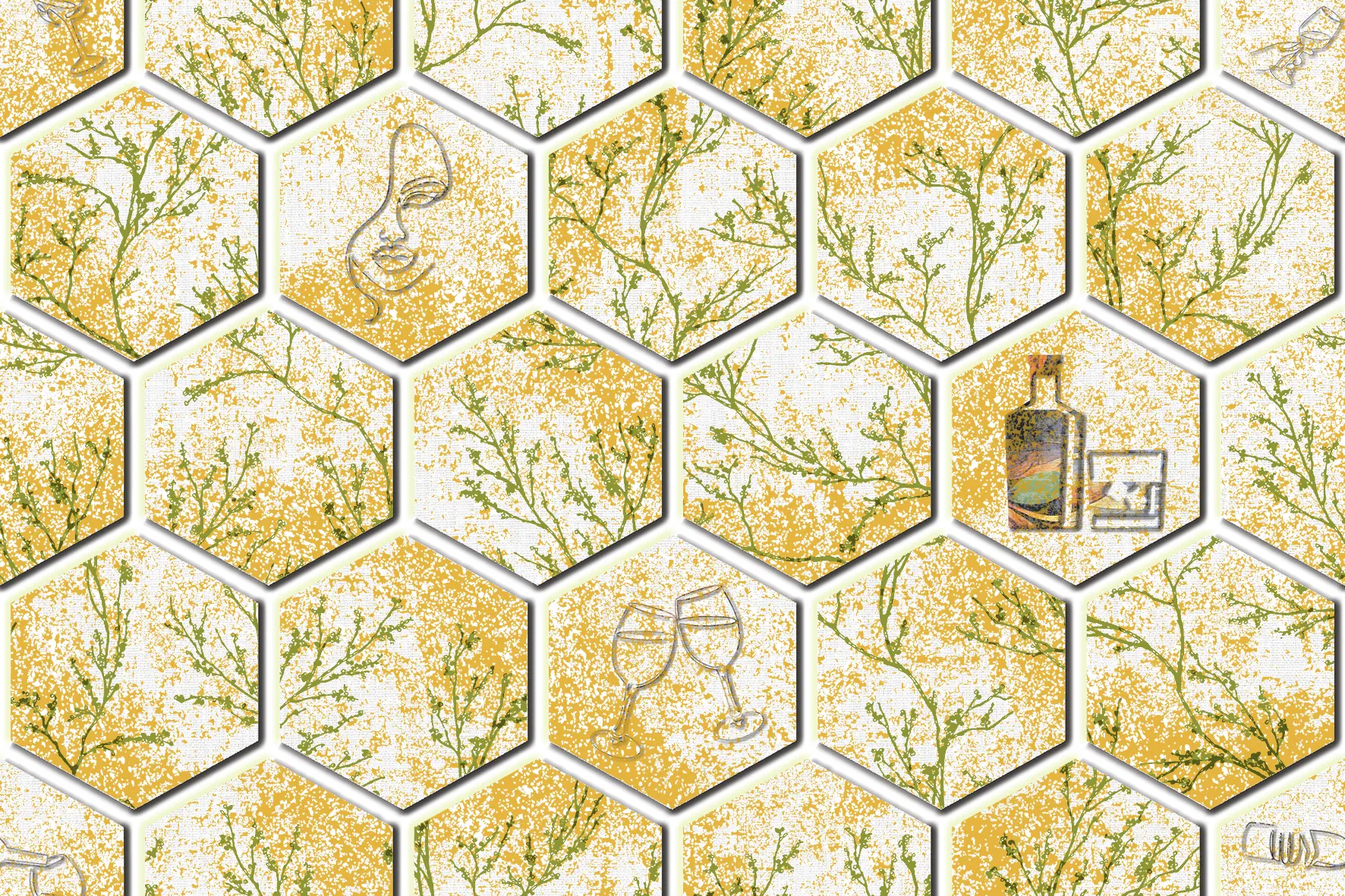
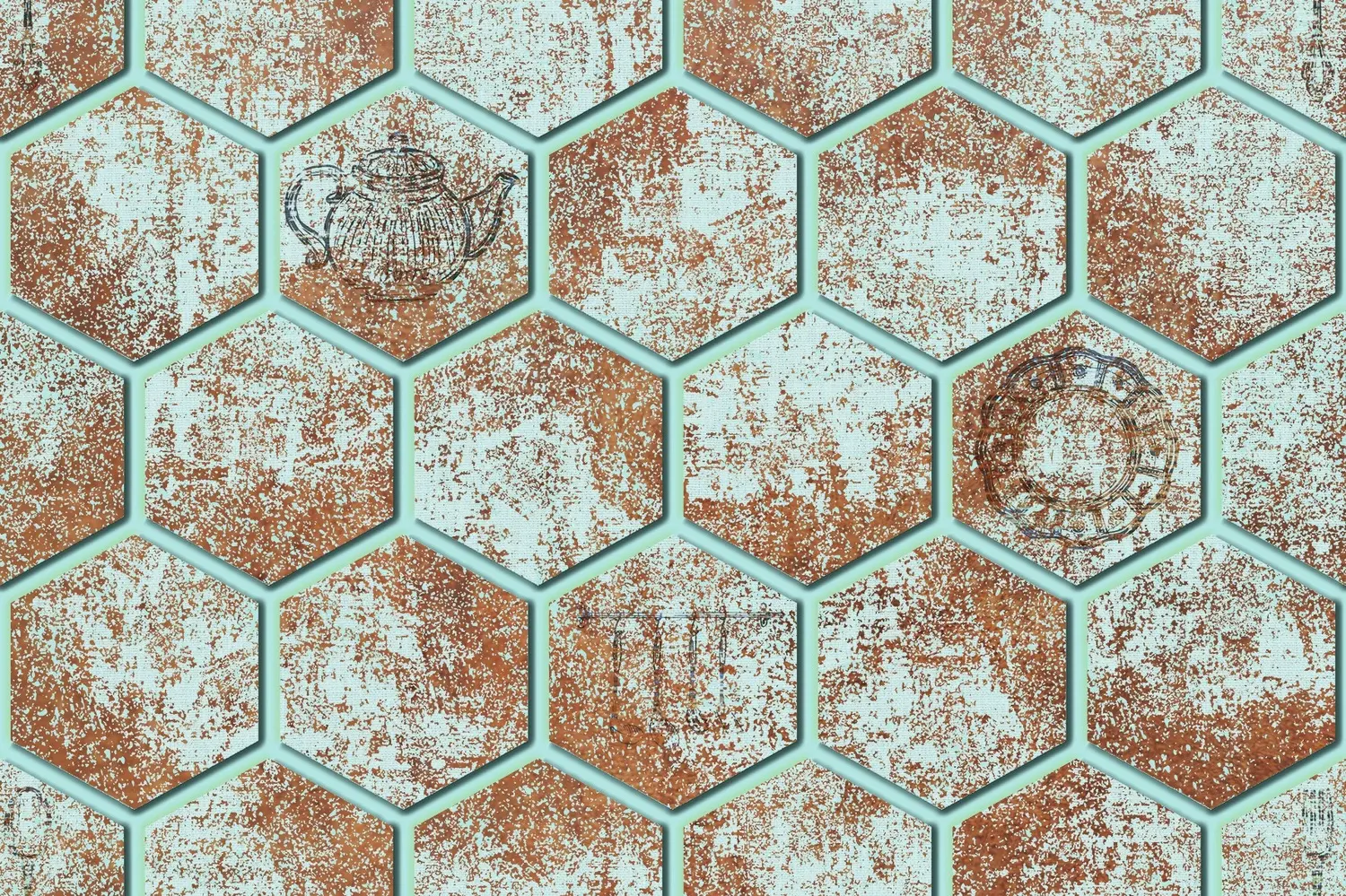
Hexagon and picket
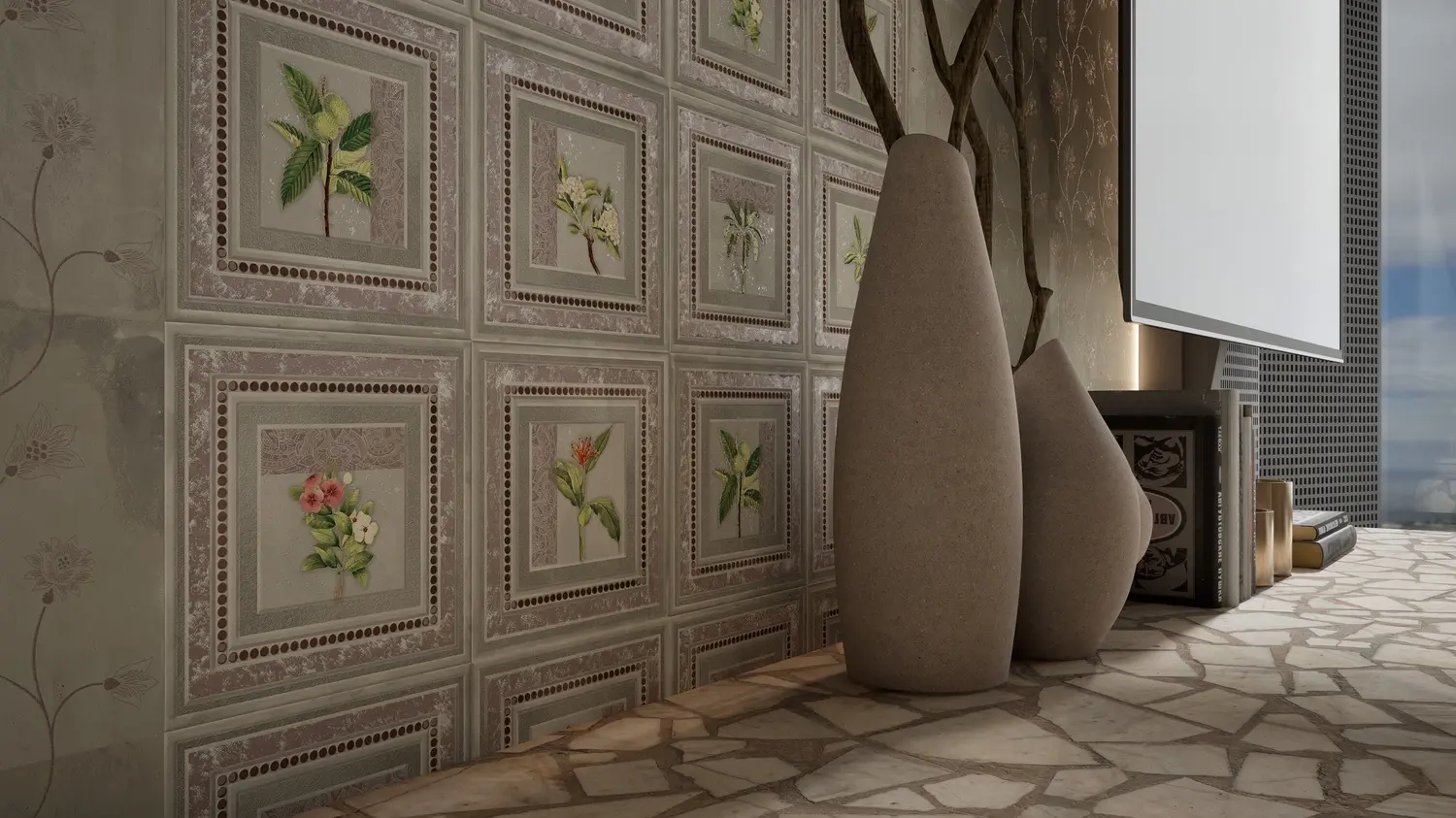
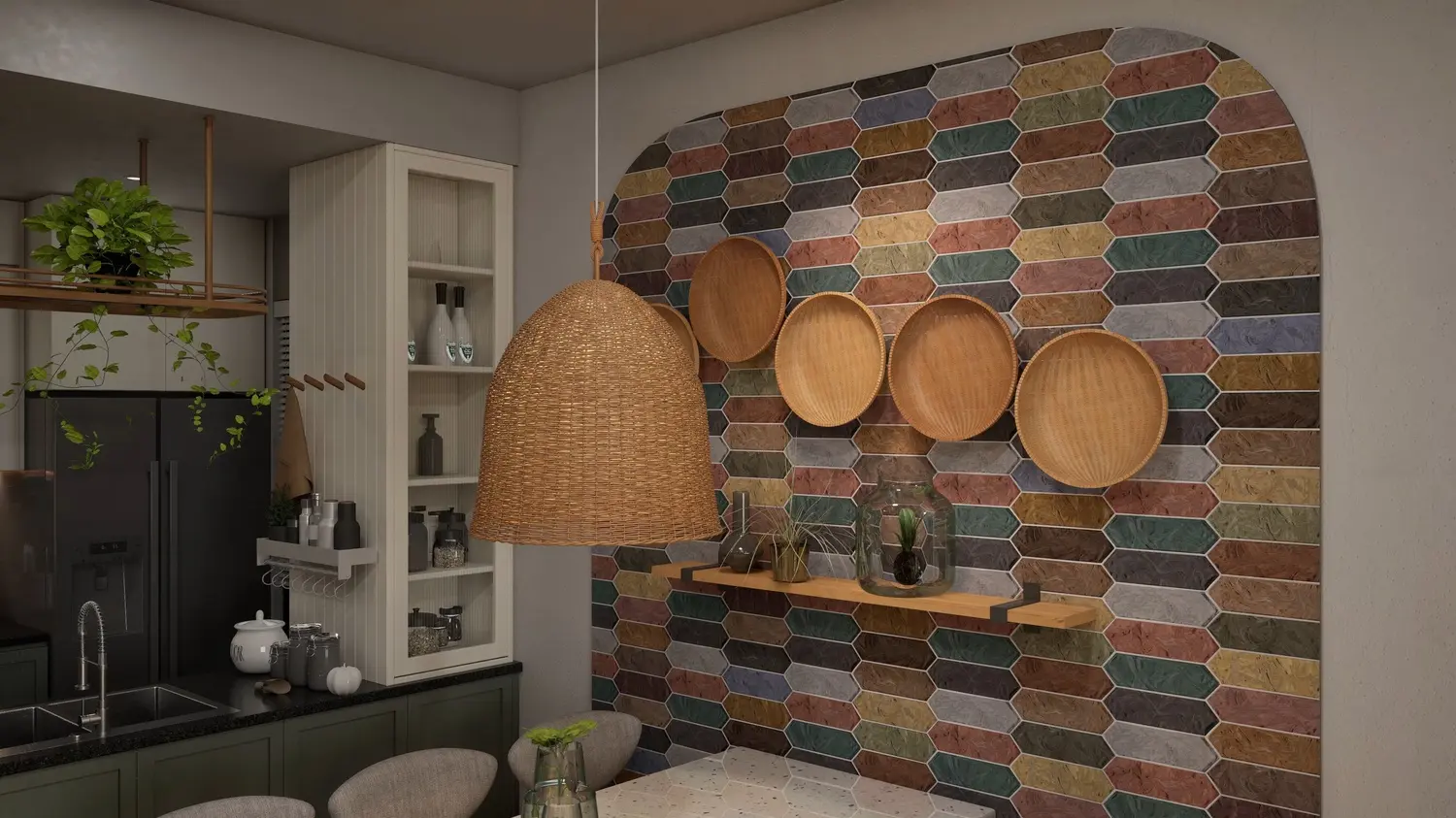
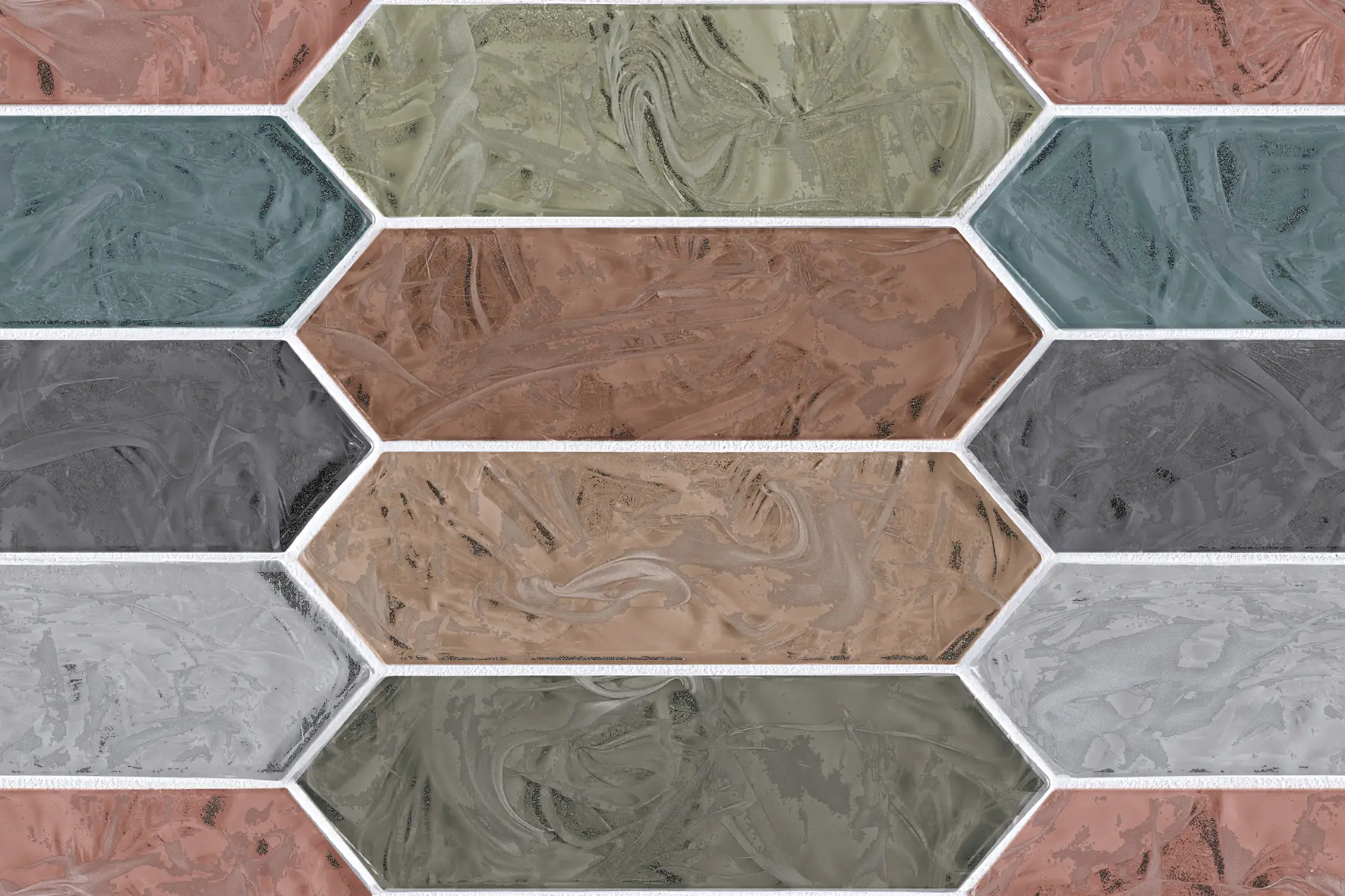
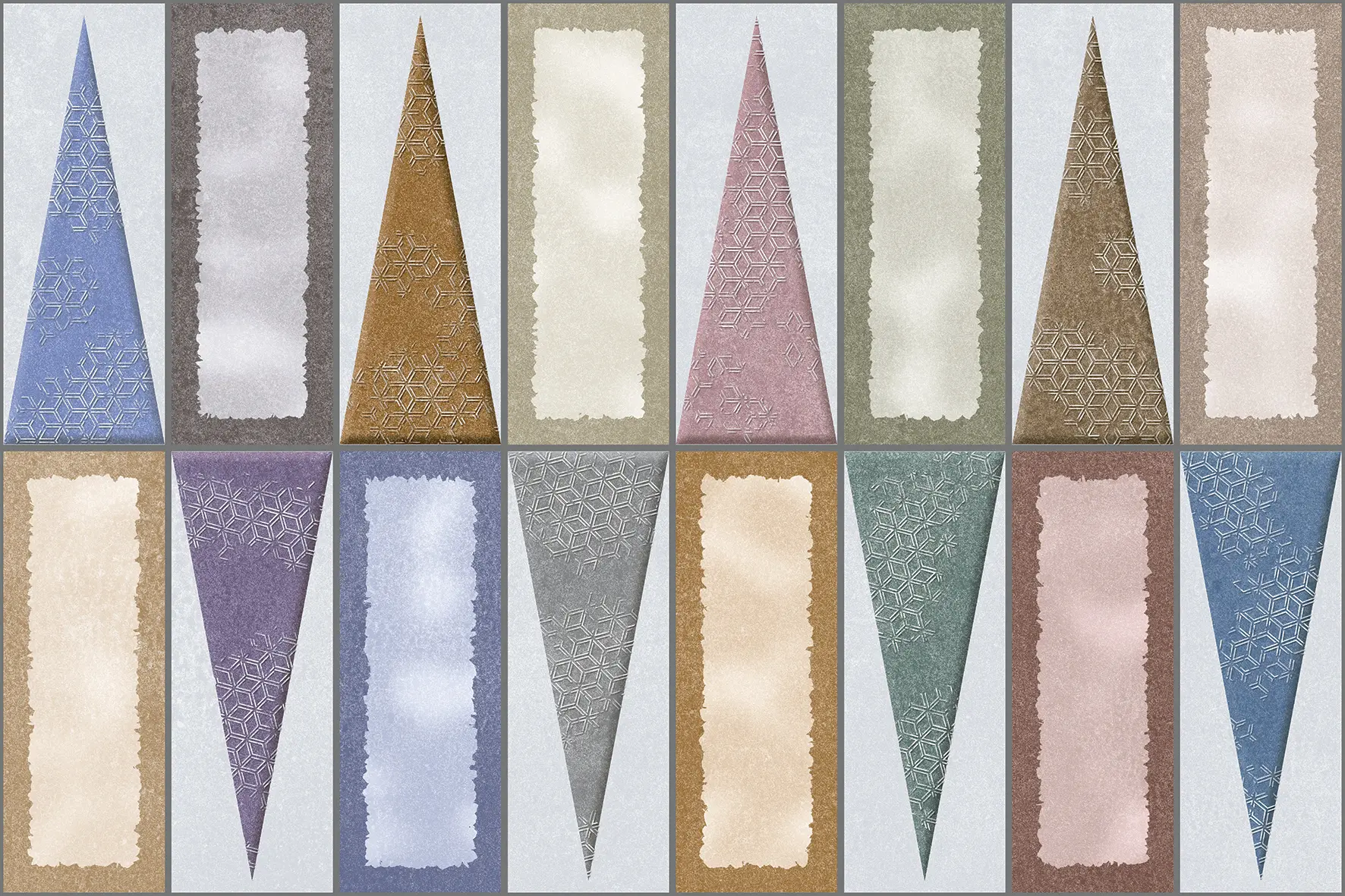
Hexagons with botanical prints or a rustic patina, and long pointed picket shapes in earthy colours.
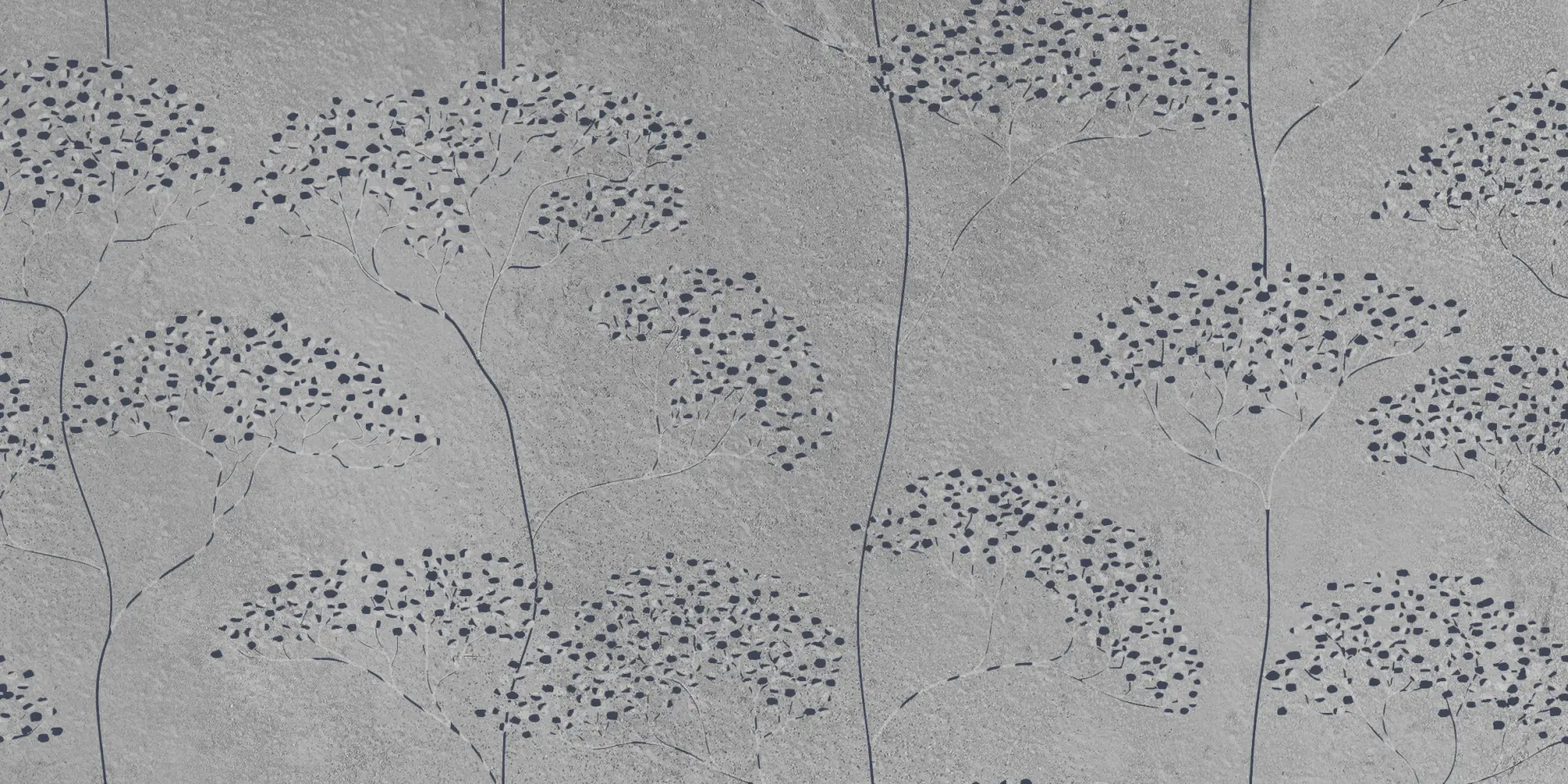
Chevron and graphic black and white

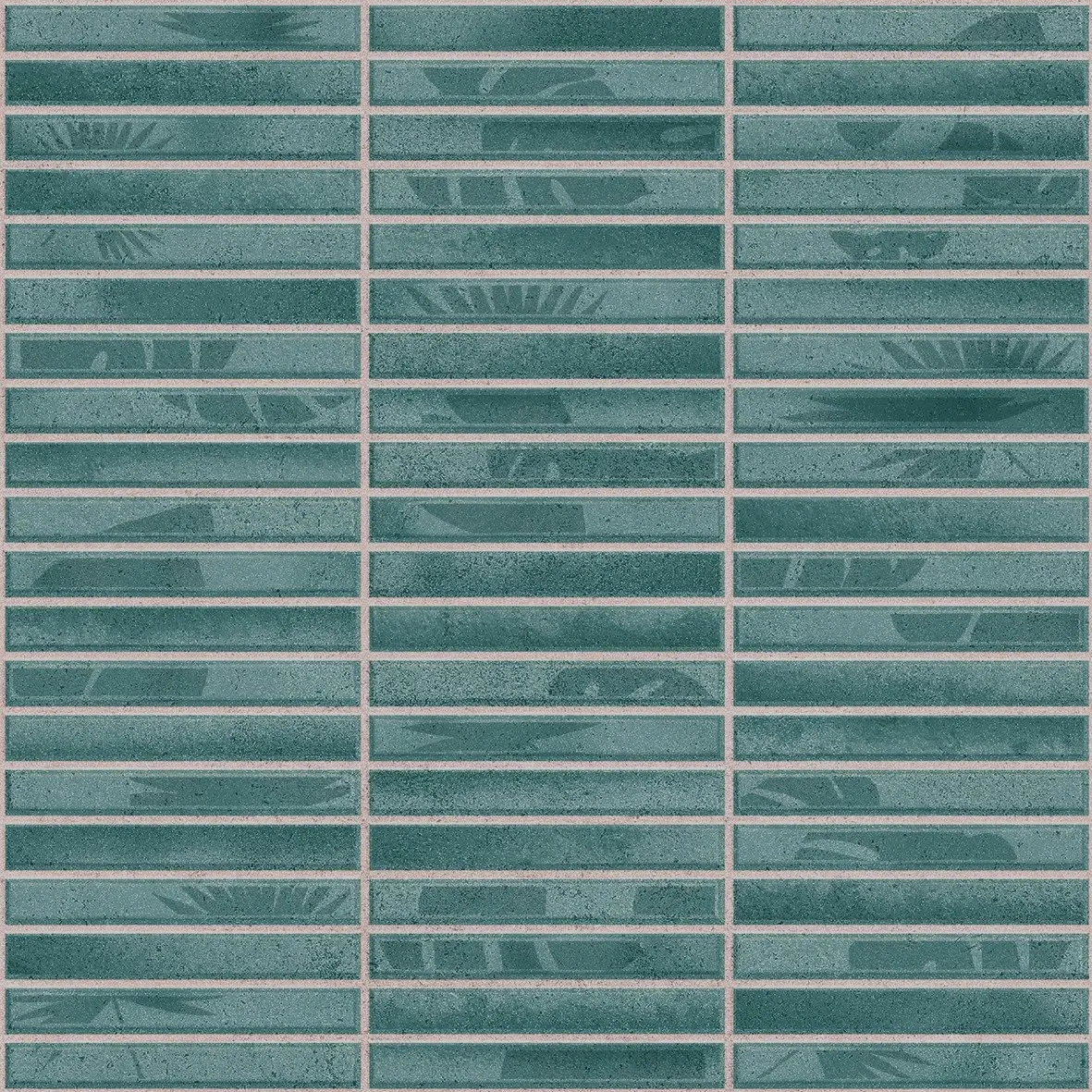
Strips and grids
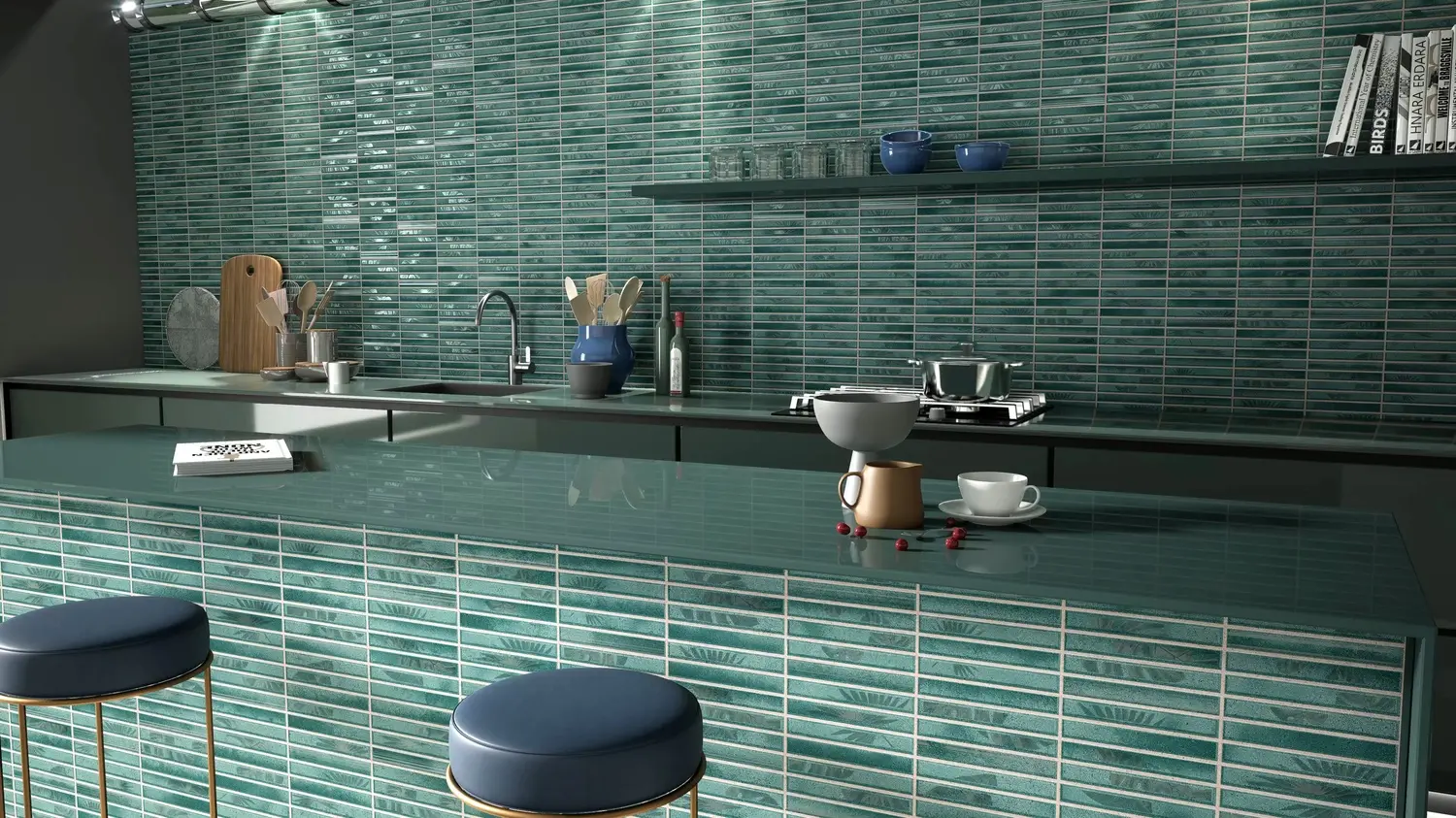
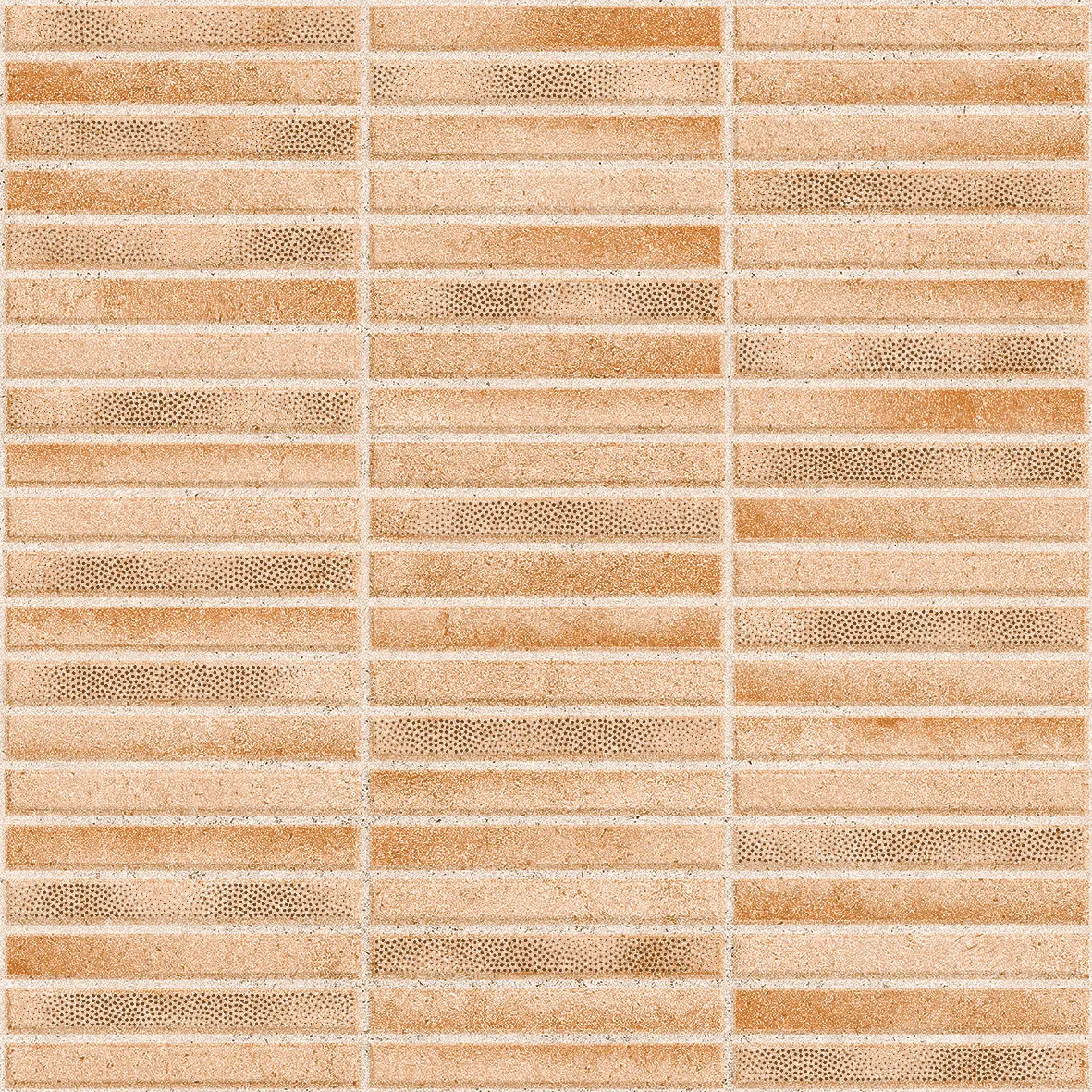
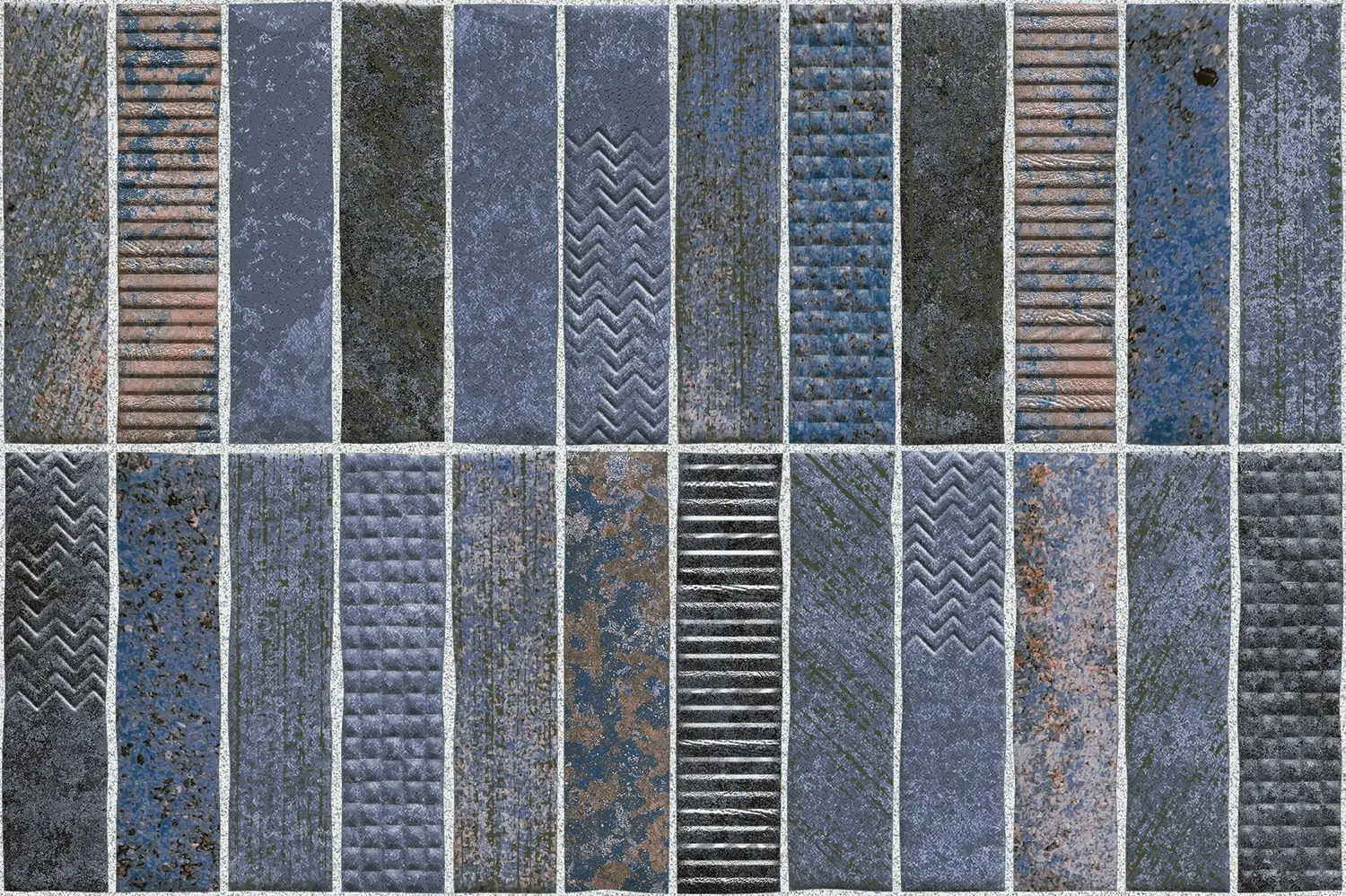
Thin stacked strips (the look of subway and finger tiles), vertical strips and a white grid with green joints.
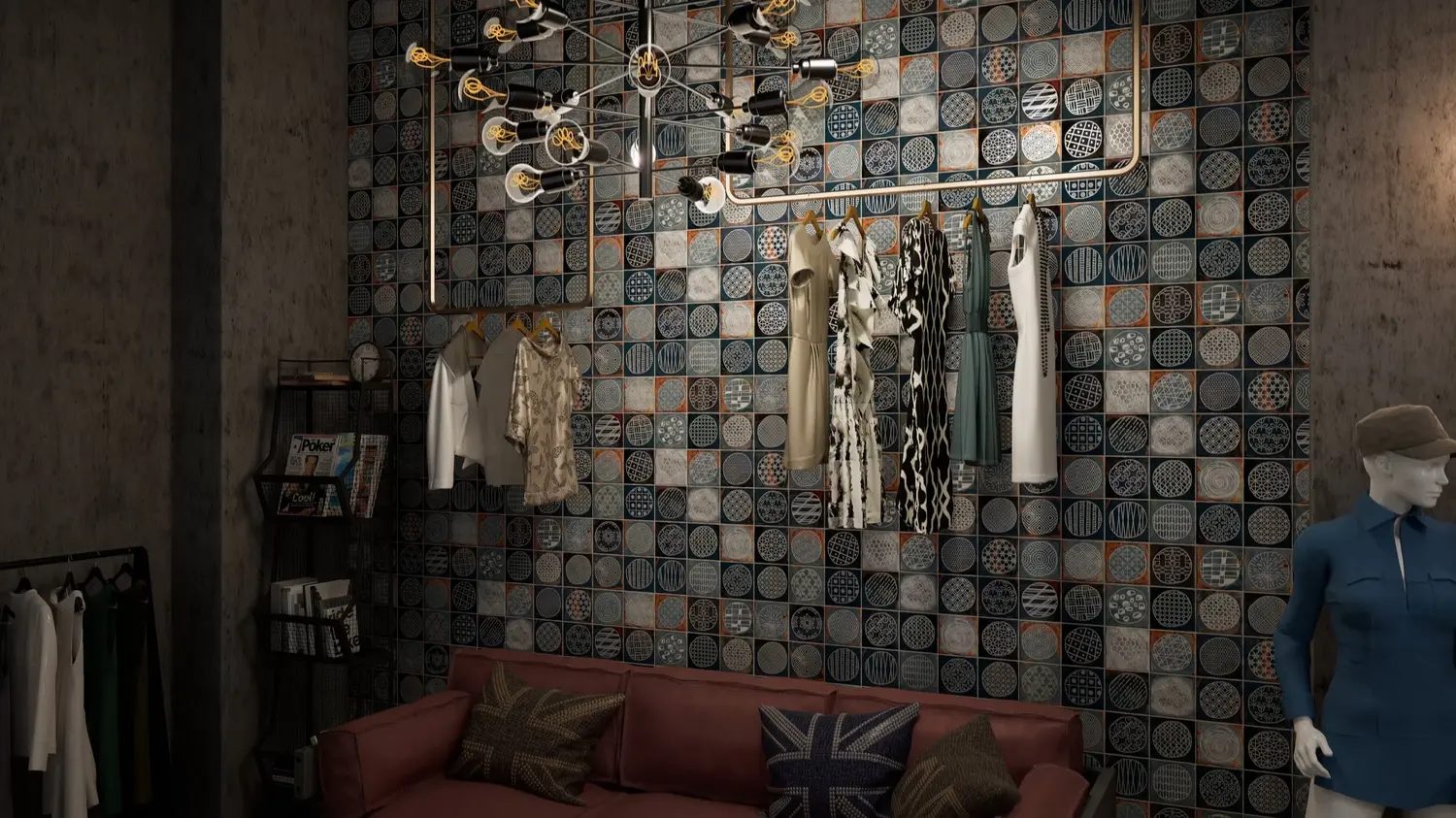
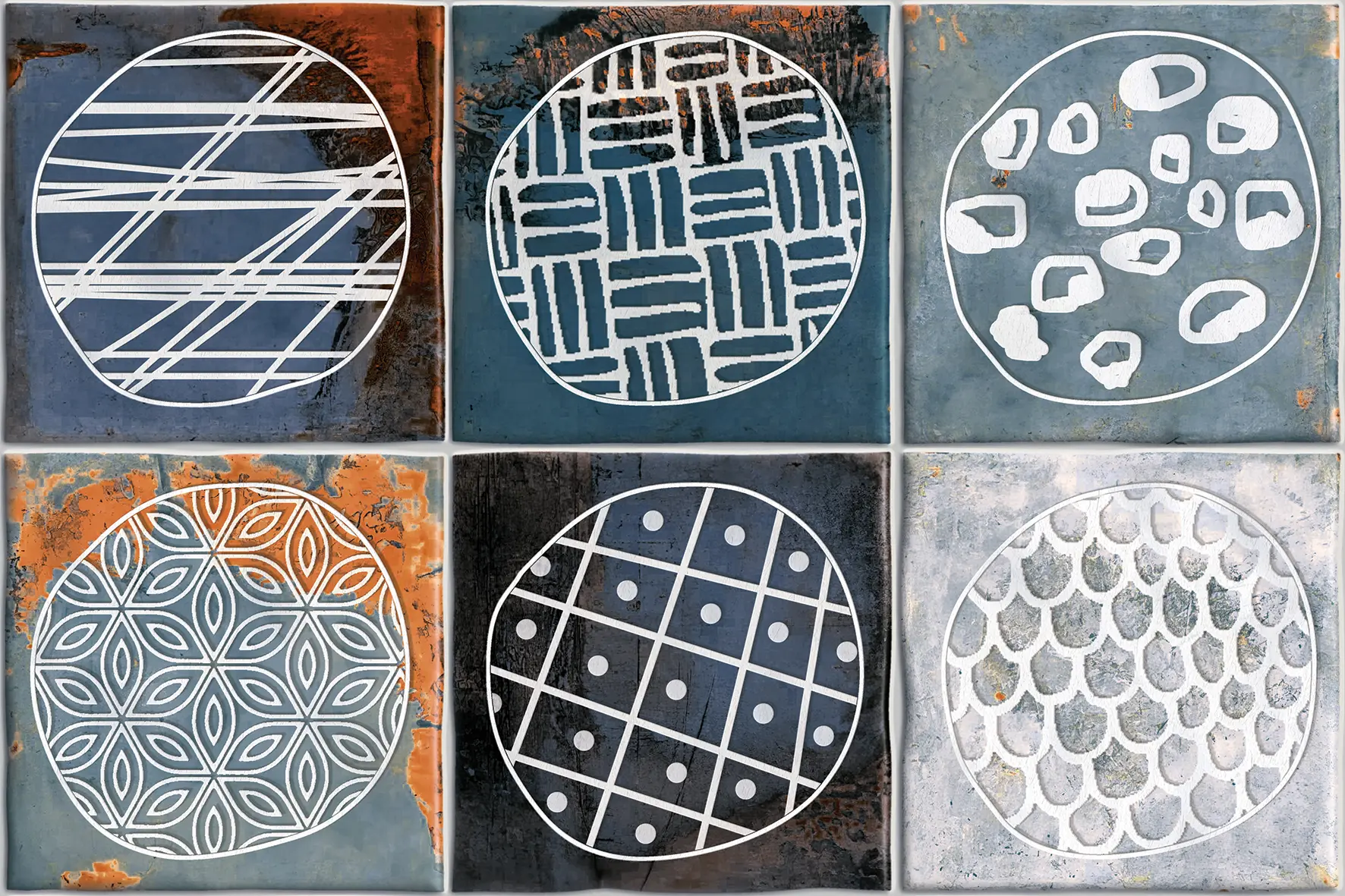
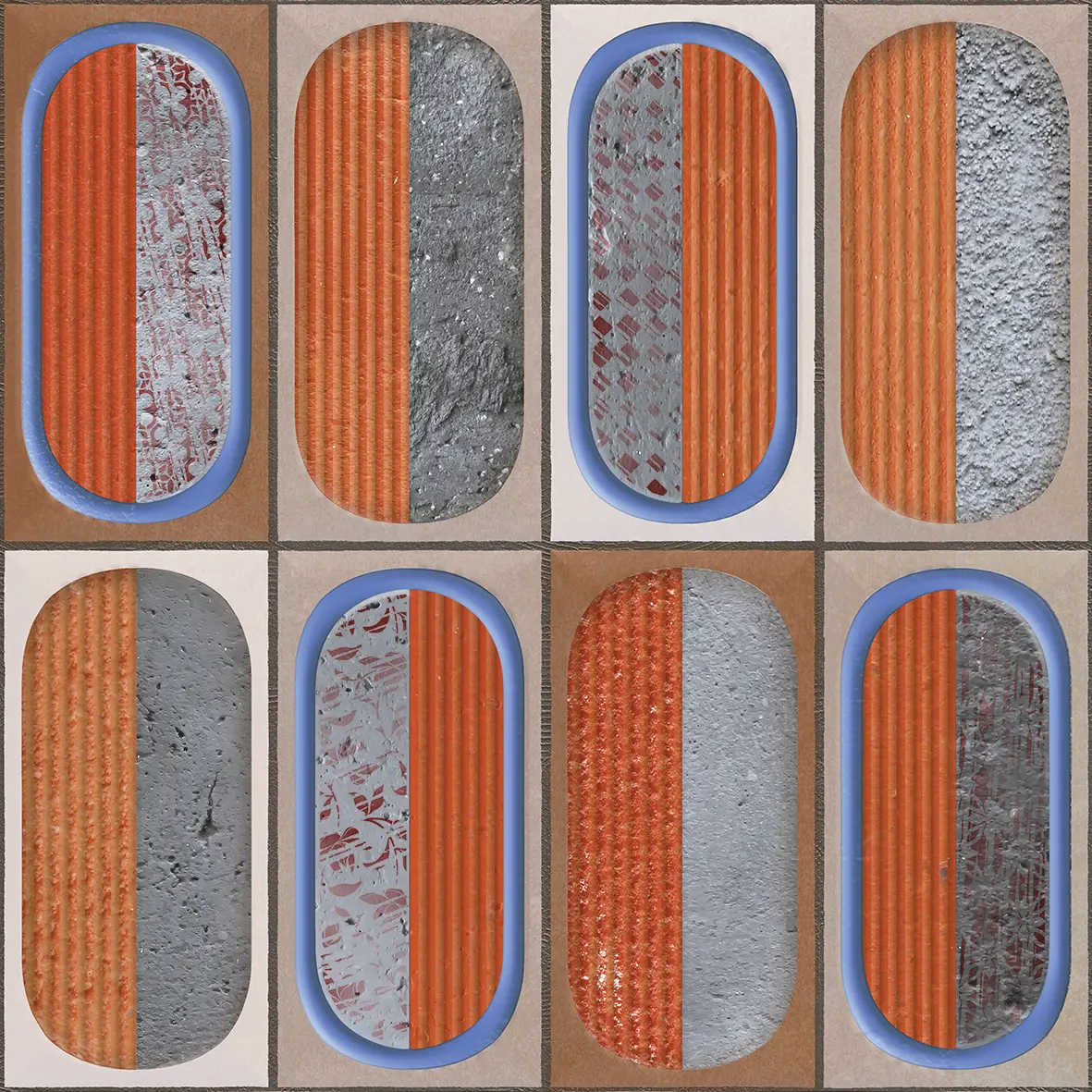
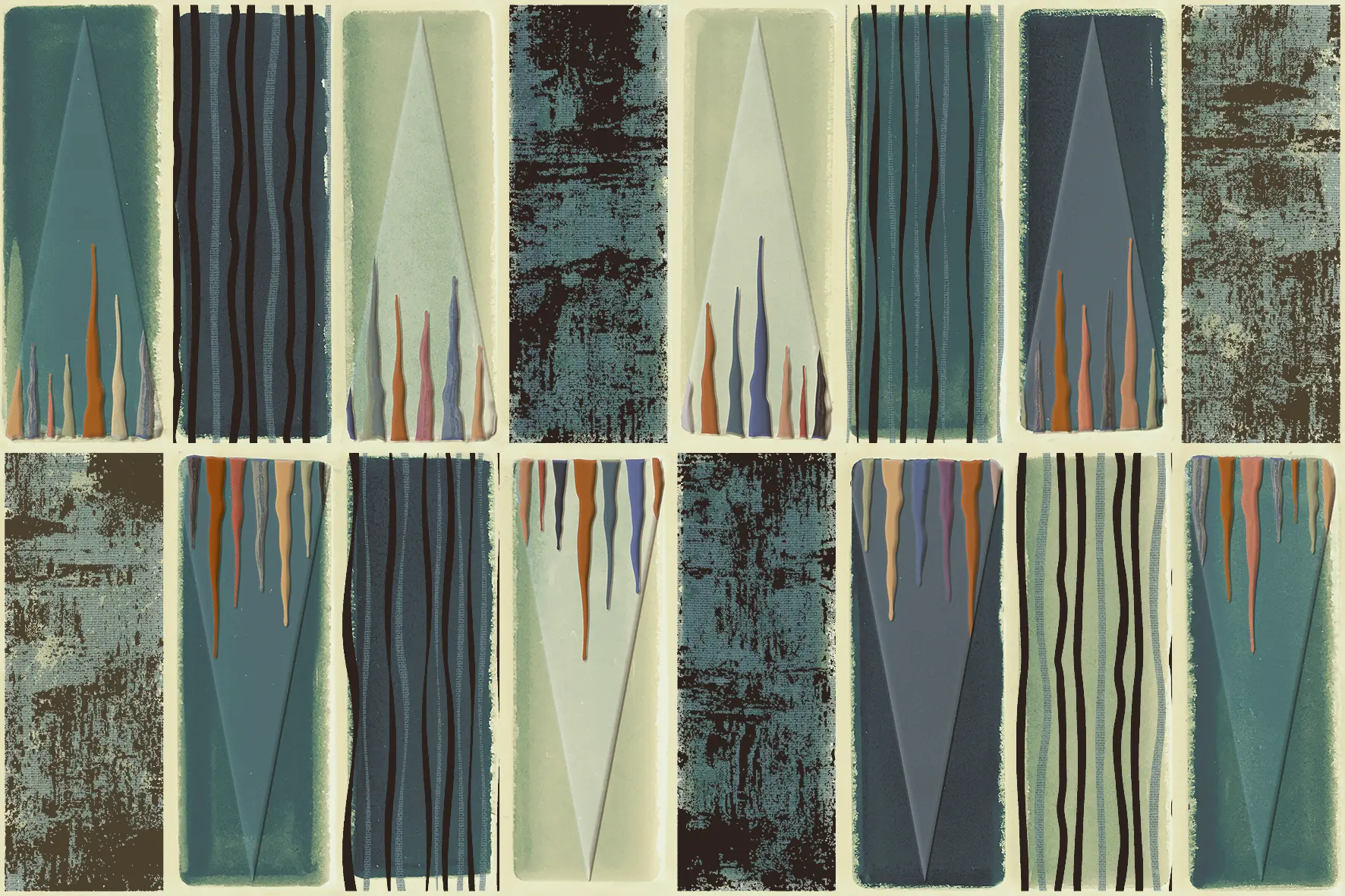
Circles, capsules and triangles
Layout tips
- Direction. Vertical strips make a wall look taller; horizontal strips make it look wider.
- Centre the pattern. Start from the centre of the wall so the cut tiles at both ends match.
- Line up the print. On herringbone and hexagon designs, check that the pattern runs on from tile to tile before the adhesive sets.
- Joints. Keep them narrow and use a grout close to the tile's main colour, so the printed pattern reads as one surface.
- Calm surroundings. A strong geometric wall needs plain walls and floors around it.
See more ways to use a feature wall in highlighter tiles and living room wall tiles.