
Moroccan tiles: how to use them in Indian homes
Moroccan tiles bring star and floral patterns, rich colour and a handmade feel. In Indian homes they work best as one feature: a kitchen backsplash, a bathroom wall or a dining wall. Here is how to use them.
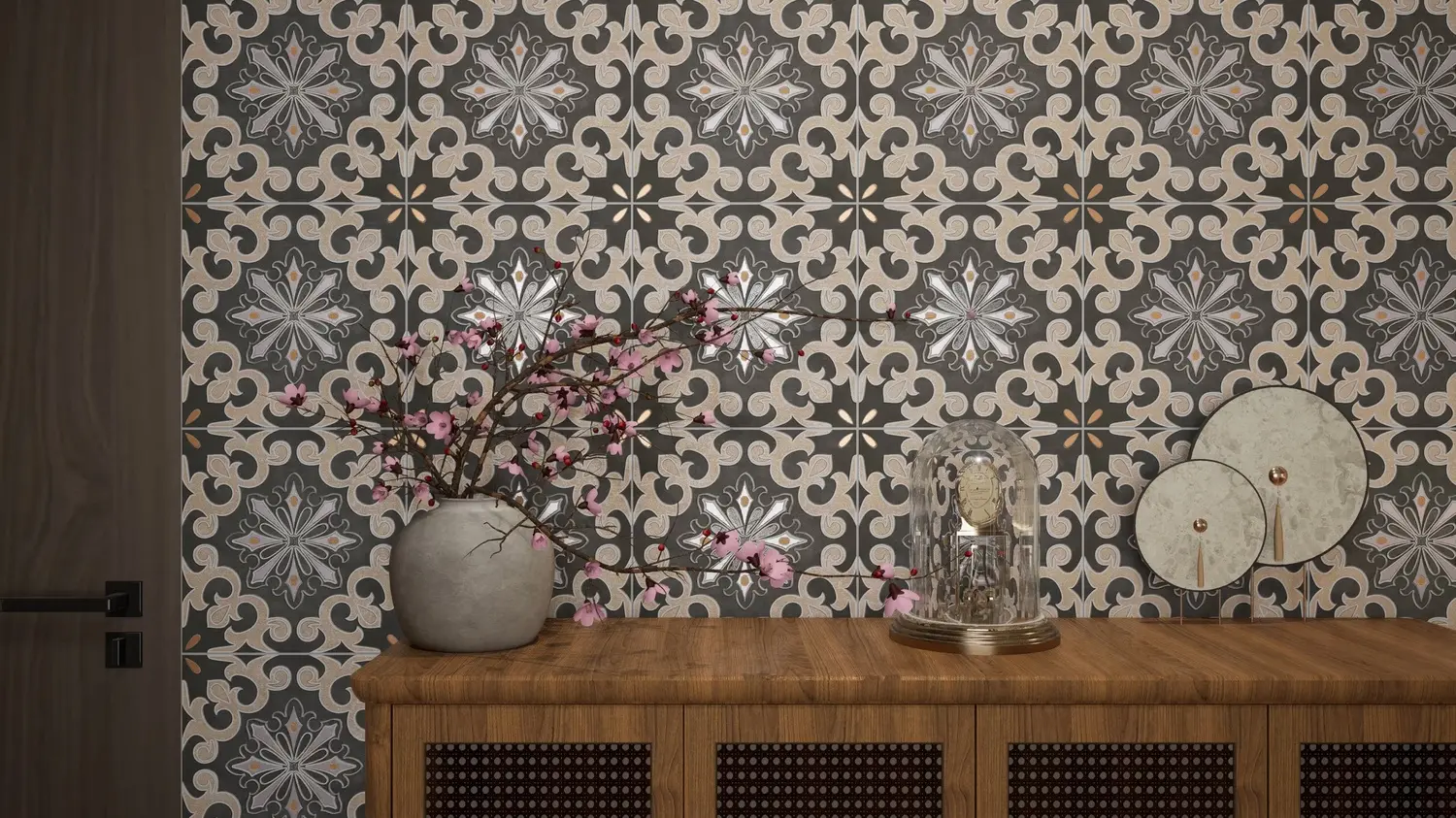
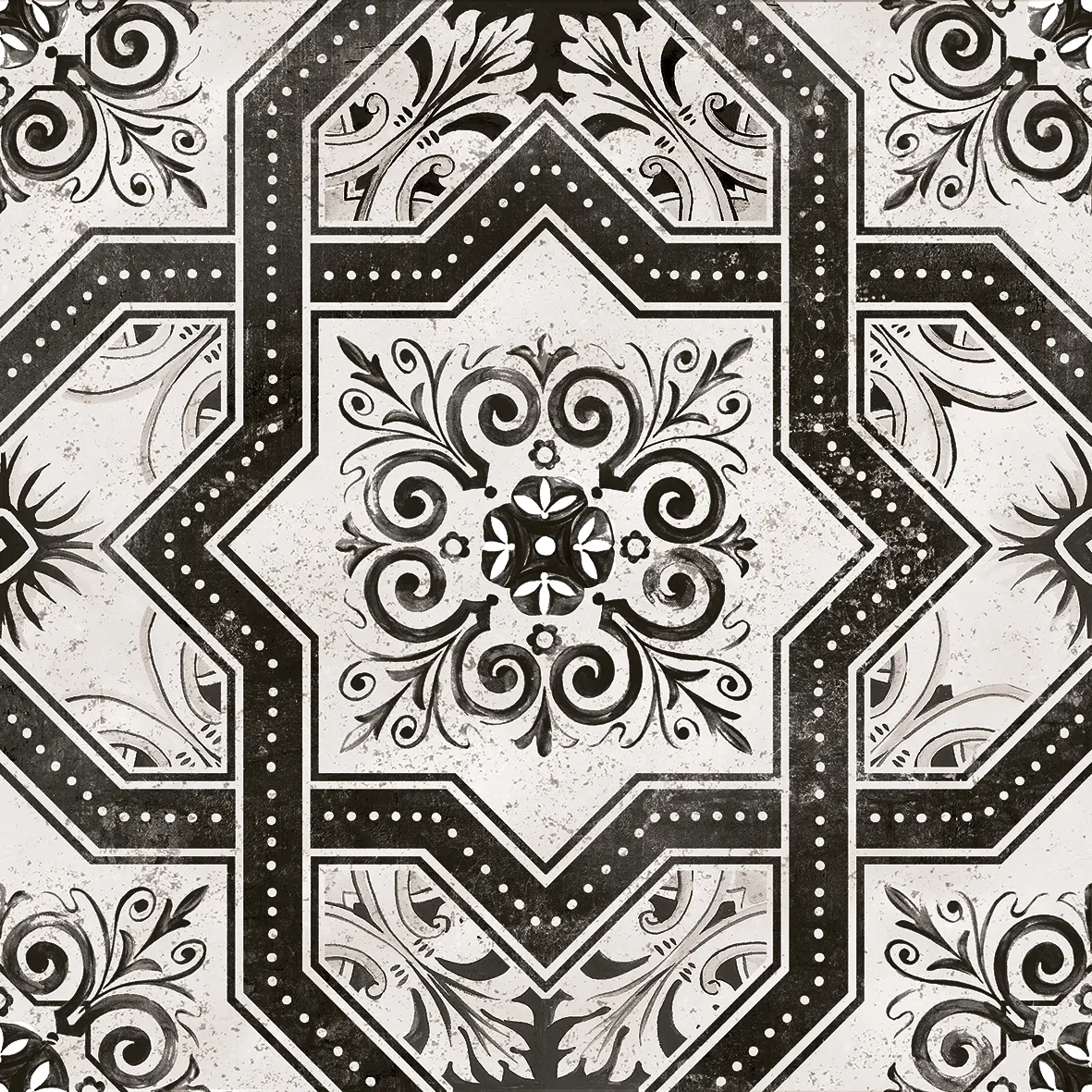
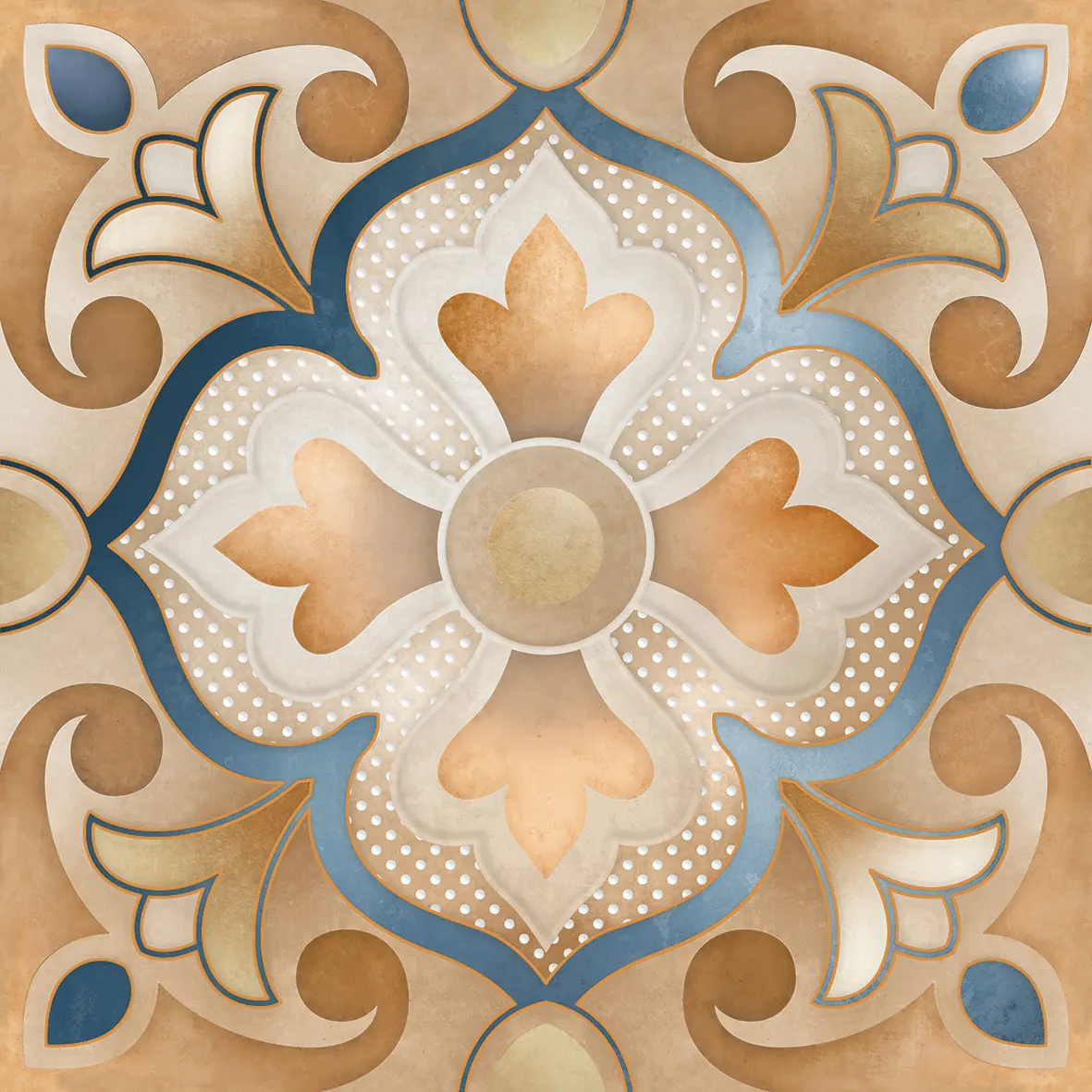
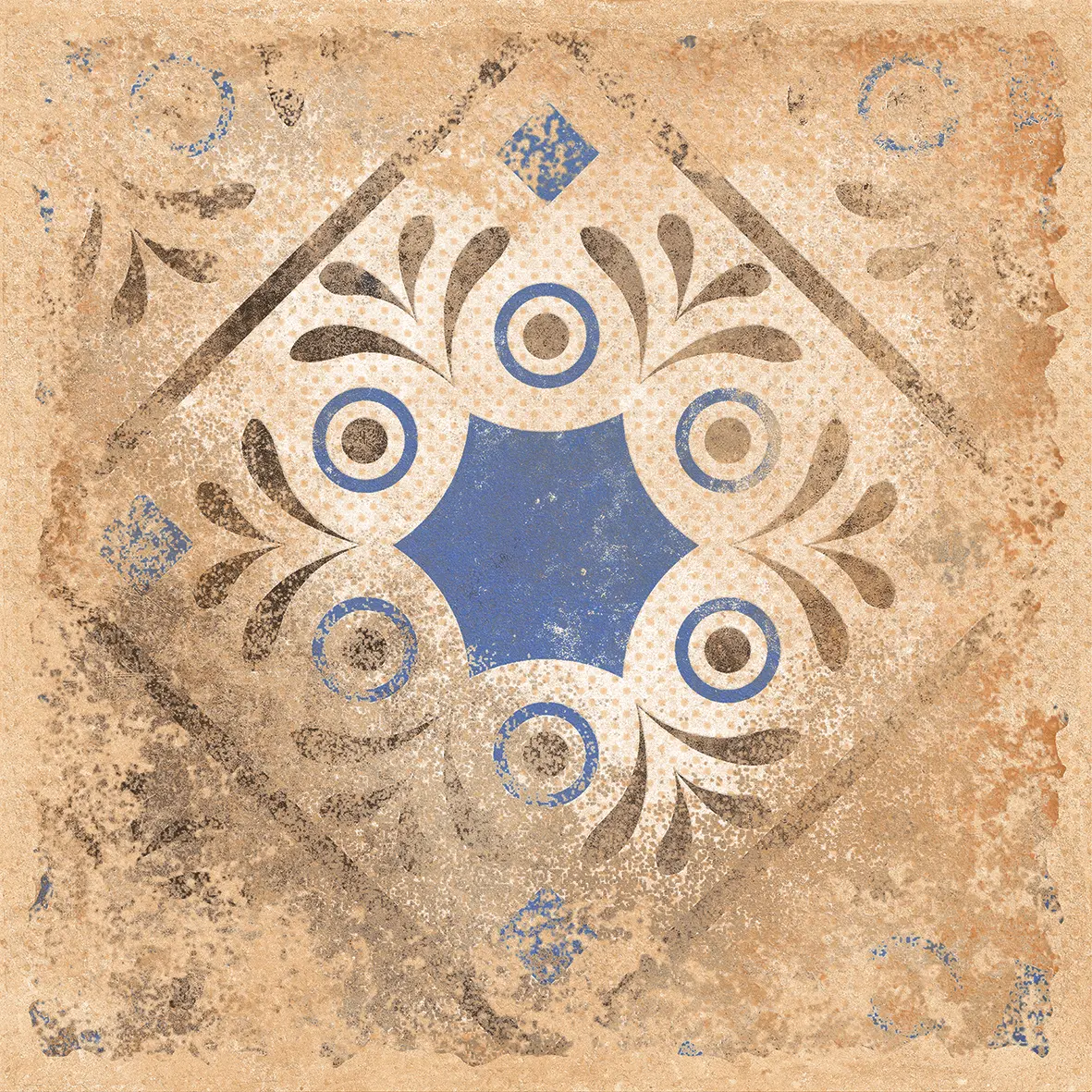
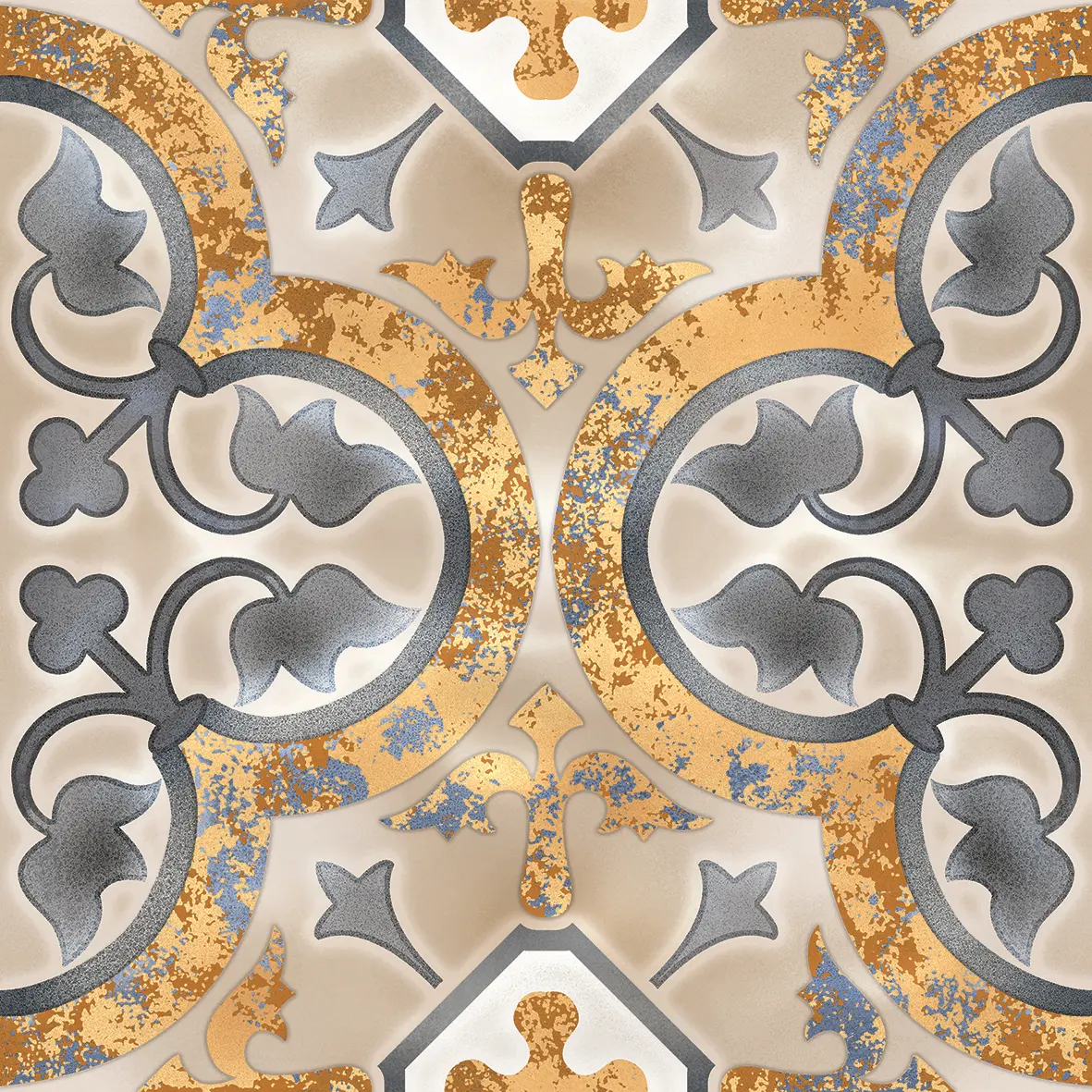
Moroccan tiles are the geometric and floral patterns of North African tile work: stars, crosses, medallions and interlocking shapes, in blues, terracotta, black and white. Traditional versions are hand-cut glazed pieces or patterned cement tiles. Digital ceramic tiles print the same patterns onto a glazed tile, so they are lighter, easier to fix and wipe clean.
Where Moroccan tiles work
Kitchen backsplash. The most popular use: a patterned band between the platform and the cabinets, with plain walls around it.
Bathroom. The wall behind the basin, or the shower wall.
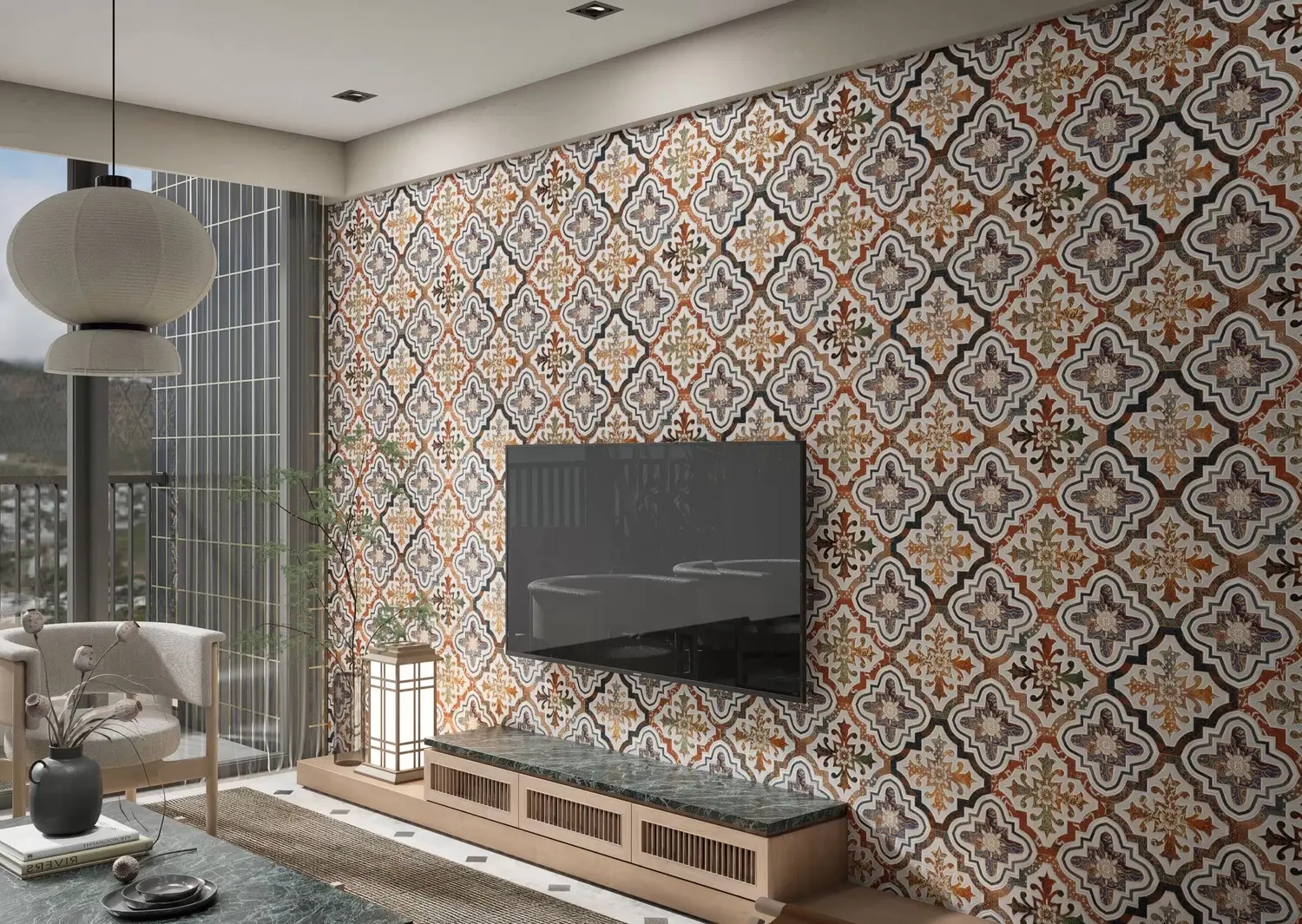
Feature wall. A dining wall, an entrance or a TV wall.
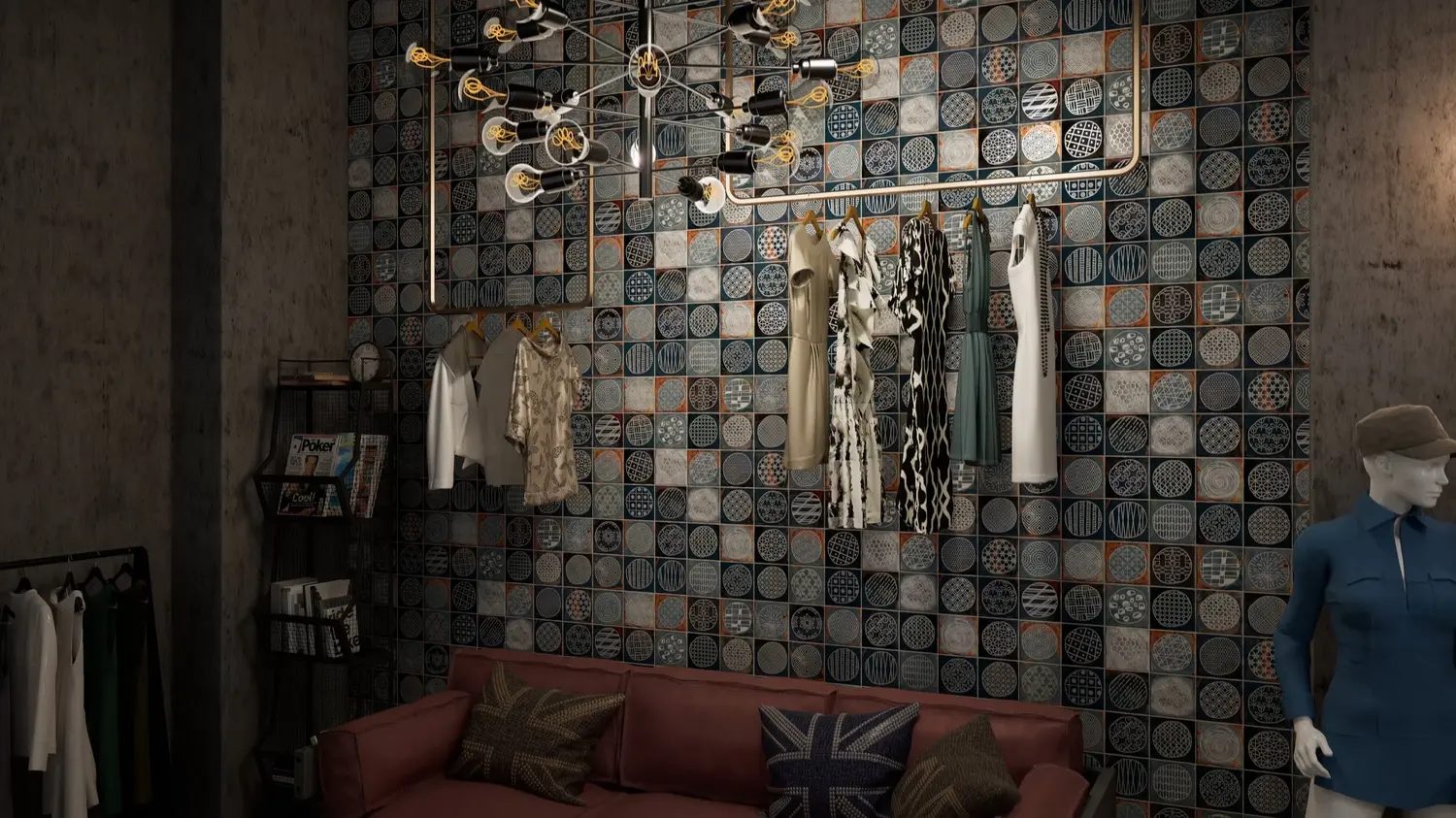
Cafes and restaurants. A counter front, or the wall behind the counter.
Choosing colours
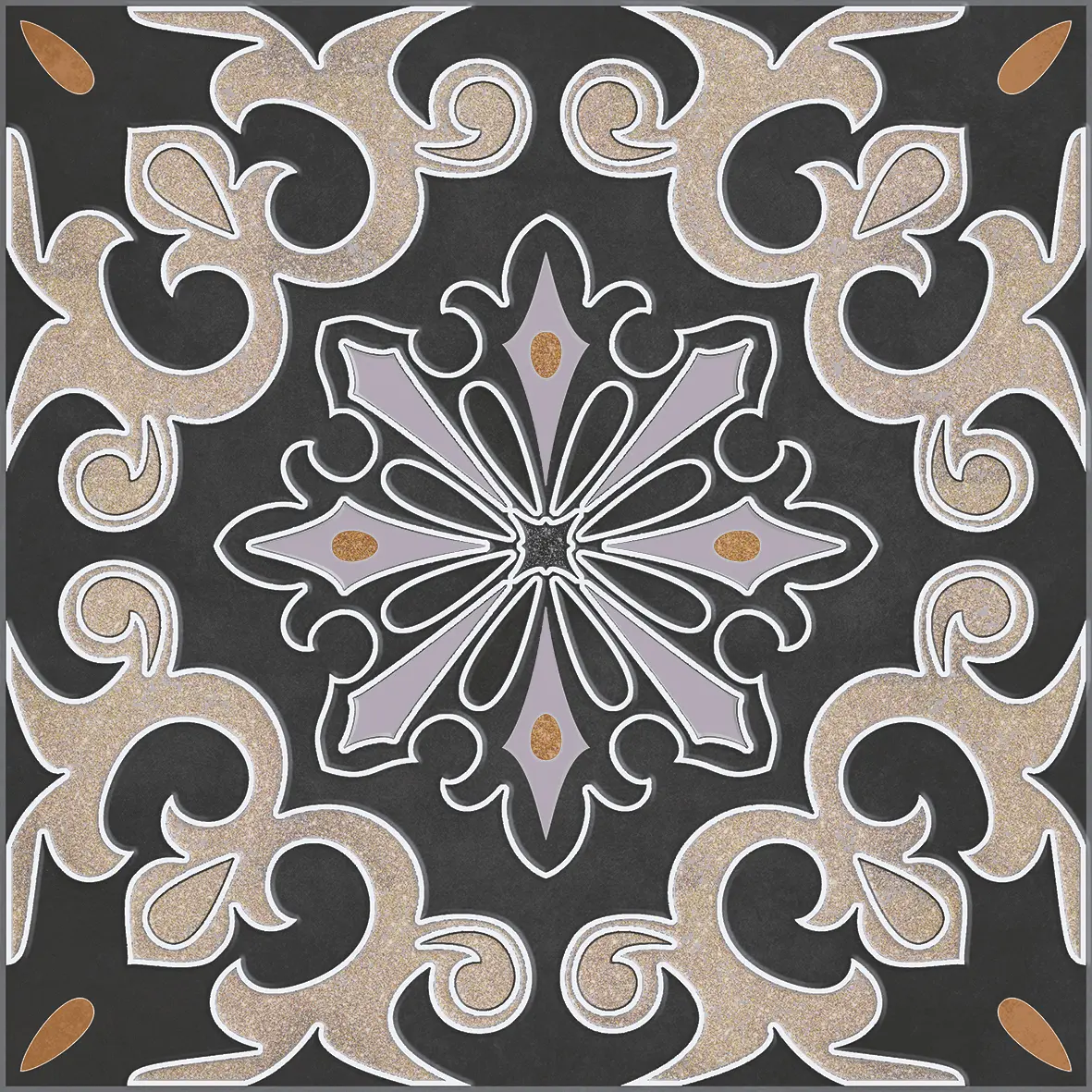
- Black and white patterns go with almost any interior and look sharp in modern kitchens.
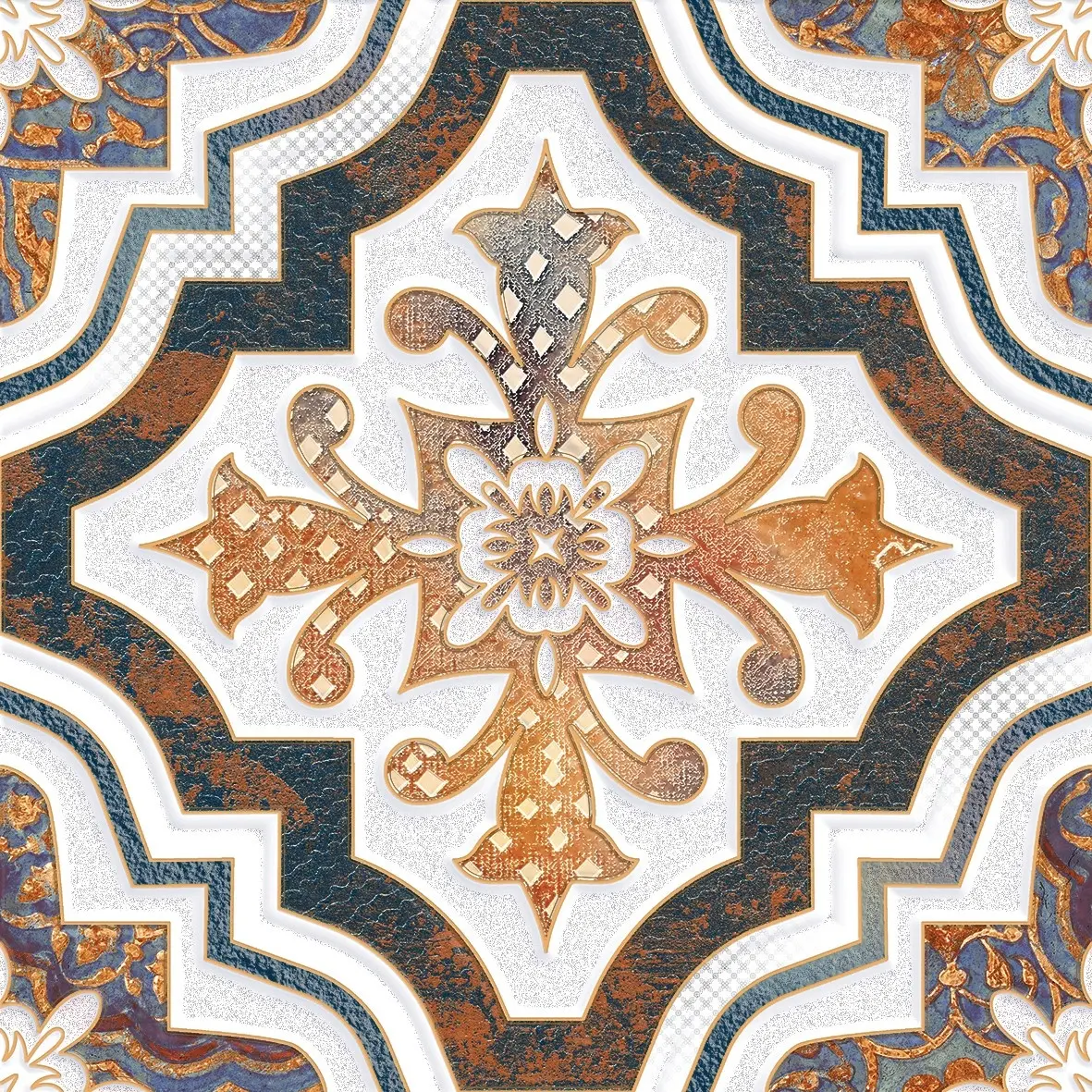
- Blue and terracotta patterns feel warm and suit wooden furniture.
- Gold and grey patterns suit a formal dining room or a bedroom.
- Keep the walls around a Moroccan wall plain, in one of the pattern's colours.
Size and layout
Moroccan designs are usually made in 300 × 300 mm (12 × 12 inch) tiles, which keeps the pattern at a natural scale. Where a pattern joins across four tiles it forms larger stars or medallions on the wall, so lay a few tiles on the floor first to see the full repeat.
Mixing with other tiles
- A Moroccan backsplash with a plain wall tile above it.
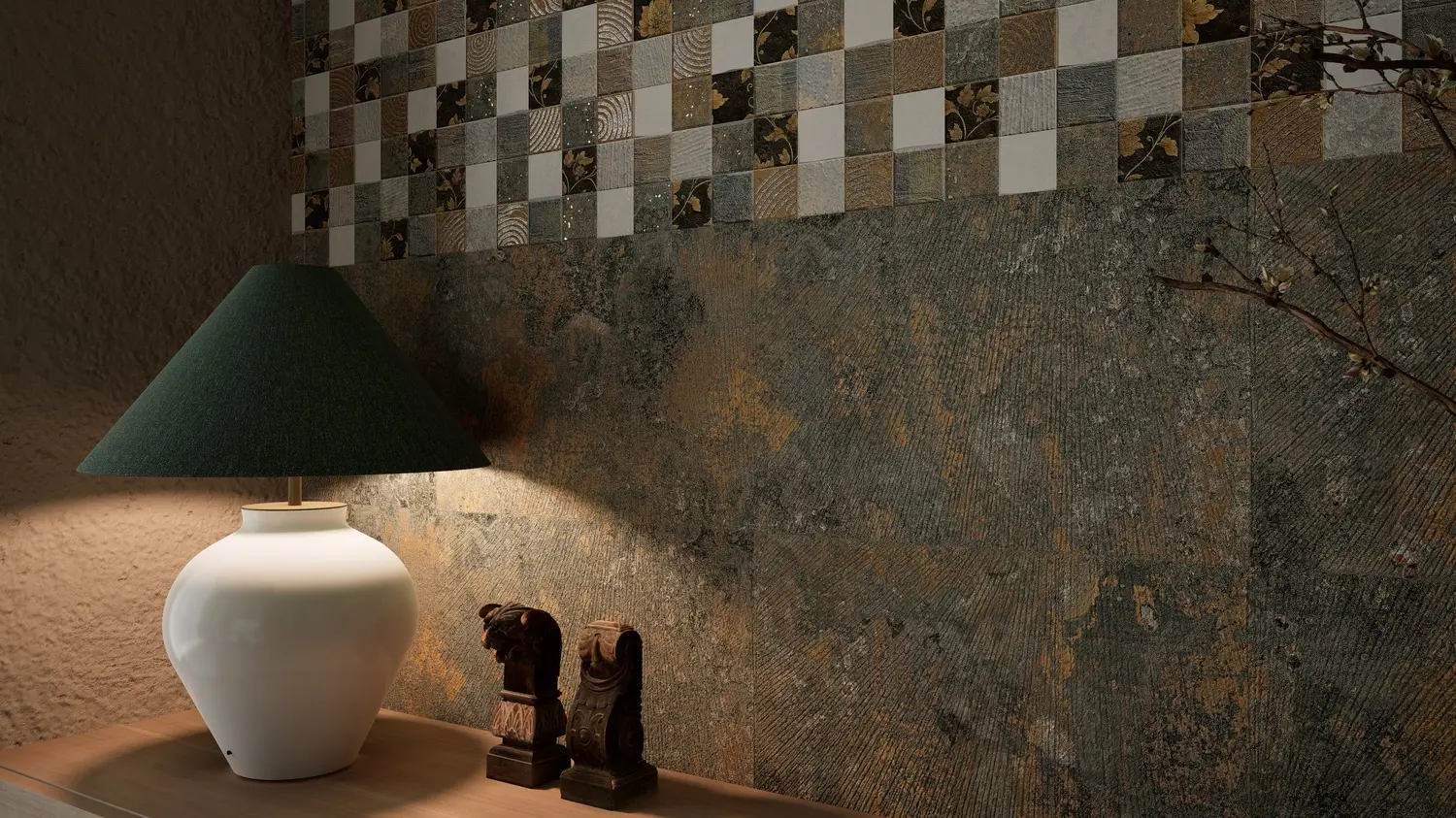
- A Moroccan band as a highlighter in a bathroom: see highlighter tiles.
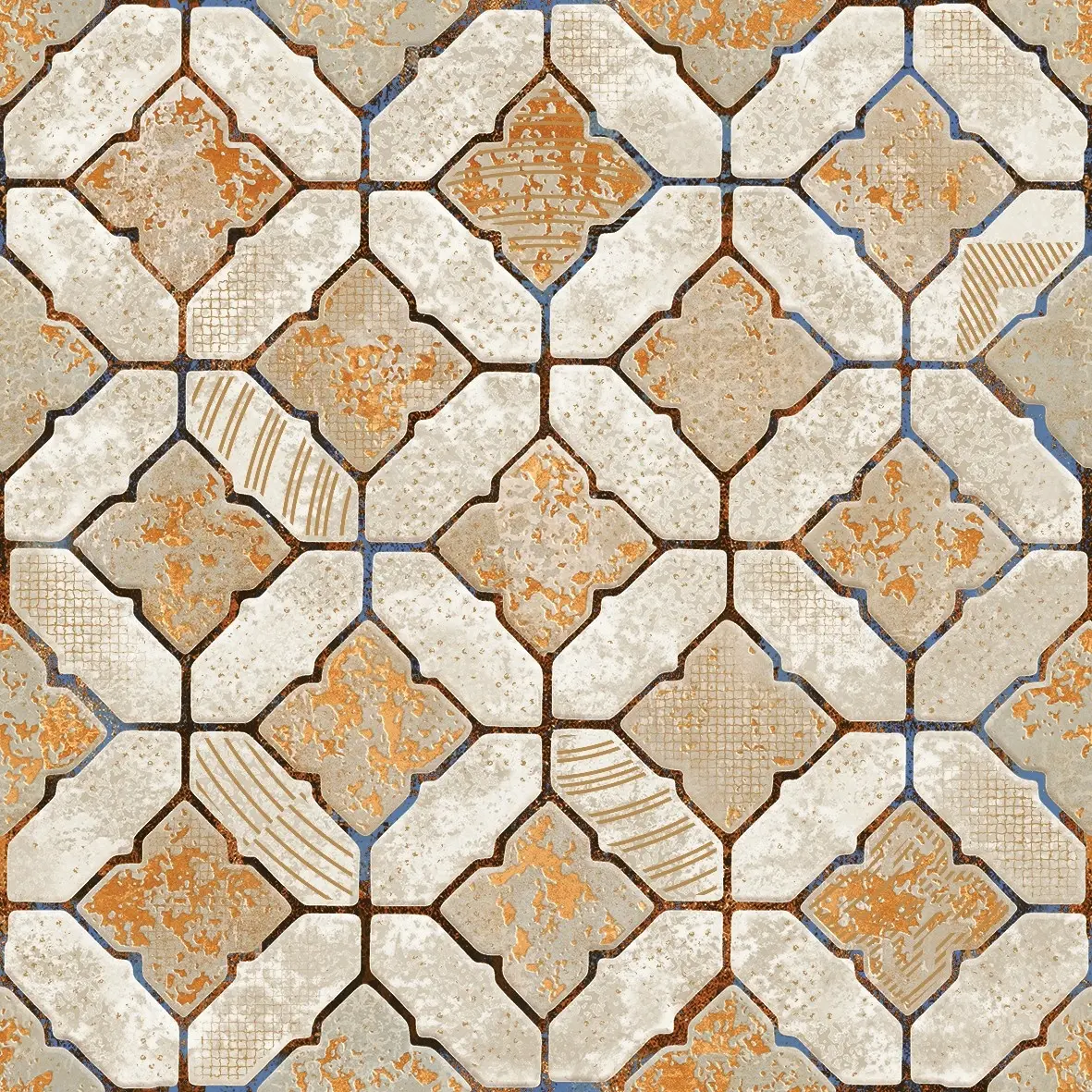
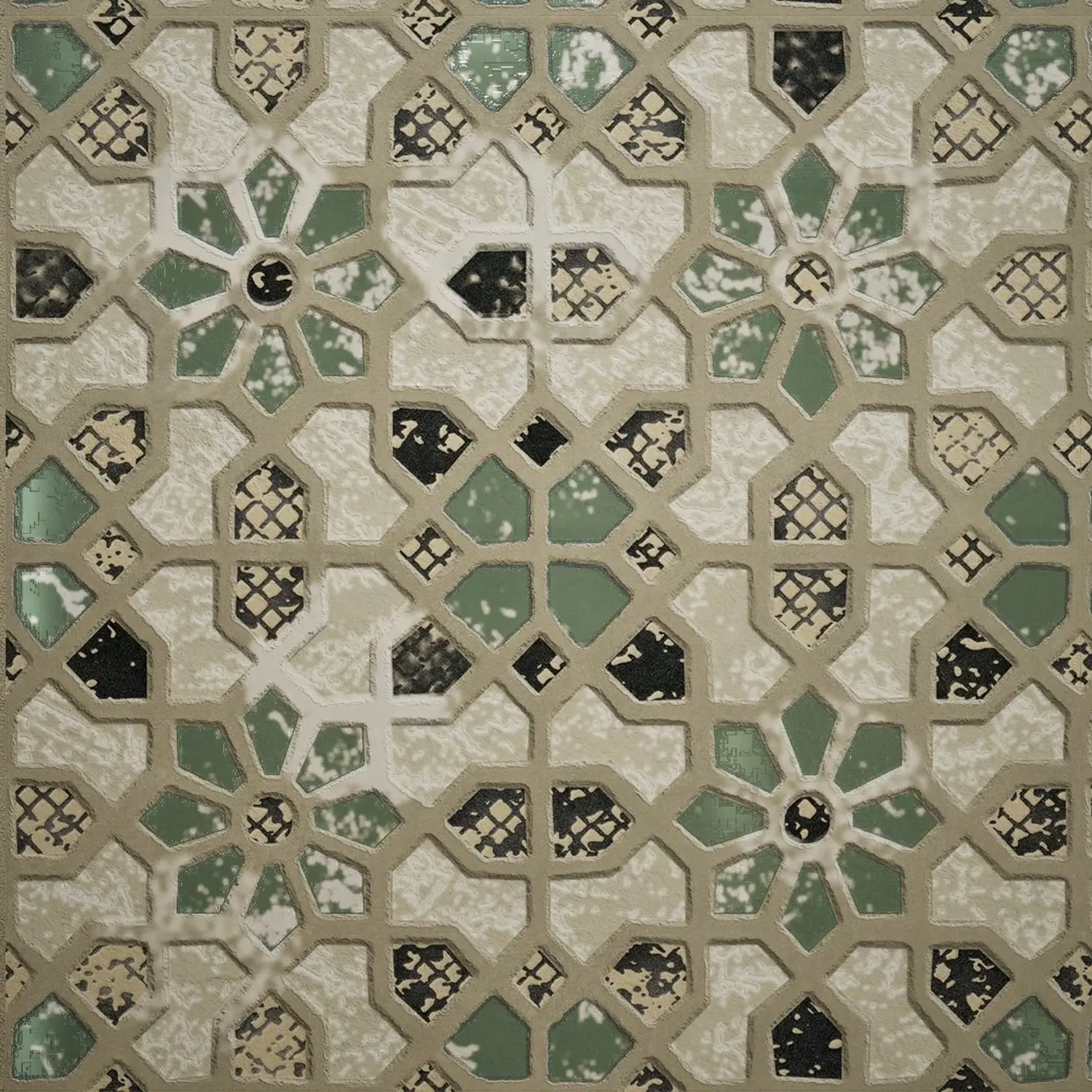
- Moroccan-style patterns from other collections, for a softer or bolder look:
Care
Glazed digital Moroccan tiles need only water and mild soap. Unlike cement tiles, they do not need sealing.
Every design is in Moroccan tiles. For kitchens, see the kitchen wall tiles guide.