
Pooja room tiles: Om, Ganesh and Ram designs for your mandir wall
The wall behind the idols is the heart of a pooja room. Devotional tiles with Om, Ganesha, diya and script designs make it special, and they stay easy to clean around lamps and incense. Here is how to plan it.
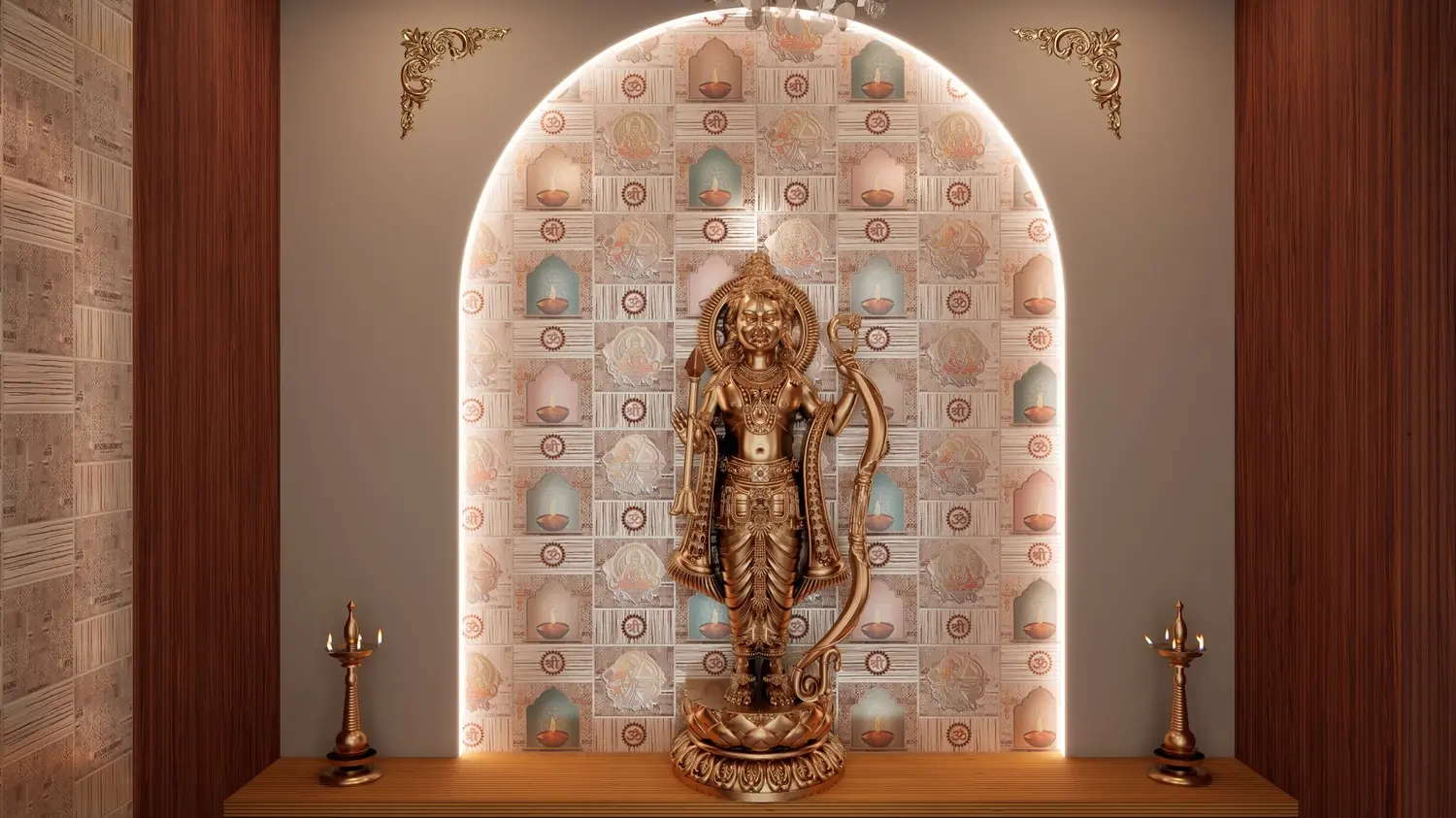
In a pooja room or a mandir corner, the wall behind the idols is the one everyone looks at. Tiles suit it well: they carry devotional designs that paint cannot, and a glazed surface wipes clean of soot from diyas and incense and the colours of daily puja.
Devotional designs
Ganesh and Om tiles
Divyam God is a set of 300 × 450 mm glossy tiles with Lord Ganesh, Om, Shree, Lord Ram with his bow and a diya in a temple arch, made to be laid together as a picture behind the idol.

Om Namah Shivaya tiles
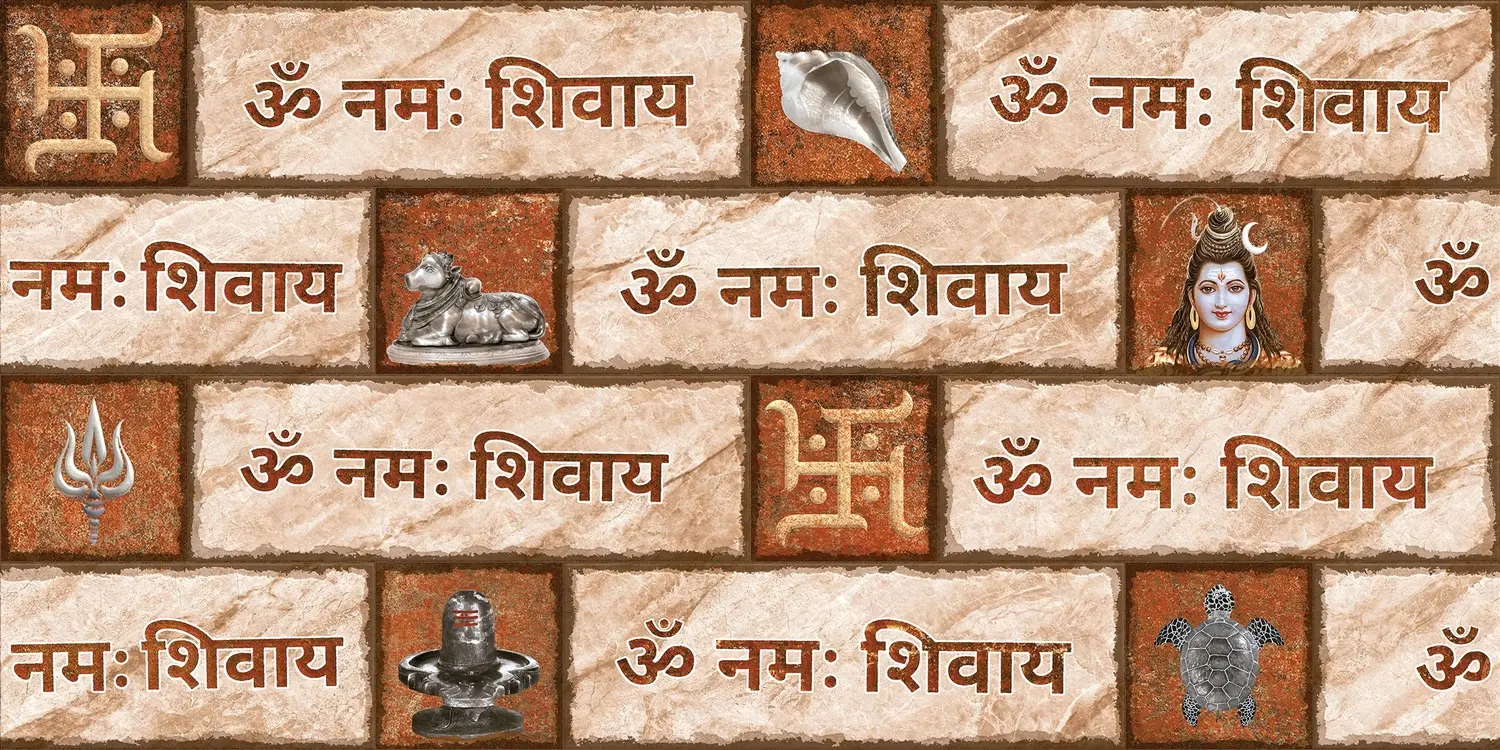
Angira Ishvara carries the mantra ॐ नमः शिवाय in Devanagari on terracotta brick blocks, with swastik, conch and Lord Shiva motifs, in 300 × 600 mm matt.
Ram naam tiles
Nimohay Raghav repeats राम (Ram) across grey and rust brick blocks with diyas, lotuses, swastik and conch, in 300 × 600 mm matt.
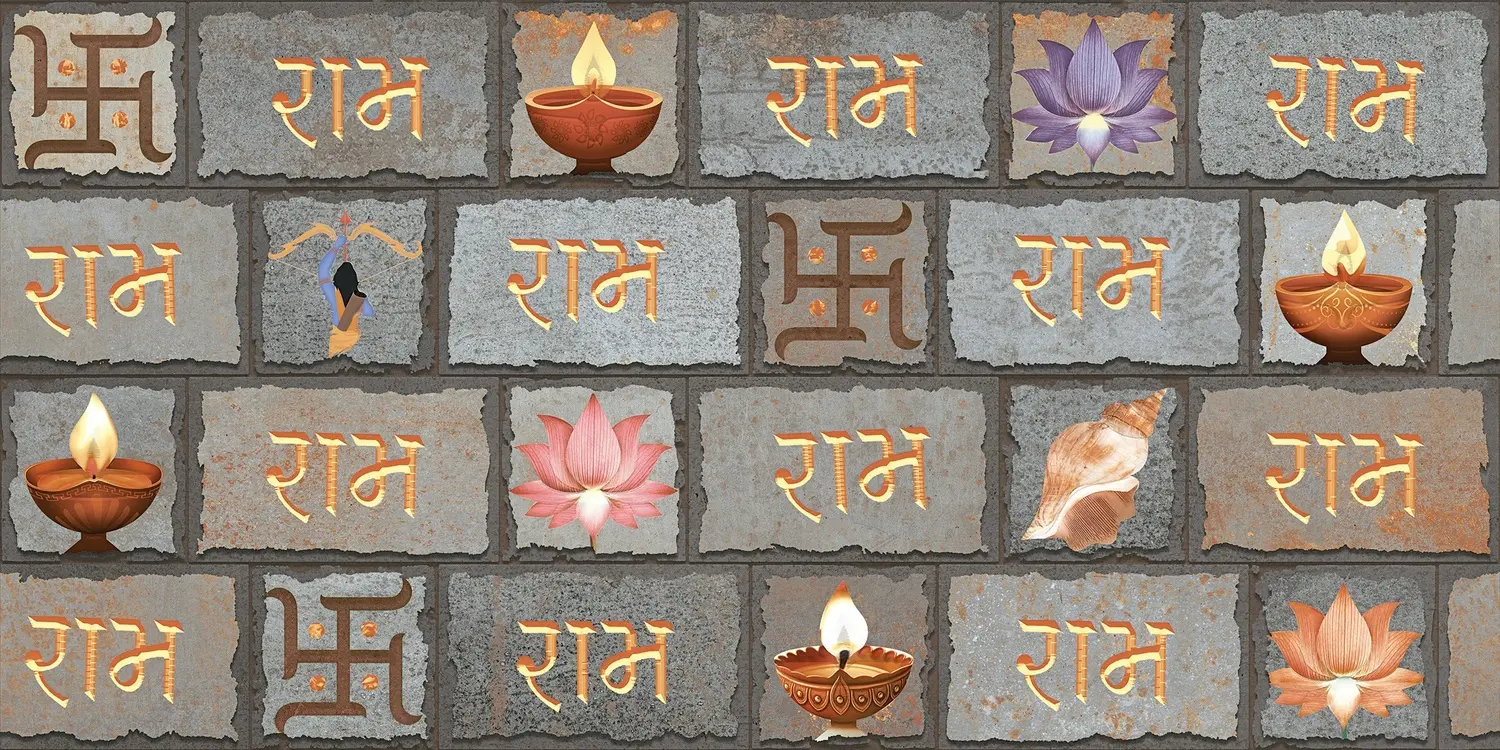
Temple and garden walls
Angira Ishvara and Nimohay Raghav are 300 × 600 mm tiles made for elevation walls, so they also suit a temple wall, a courtyard shrine or a garden wall behind a statue.
How to lay out the mandir wall
- The idol's wall. The devotional design behind and around the idol, at the height where it is seen while sitting or standing.
- Around it. A plain cream or white tile, so the design stands out.
- A mandir unit. With a wooden or marble mandir, tile the wall behind it and let the design show above and beside it.
- An open corner. In a small home, one tiled panel turns a corner of the living room into a mandir.
Glossy or matt
Glossy tiles reflect diya light and make a small pooja room brighter. Matt tiles avoid glare from lamps and hide smudges. Both wipe clean, so choose by how the room is lit.
Colours and Vastu
Vastu guidance commonly places the pooja room in the north-east of the home and favours light, calm colours: white, cream, light yellow and soft saffron. Dark colours are usually avoided behind the idols. Our devotional designs come in cream, terracotta and soft grey tones.
Size
300 × 450 mm (12 × 18 inch) tiles suit a compact mandir wall. 300 × 600 mm (12 × 24 inch) tiles cover a larger wall, or an outdoor temple wall, with fewer joints. To work out the boxes, measure the wall, add 10% for cuts, and divide by 7.5 sq ft for a 300 × 450 mm box or 8 sq ft for a 300 × 600 mm box.
Keeping it clean
- Wipe soot and oil with mild soap and water. Avoid acids and scrubbing pads.
- Keep diyas on a tray or a stand a little away from the wall.
- Epoxy grout does not absorb oil and kumkum.
The whole range is in pooja room tiles. For panels and bands, see highlighter tiles.