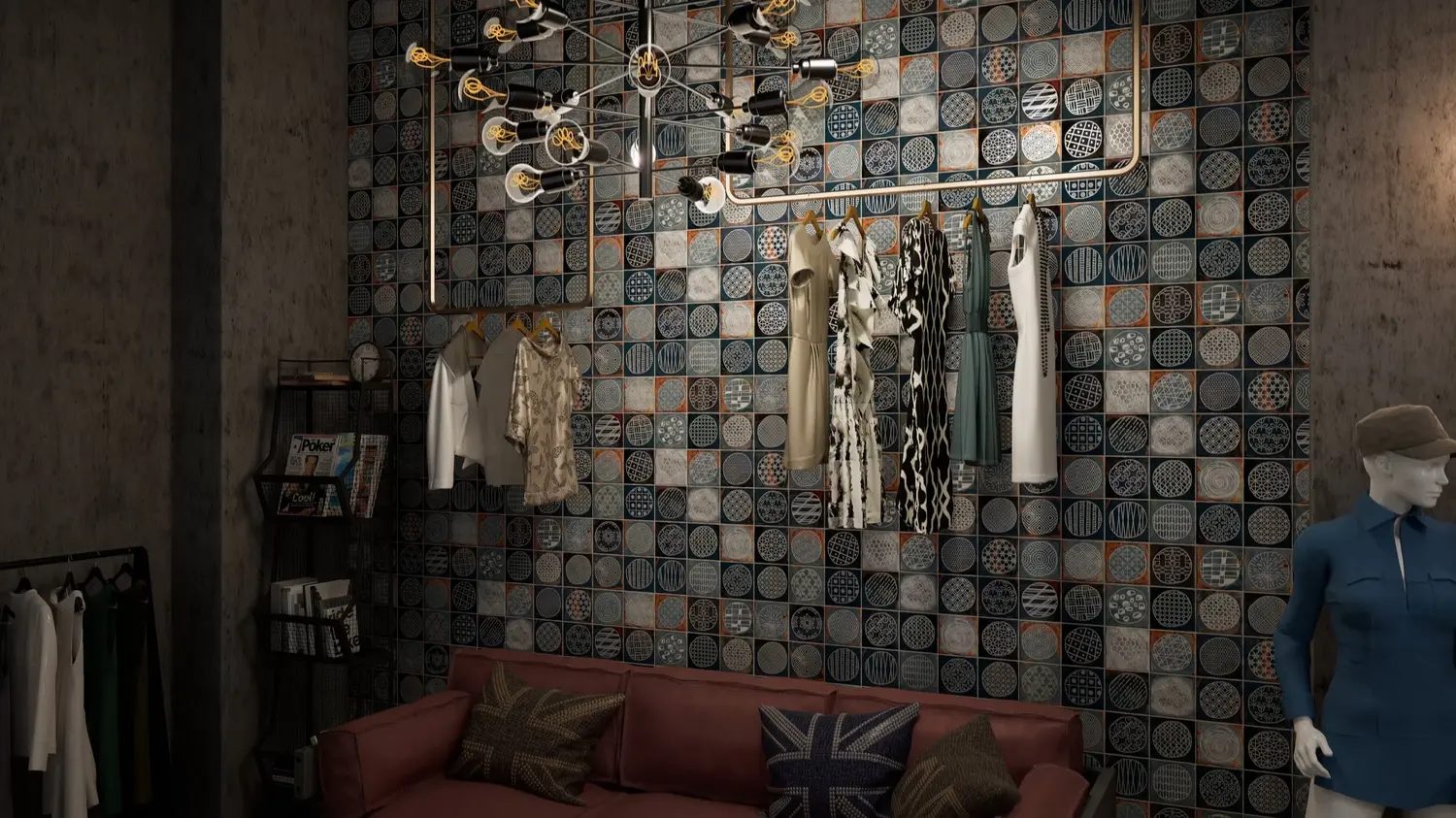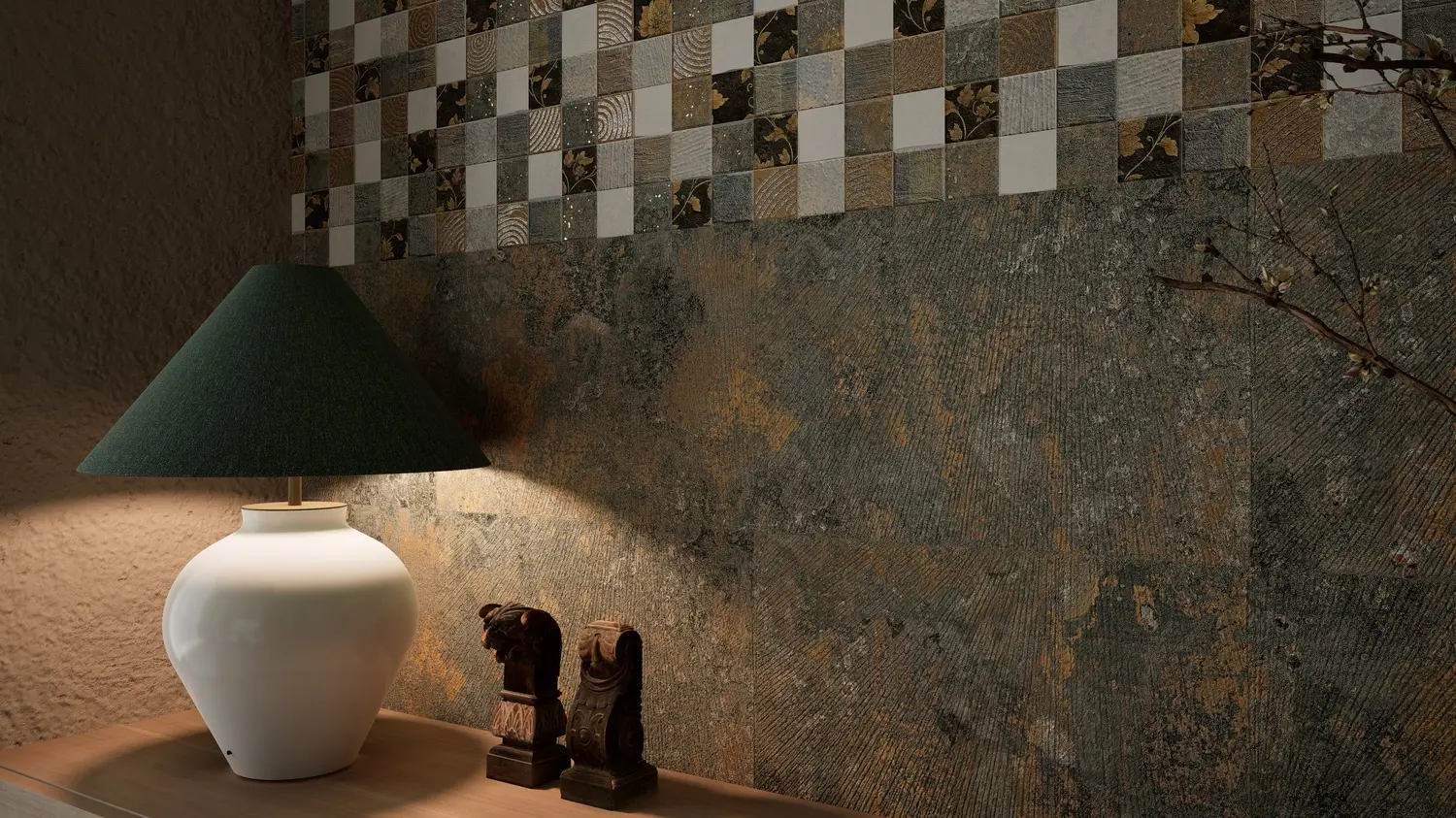

Designer wall tiles: how to choose a design that suits your space
A designer wall tile carries a real design: a pattern, a texture or an image printed into the glaze, made to be the feature of a wall. Here is how to choose one that suits your room, your light and the way you live.
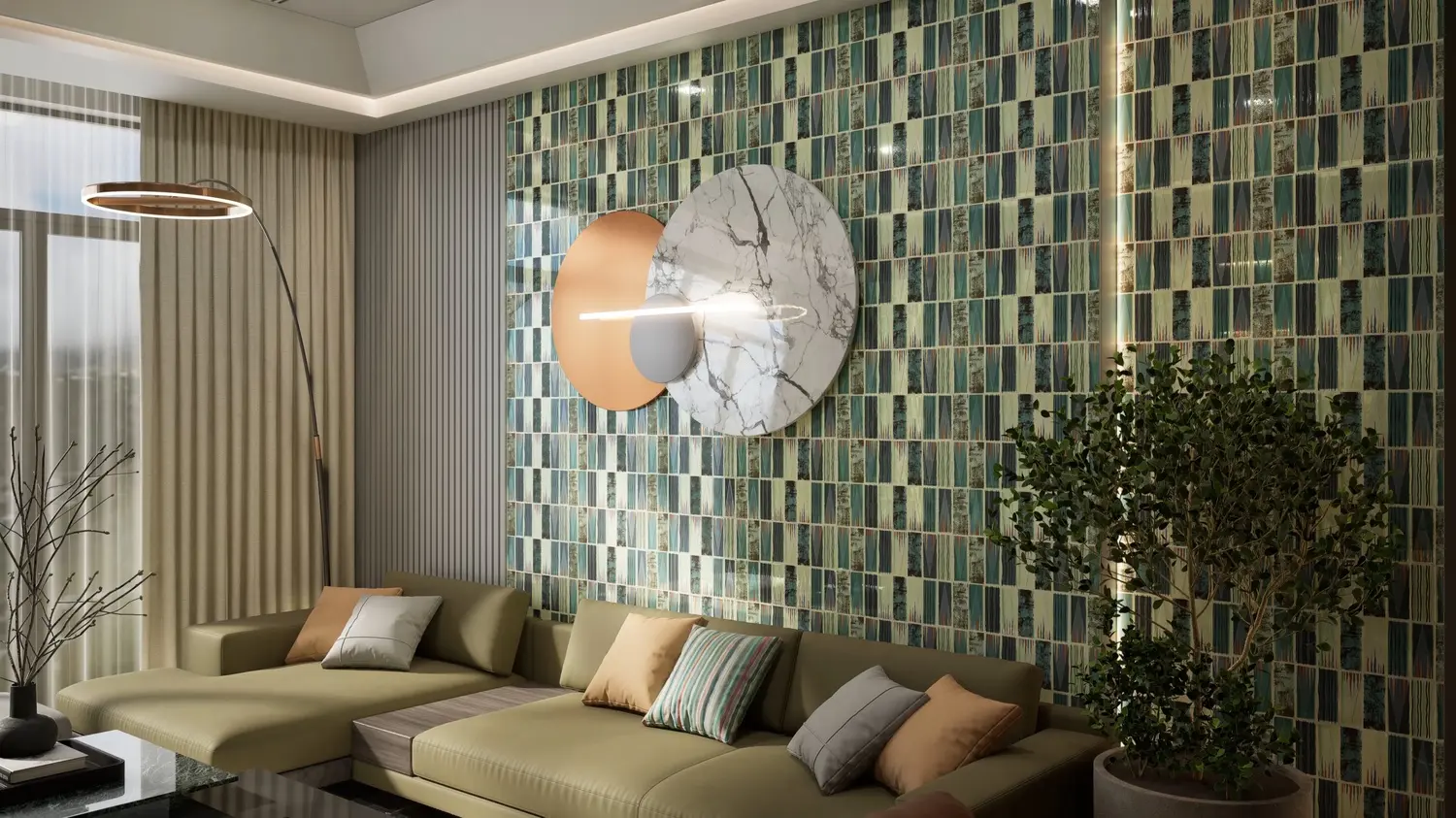
A plain tile covers a wall. A designer wall tile is chosen to be seen: a pattern, a stone or brick look, a botanical print or a geometric layout that gives the room its character. Most designer wall tiles made in India today are digital ceramic tiles, printed with ceramic inks and then fired, so the design lasts as long as the tile.
This guide covers what to look for, how to match a design to each room, and how to avoid the mistakes that make an expensive wall look busy.
What makes a wall tile designer
Three things separate a designer tile from an ordinary one:
- A design worth looking at. Patterns, textures and images with real detail, not a flat colour with a faint print.
- Enough variety. Good digital designs come with several faces: slightly different prints of the same design, mixed in the boxes, so a large wall does not repeat itself every few tiles. Some of our pattern and texture designs carry 64 faces.
- A plan for the wall. A strong design works best with a calm partner tile around it, so the feature has room to breathe.
Pick the look first, then the room
| Look | What it does | Where it works | Designs |
|---|---|---|---|
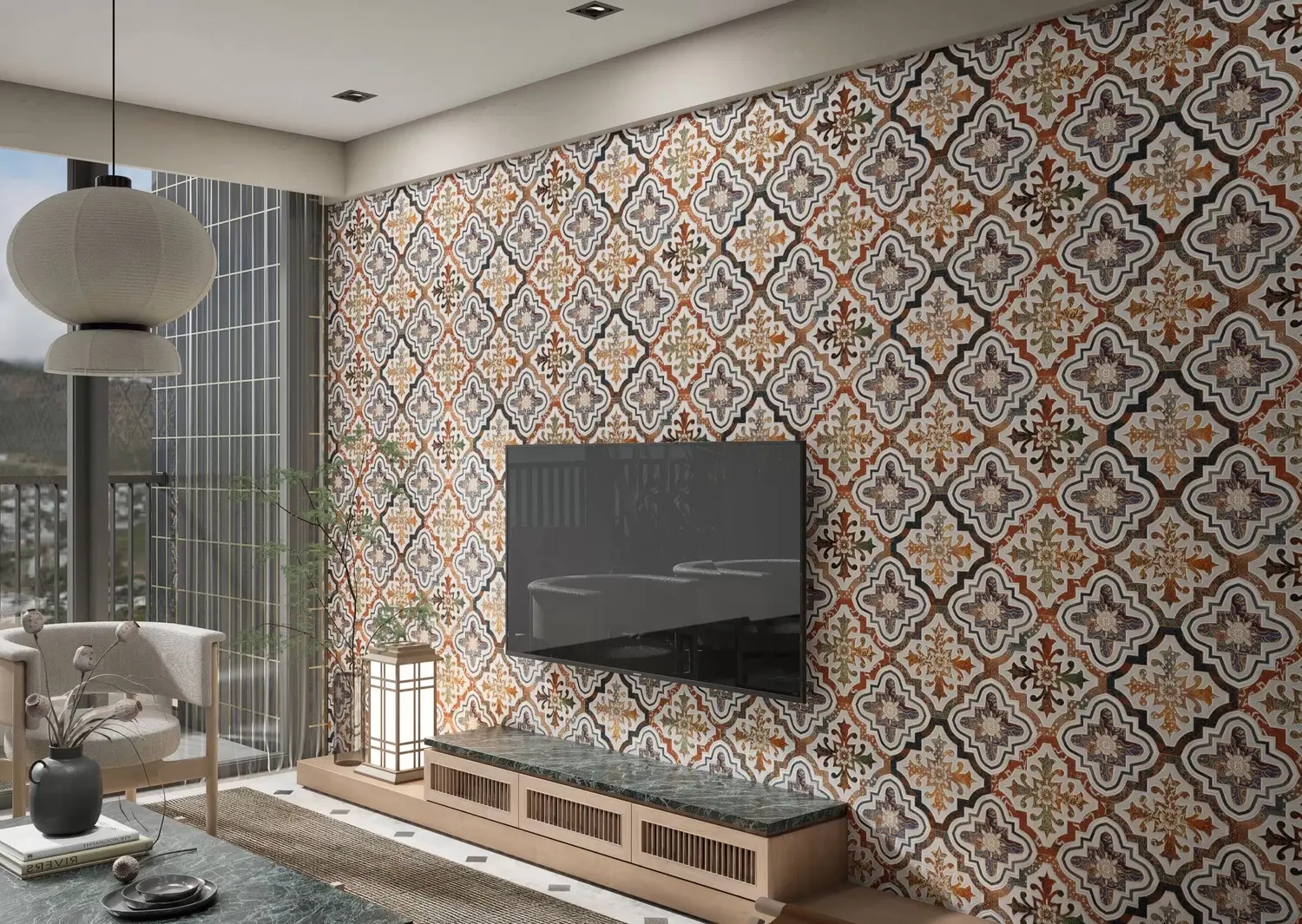
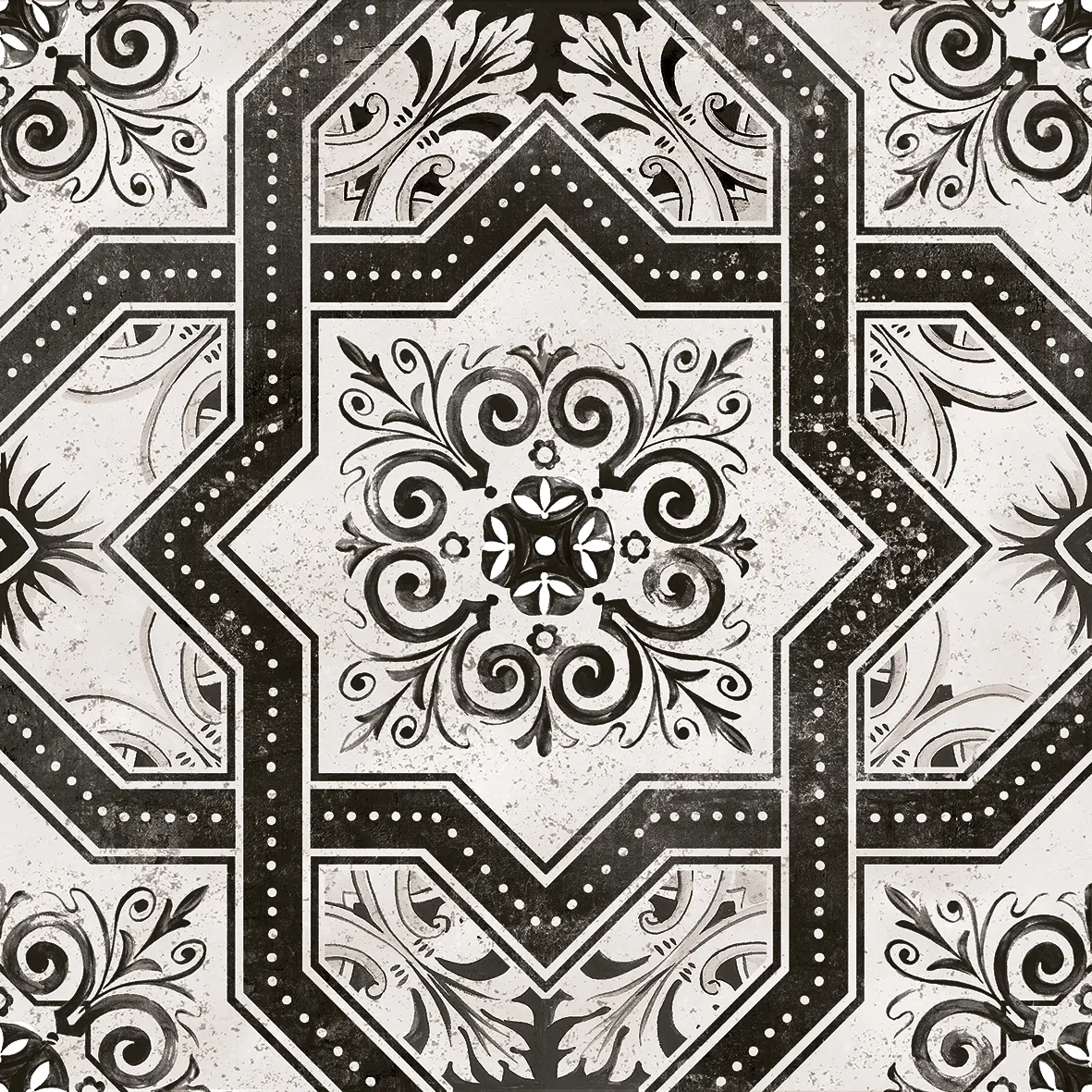
| Geometric and pattern | Adds energy and rhythm | Living rooms, TV walls, dining areas, cafes | Valia, Emola, BW 01 |
| Botanical and soft print | Calm, light, easy to live with | Bedrooms, living rooms | Velveno, Qubonic, Graph |
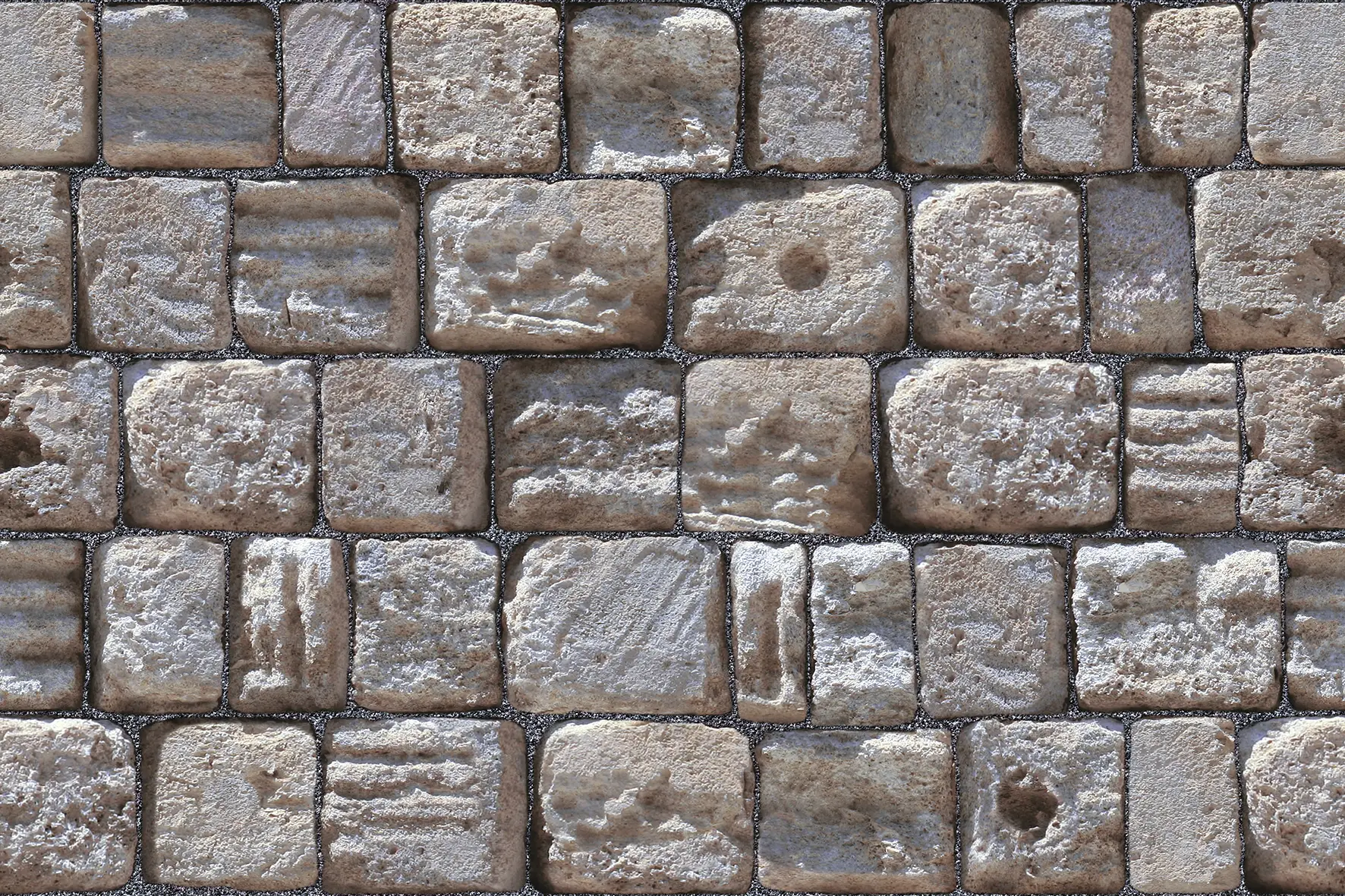
| Stone and brick | Natural texture without the weight of real stone | Feature walls, terraces, front walls | Arritage Square, Mudy Stone, Delice Bricks |
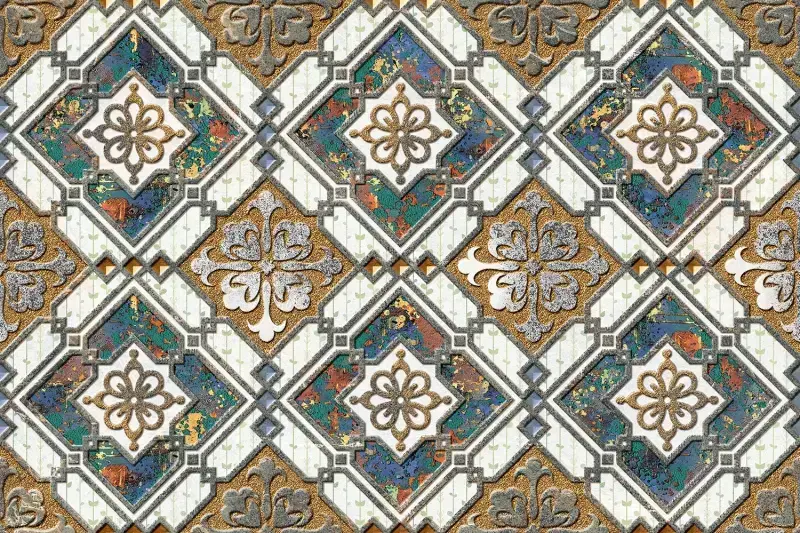
| Moroccan and cement-tile pattern | Colour and craft, a classic accent | Kitchens, bathrooms, cafes | Porto Fatima, Melisa Art, Areban |
| Devotional | Om, Ganesha, diya and script designs | Pooja rooms, mandir walls | Divyam God, Angira Ishvara, Nimohay Raghav |

Designer tiles room by room
Living room and TV wall. One wall, usually behind the TV or the sofa, carries the design and the others stay plain. A 300 × 600 mm (12 × 24 inch) tile gives fewer joints on a large wall. See the living room guide.
Kitchen. The backsplash between the platform and the wall cabinets is the place for a pattern. A glossy finish wipes clean fastest near the hob. See the kitchen guide.
Bathroom. A pattern on one wall, or as a band at eye level, with a plain tile around it. See the bathroom guide.
Bedroom. Softer prints and textures work better than bold geometry behind the bed.
Pooja room. Devotional designs made for the purpose, so the wall behind the idols becomes the focus. See the pooja room guide.
Front elevation. Stone, brick and rustic looks age well outdoors. See the elevation guide.
Five checks before you buy
- Ask how many faces the design has. More faces means less visible repetition on a big wall.
- See a real tile, not only a photo. Ask for a sample and look at it in your room's light.
- Match the finish to the room: matt hides water marks, glossy reflects light and wipes clean, rustic adds texture.
- Buy the whole wall from one batch, plus about 10% for cuts, so the shade matches.
- Plan the layout before fixing: where the pattern starts and where the cut tiles go.
More on quality in 8 checks before you buy premium wall tiles.
Sizes for designer walls
| Size | Inches | Best for |
|---|---|---|
| 300 × 300 mm | 12 × 12 | Patterns, Moroccan and mosaic looks, small walls |
| 300 × 450 mm | 12 × 18 | Kitchens and bathrooms, the standard wall tile |
| 300 × 600 mm | 12 × 24 | Large feature walls and elevations, fewer joints |
Every design is listed by size and collection on the designer wall tiles page.