
How to clean wall tiles: bathroom, kitchen, grout, hard water stains and exterior walls
How to keep glazed ceramic wall tiles and their grout clean: what to use and what to avoid, room by room, with a stain chart for hard water, oil, mould, rust, cement haze and diya soot.
Glazed ceramic wall tiles are one of the easiest surfaces in a home to keep clean. The glaze is fired into a hard, sealed layer that does not absorb water, oil or stains, so most dirt sits on the surface and wipes away. What makes a tiled wall look tired is usually the grout between the tiles, hard water marks in the bathroom, a film of oil in the kitchen, or damage from the wrong cleaner.
This guide explains how to clean wall tiles and grout room by room, what to use for each kind of stain, and what to avoid. It applies to glazed ceramic tiles such as ours, in glossy, matt and rustic finishes. For natural stone, unglazed terracotta or cement tiles, the rules are stricter, because those surfaces are porous.
What you need
- Soft microfibre cloths and a sponge with a non-scratch side
- A soft brush and an old toothbrush or grout brush
- A rubber squeegee for the shower
- A spray bottle and a bucket
- A mild, pH-neutral cleaner or a few drops of dish soap in warm water
- White vinegar, baking soda and an oxygen bleach or hydrogen peroxide, for occasional stains
- Rubber gloves
Most days, warm water with a little dish soap is all a tiled wall needs. Keep stronger products for specific stains.
The golden rules
- Start mild. Try water and a neutral cleaner first. Move to something stronger only if the stain stays.
- Protect the grout. Cement grout is softer than the tile and is dissolved by acids. Wet the joints with plain water before using any acidic cleaner, and rinse well after.
- No scratching tools. Steel wool, wire brushes and scouring powders scratch a glossy glaze and leave grey marks on a matt one.
- Never mix cleaners. Bleach mixed with acids (such as vinegar or toilet acid) or with ammonia releases toxic gas. Use one product at a time and rinse between them.
- Rinse and dry. Cleaner left to dry leaves a film that attracts dirt. Rinse with clean water and wipe dry, especially on glossy tiles.
- Test first. Try any new product on a spare tile or a hidden corner.
Glossy, matt and rustic finishes
- Glossy tiles show water spots and smears more than dirt. Clean with a damp microfibre cloth, then buff dry with a second cloth for a streak-free shine. Avoid abrasive pads, which leave fine scratches that dull the gloss over time.
- Matt tiles hide water marks and fingerprints, but their fine texture can hold dirt. Use a soft brush or a sponge with a neutral cleaner, working in small circles, then rinse.
- Rustic and stone-look tiles have a deeper texture, like real stone. Scrub with a soft nylon brush and plenty of water, and rinse well so cleaner does not settle in the texture.
Our digital wall tiles guide explains the three finishes in more detail.

Cleaning bathroom wall tiles
Bathrooms face soap scum, hard water, damp and, if ventilation is poor, mould. A little routine prevents all four.
- After every shower: run a squeegee down the shower wall and glass. It takes thirty seconds and removes most of the water that would otherwise dry into white spots.
- Every week: spray the walls with a neutral bathroom cleaner or warm soapy water, wipe with a sponge, scrub the grout lines in the shower with a brush, rinse and dry.
- Every month: treat hard water marks and check the grout and silicone for mould.

Removing hard water stains
Many Indian cities, and most homes on borewell water, have hard water. As it dries, it leaves white spots and a chalky film of calcium and magnesium salts on tiles, taps and glass. Acids dissolve these salts.
- Wet the grout lines with plain water first.
- Spray a mix of one part white vinegar to one part warm water onto the marks, or use a bathroom descaler made for tiles.
- Leave it for five to ten minutes, no longer.
- Wipe with a sponge, using the non-scratch side on heavy deposits.
- Rinse thoroughly with clean water and dry.
For thick scale, repeat rather than leaving the acid on longer. Do not use undiluted toilet acid (often sold as tezab or hydrochloric acid) on wall tiles: it eats into cement grout, can mark the glaze, corrodes chrome fittings and gives off harsh fumes.
Soap scum
Soap scum is a greasy grey film of soap and hard water salts. A paste of baking soda and a little water, rubbed on with a soft sponge, lifts it; follow with the vinegar mix if hard water is mixed in, then rinse. Switching from bar soap to liquid soap or body wash also reduces it.
Mould on grout and silicone
Black or grey spots in the grout and along silicone joints are mould, which grows where the wall stays damp. Spray the joints with hydrogen peroxide or a solution of oxygen bleach, leave for ten to fifteen minutes and scrub with a grout brush. A diluted chlorine bleach also works, used alone in a ventilated room. If mould has grown into the silicone itself, cut the silicone out and replace it. Then deal with the cause: run an exhaust fan during and after showers, and squeegee the walls.
Cleaning kitchen wall tiles
The backsplash behind the hob collects a thin film of oil mixed with dust and steam. Wiped quickly, it comes straight off; left for months, it turns sticky and yellow.
- Daily: wipe the backsplash after cooking with a damp cloth and a drop of dish soap.
- Weekly: wash the whole backsplash with warm water and dish soap, which is made to cut grease, then rinse and dry.
- Built-up grease: spray a kitchen degreaser, or apply a paste of baking soda and water, leave for ten minutes, and scrub gently with a soft brush. Rinse with hot water.
- Turmeric and masala stains on grout: a baking soda paste or oxygen bleach lifts most of them; the glazed tile face does not absorb them.
Glossy tiles behind a hob wipe clean in one pass, which is why they are popular there. Matt kitchen tiles need a soft brush now and then to lift oil from their texture. If your grout keeps staining, consider an epoxy grout when you next retile, or seal the existing cement grout. The kitchen wall tiles guide covers finishes and grout for kitchens.

Cleaning grout
Grout is the part that changes colour over the years, because cement grout is slightly porous and absorbs dirt. To bring it back:
- Brush the joints with warm water and a neutral cleaner, using a stiff nylon grout brush (not a wire brush).
- For grey or stained grout, apply a paste of baking soda and water along the joints, spray lightly with vinegar mix or hydrogen peroxide so it fizzes, wait a few minutes and scrub.
- For mould, use hydrogen peroxide or oxygen bleach, as above.
- Rinse well and let the grout dry.
Once the grout is clean and dry, a penetrating grout sealer helps it resist stains for a year or two. Epoxy grout does not need sealing. If grout is cracked, crumbling or permanently stained, it can be raked out and replaced without removing the tiles.
Living room, bedroom and feature walls
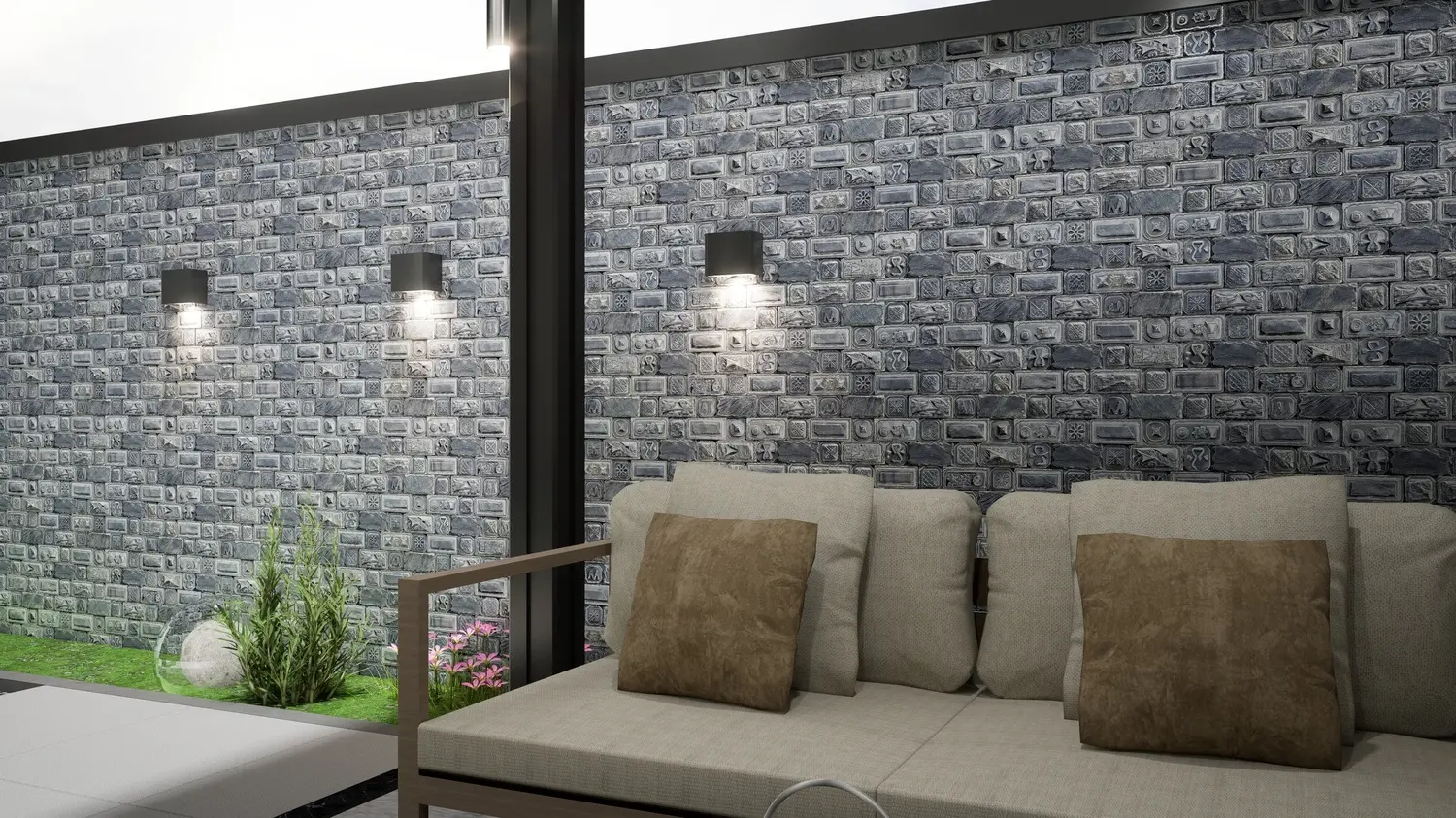
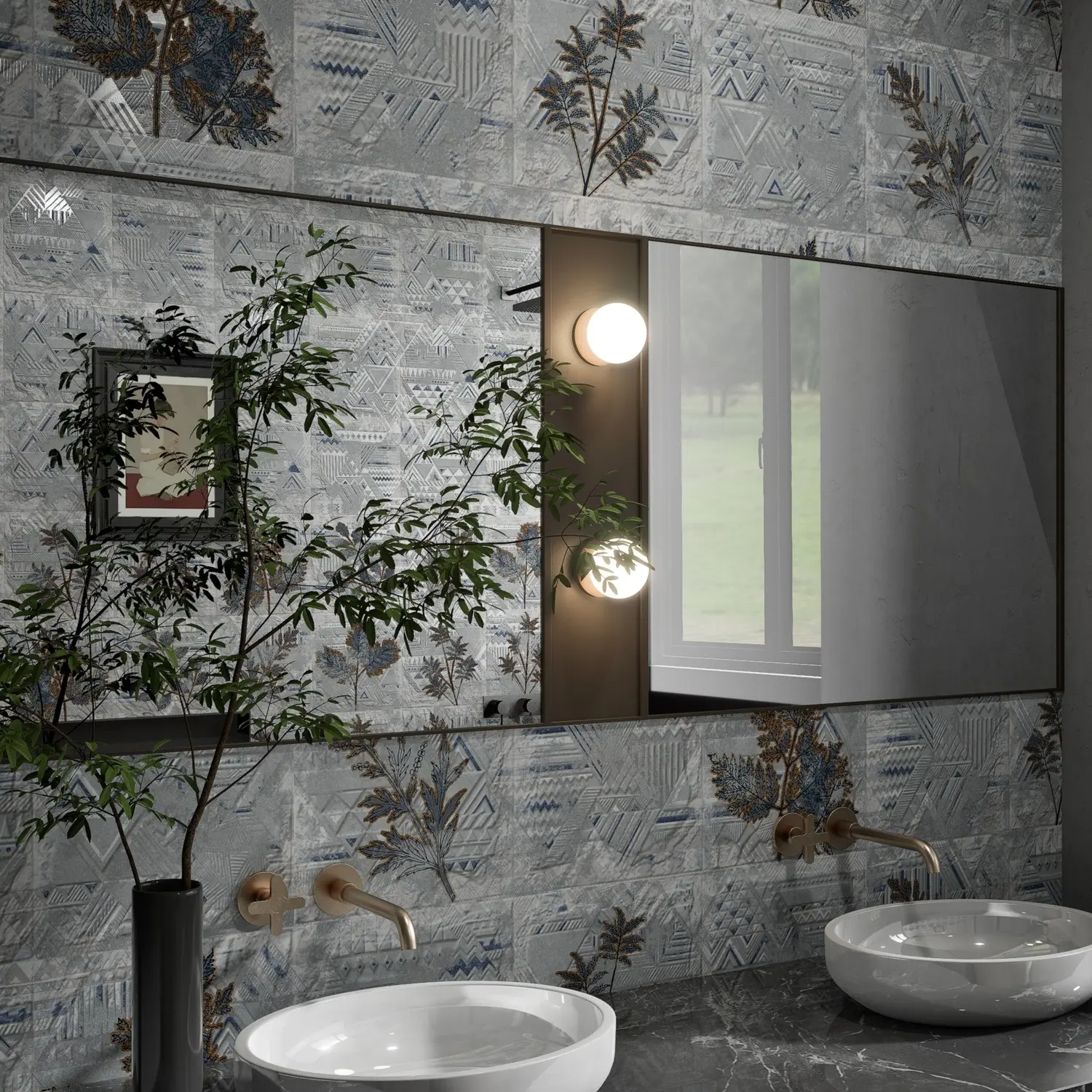
Tiles on a TV wall, behind a bed or in a hallway only gather dust and the odd fingerprint. Dust them with a dry microfibre cloth or a soft brush attachment on the vacuum, and wipe with a damp cloth when needed. On patterned walls with relief-look prints, such as carved stone or framed botanical decors, the print is flat under the glaze, so a cloth reaches everything.
Pooja room tiles
Diyas, incense and camphor leave a film of soot on the wall behind the mandir, and oil from lamps can splash. Wipe the tiles with warm water and a little dish soap, which lifts soot and oil, then rinse with a clean damp cloth. Avoid acidic cleaners near brass and copper items. The devotional images on our pooja room tiles are printed in the glaze and fired, so cleaning does not wear them away. The pooja room tiles guide covers designs and layouts.


Exterior and elevation tiles
Outside walls collect dust, rain streaks and, on shaded walls, green algae.
- Dust and streaks: wash with water, a mild detergent and a long-handled soft brush, working from the bottom up so dirty runs do not streak the clean area, then rinse from the top down.
- Pressure washers: use a low setting and keep the nozzle at least 30 cm from the wall; a strong jet close up can damage grout and force water behind tiles.
- Algae and moss: treat with a diluted bleach solution or an outdoor biocide, leave as directed, brush and rinse. Improve drainage or cut back plants that keep the wall damp.
- White powder on joints (efflorescence): salts carried out of the wall by water. Brush them off dry; if they return, find and stop the water source. A diluted efflorescence remover can be used once the wall is dry.
Matt and rustic stone-look tiles are the best choice outdoors because they hide dust between cleans. See the exterior elevation tiles guide.
Pool area tiles
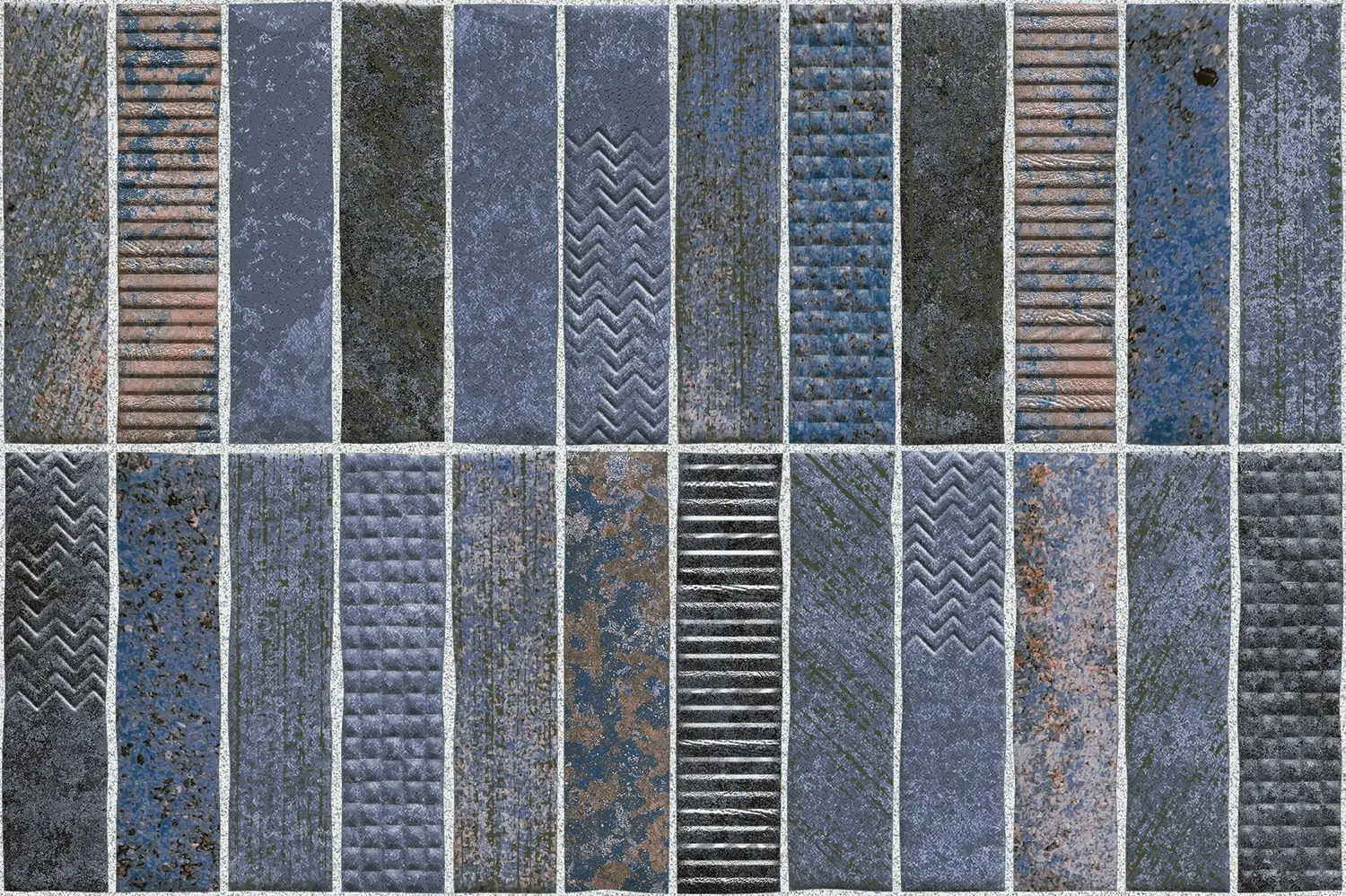
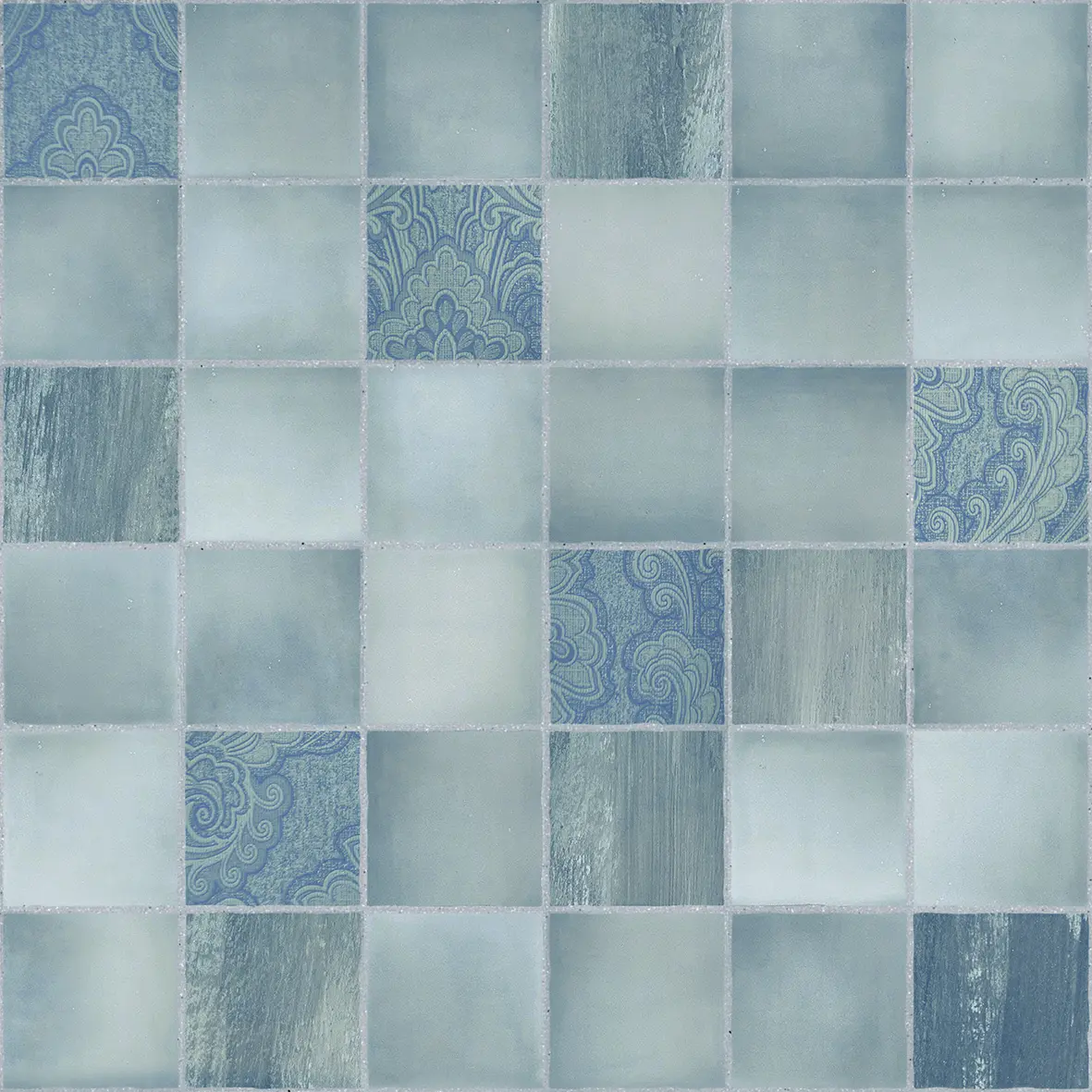
Pool and spa tiles collect a line of calcium scale at the water level, plus sunscreen and body oils. Brush the waterline weekly; use a pool tile cleaner made for scale, following the pool chemical supplier's advice so it does not upset the water balance. Our blue mosaic-look pool area tiles are glazed ceramic and clean like any other glazed tile.
Removing cement haze after installation
After new tiles are grouted, a thin grey film of cement (grout haze) often remains on the surface. Most of it buffs off with a dry cloth the day after grouting. If it stays:
- Wait until the grout has cured, usually at least a week.
- Wet the wall and the joints with plain water.
- Use a grout haze remover made for glazed tiles, diluted as the label says, with a soft brush or sponge.
- Rinse well with plenty of water, then dry.
Do not scrape cement off glazed tiles with metal blades, and do not use strong acid: it attacks the new grout. Our installation guide explains how to clean grout off during fixing, which avoids most haze.
A stain chart
| Stain | Use | Avoid |
|---|---|---|
| Hard water spots | 1:1 vinegar and water or a tile descaler, rinse | Undiluted toilet acid |
| Soap scum | Baking soda paste, then rinse | Steel wool |
| Kitchen oil | Dish soap in warm water, degreaser | Scouring powder on glossy tiles |
| Mould on grout | Hydrogen peroxide or oxygen bleach | Mixing bleach with acid or ammonia |
| Rust marks from fittings | A rust remover safe for glazed tiles, rinse | Wire brush |
| Paint splashes | Soften with water, lift with a plastic scraper | Metal blades |
| Diya soot and oil | Dish soap in warm water | Acid near brass and copper |
| Marker or pen | Rubbing alcohol on a cloth | Abrasive pads |
| Cement haze | Grout haze remover after curing | Strong acid on new grout |
Home remedies: what works and what does not
Most homes reach for the same few things. Here is how they behave on glazed ceramic tiles:
- Lemon juice is an acid, like vinegar. It removes light hard water marks, with the same care for the grout: wet the joints first and rinse well.
- Baking soda is a mild abrasive and alkaline. It is safe on the glaze and good for grout, soap scum and grease. On glossy tiles, use it as a paste with a soft sponge, not a scrubber.
- Dish soap cuts grease and soot and is the best everyday cleaner. Rinse it off, or it leaves a slippery film.
- Phenyl and floor disinfectants clean and disinfect, but many leave a film on glossy walls. Dilute as the label says and wipe with plain water after.
- Kerosene or diesel is sometimes used on oily kitchen walls. Avoid it: it leaves a greasy, flammable film and a smell, and dish soap does the job.
- Salt is a coarse abrasive and can scratch a glossy glaze; use baking soda instead.
- Toothpaste works on small marks on grout as a gentle abrasive, but a baking soda paste does the same for far less.
- Bleach powders and scouring powders contain hard grit. Keep them off glossy tiles.
Whatever you use, the order is the same: the mildest thing first, a short contact time, a thorough rinse and a dry wipe.
Before the monsoon and before festivals
Two times of year deserve a deeper clean. Before the monsoon, wash exterior walls, check the grout and silicone around windows and on terraces, and re-seal or re-grout any open joints, so rain does not get behind the tiles. Before Diwali and other festivals, when most homes clean top to bottom, deep clean the kitchen grout, descale the bathroom and wash the pooja room wall; it is also the right time to reseal cement grout for the year.
A cleaning routine
| How often | Bathroom | Kitchen | Other walls |
|---|---|---|---|
| Daily | Squeegee the shower | Wipe the backsplash | Nothing |
| Weekly | Wash walls and scrub shower grout | Wash with dish soap | Dust |
| Monthly | Treat hard water, check for mould | Degrease above the hob | Damp wipe |
| Yearly | Check grout and silicone, reseal grout | Deep clean grout | Wash exterior walls before and after the monsoon |
Choosing tiles that are easy to clean
If you are still choosing tiles, a few choices make cleaning easier for years:
- Larger tiles mean fewer grout lines: a 300 × 600 mm tile has about a third fewer joints than a 300 × 300 mm tile over the same wall.
- Glossy tiles wipe clean fastest behind a hob; matt tiles hide water marks in a bathroom.
- Mid-tone and patterned tiles hide dust and splashes better than plain white or plain black.
- A grout colour close to the tile hides minor staining.
- Epoxy grout in showers and behind the hob stays clean with almost no effort.
The tile sizes guide compares the three sizes, and premium wall tiles explains how the glaze and print affect durability.


Questions about caring for a particular Axoli design? Contact us.