
Tile trends 2026: the latest wall tile designs, colours and finishes, and how to use them
What is new in wall tiles for 2026: the colours, patterns, textures and layouts designers are choosing, which trends will last and which will date, and how to use each one at home or in a project.
Every year new tile designs arrive from Morbi, Spain and Italy, and every year people ask what the latest tiles design is. The honest answer is that tile trends move more slowly than fashion: a wall is tiled for ten or twenty years, so the trends that matter are shifts in taste that last. This guide describes the wall tile trends we see in 2026, from the designs architects and interior designers ask us for, the rooms our dealers fit and the looks that customers photograph and share.
For each trend we explain what it is, why it is popular, where it works, and how to use it so it still looks good when the trend has passed. The examples come from our own range of ceramic digital wall tiles.
The big picture: warm, natural and personal
Three ideas run through almost every trend this year:
- Warmth. Cool greys and stark white are giving way to terracotta, sand, olive, sage, rust and warm whites.
- Nature. Stone, clay, leaves and handmade textures, as people bring the outdoors in.
- Personality. Patchwork, mixed patterns and devotional or artistic walls, instead of one plain tile from floor to ceiling.
Digital printing makes all three easy: a single ceramic tile can carry the look of hand-cut stone, a field of leaves or a patchwork of patterns, at the price and weight of a tile.
1. Terracotta and earthy tones
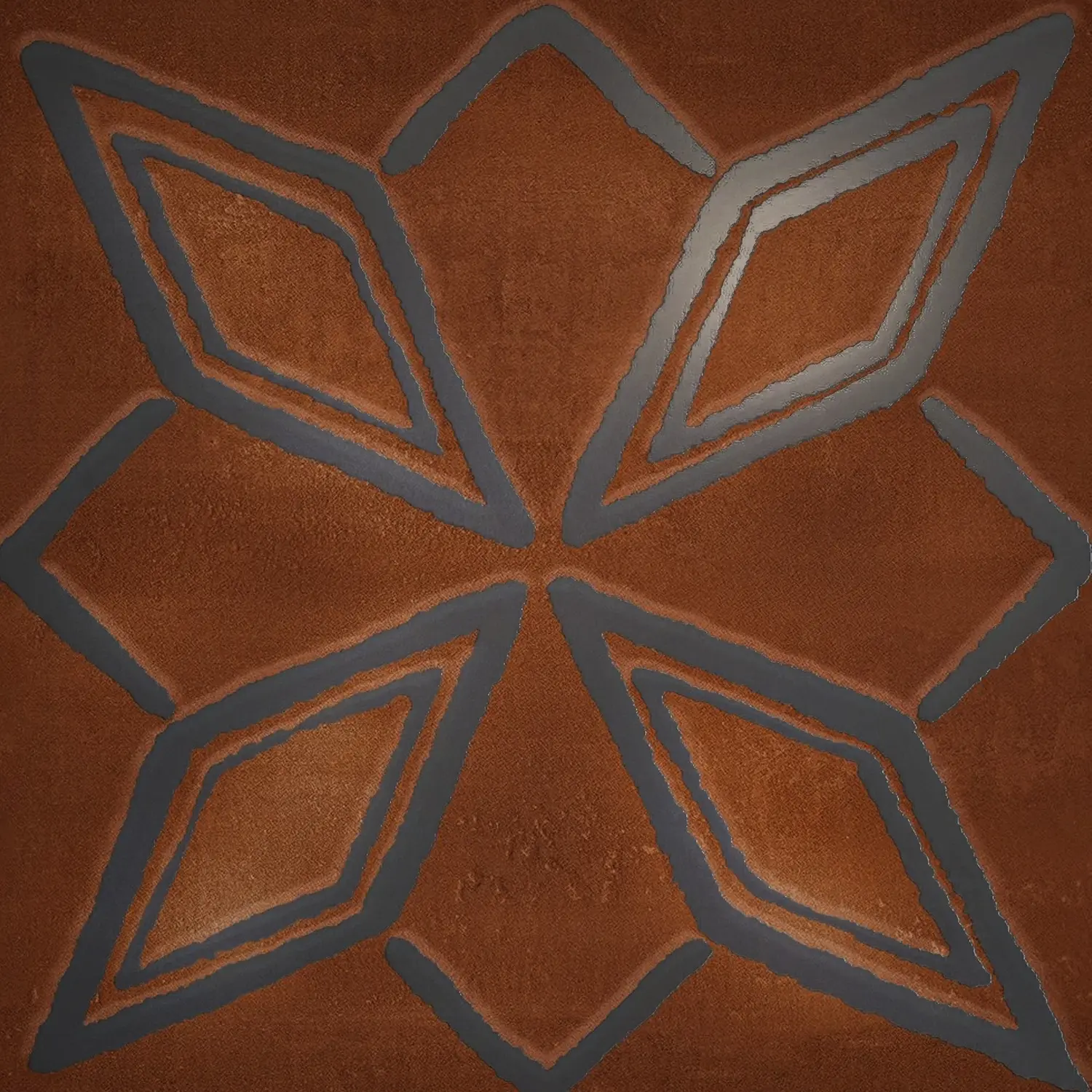
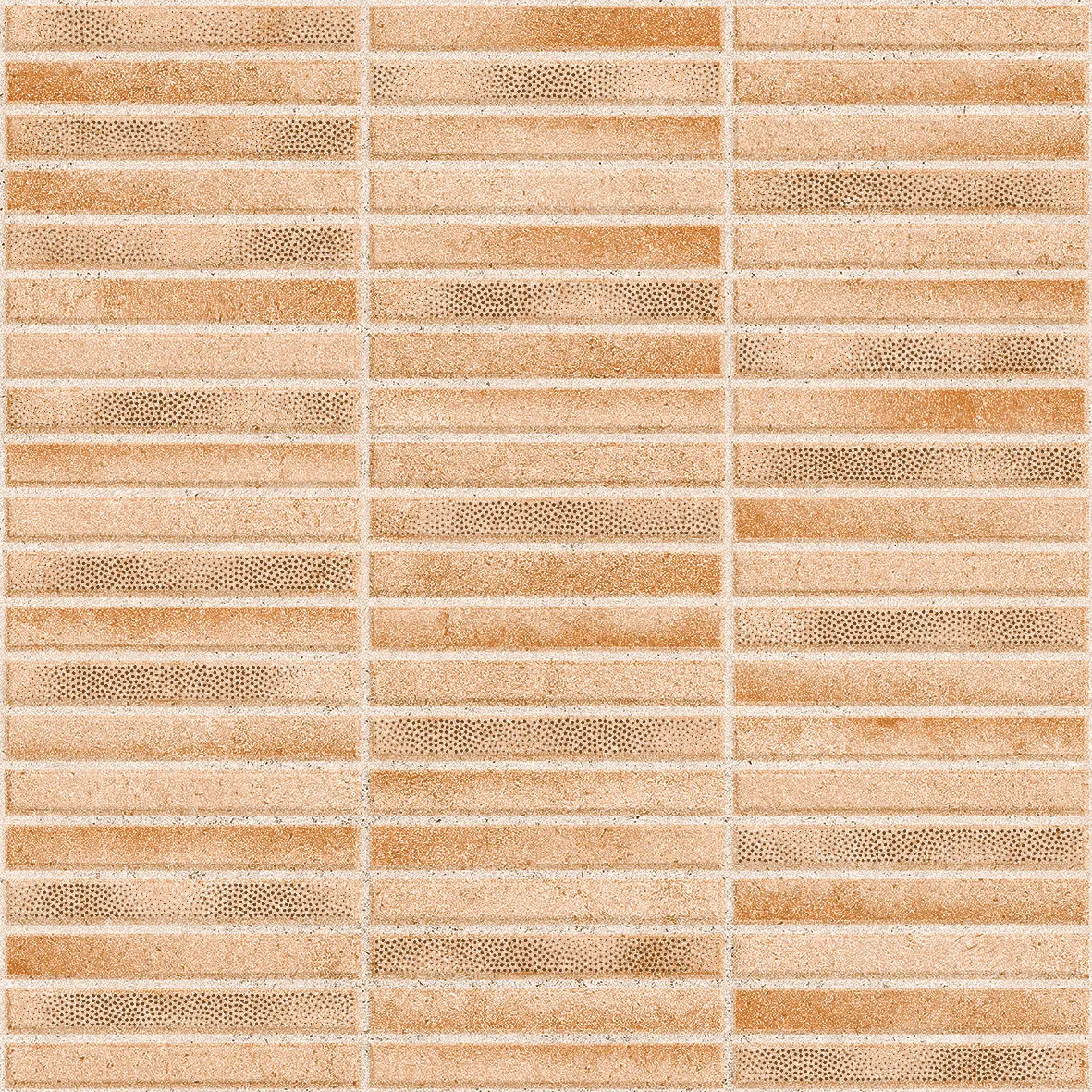
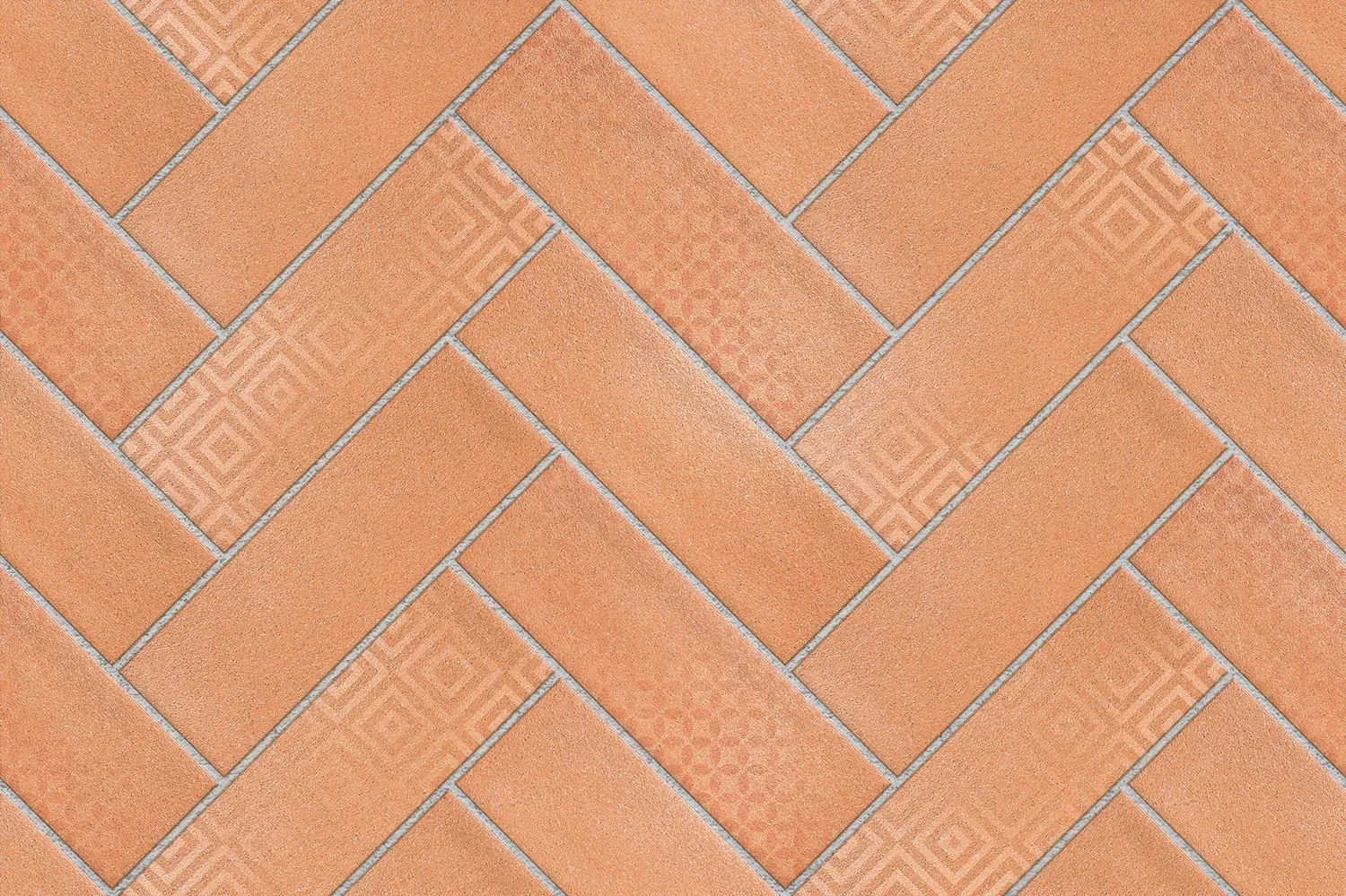
Terracotta is the colour of the moment: warm orange-brown clay, rust, peach and sand, often with a soft, uneven surface that looks hand-fired. It brings warmth to living rooms, kitchens and terraces and pairs beautifully with wood, cane, brass and plants.
- Designs: Emola (rust terracotta with a soft cloudy surface and star and lattice decors), Pigmento Beige (stacked strips in peach, sand and terracotta) and Delice Bricks (a terracotta herringbone).
- How to use it so it lasts: on one feature wall or a kitchen backsplash, with cream or warm white elsewhere.
More in our terracotta tiles guide.
2. Sage, olive and soft greens
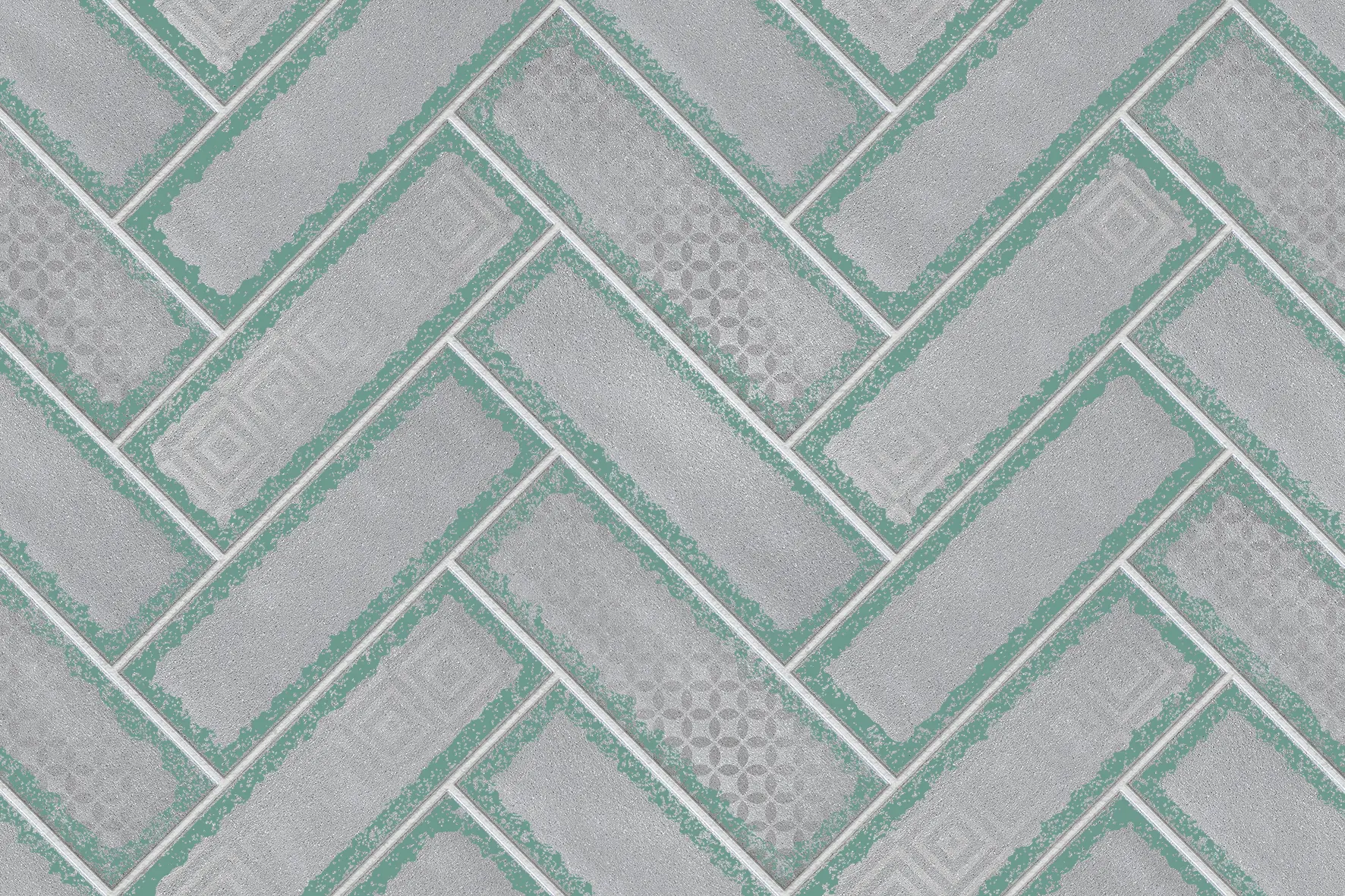
Green has moved from accent to main colour, especially in kitchens and bathrooms. Sage, olive and mint feel calm and natural and work with both wood and white.
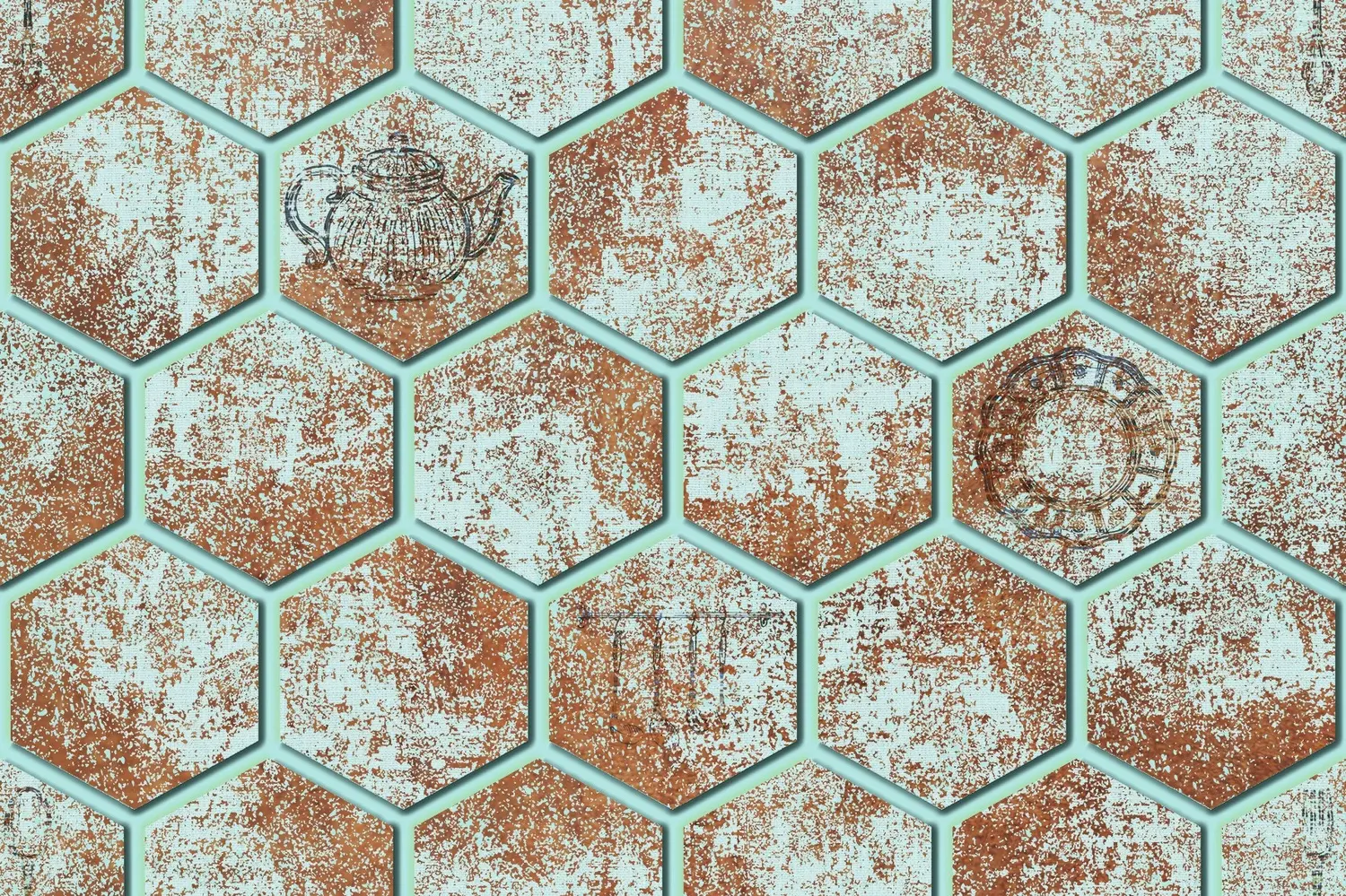
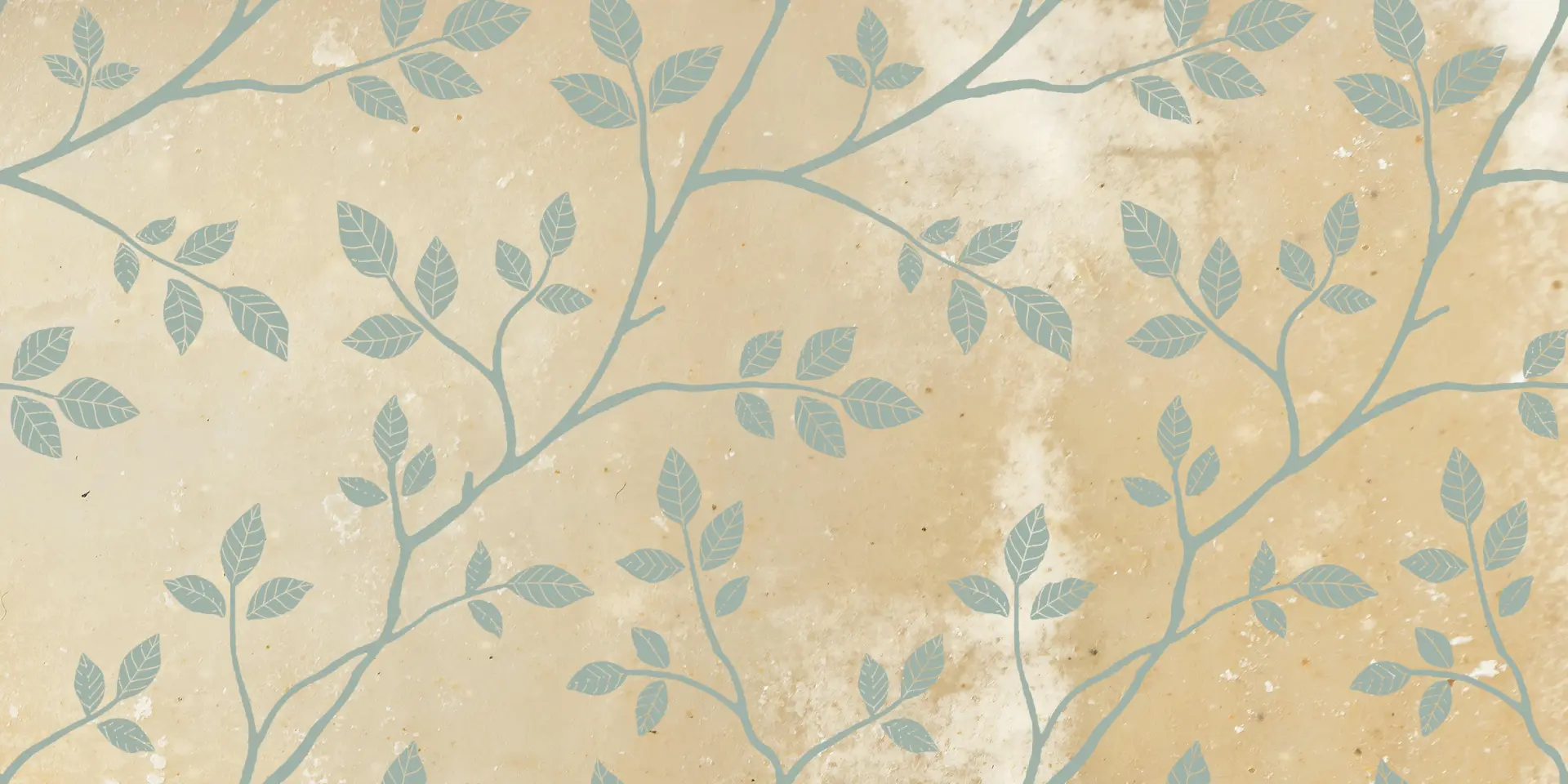
- Designs: Greva Art (a sage green herringbone), Mailono Zapta (mint hexagons on a weathered rust and aqua ground) and Velveno (sage leaf vines on beige).
- Pair with: brass taps, light oak, cream counters, terracotta pots.
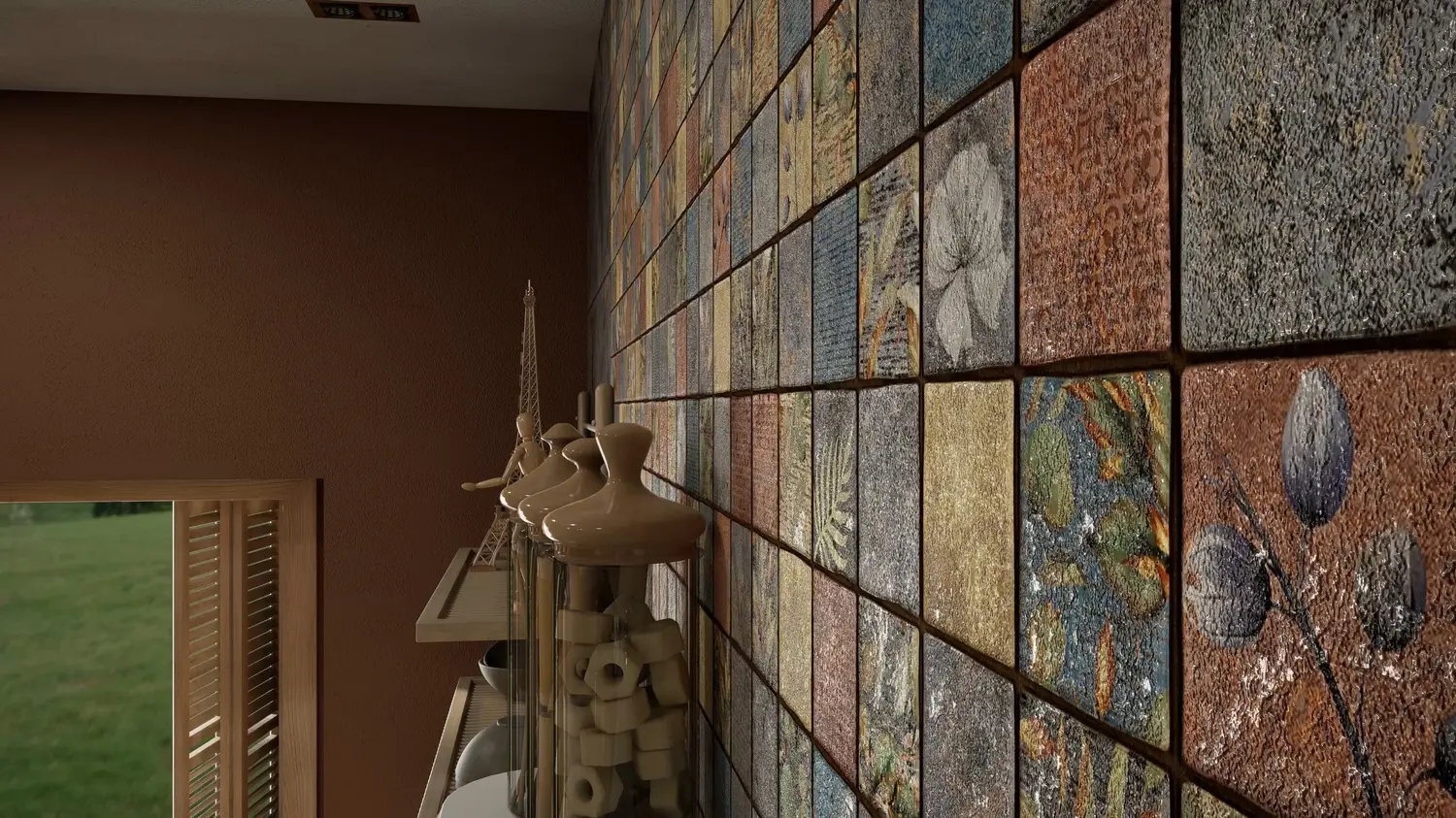
3. Patchwork and mix-and-match
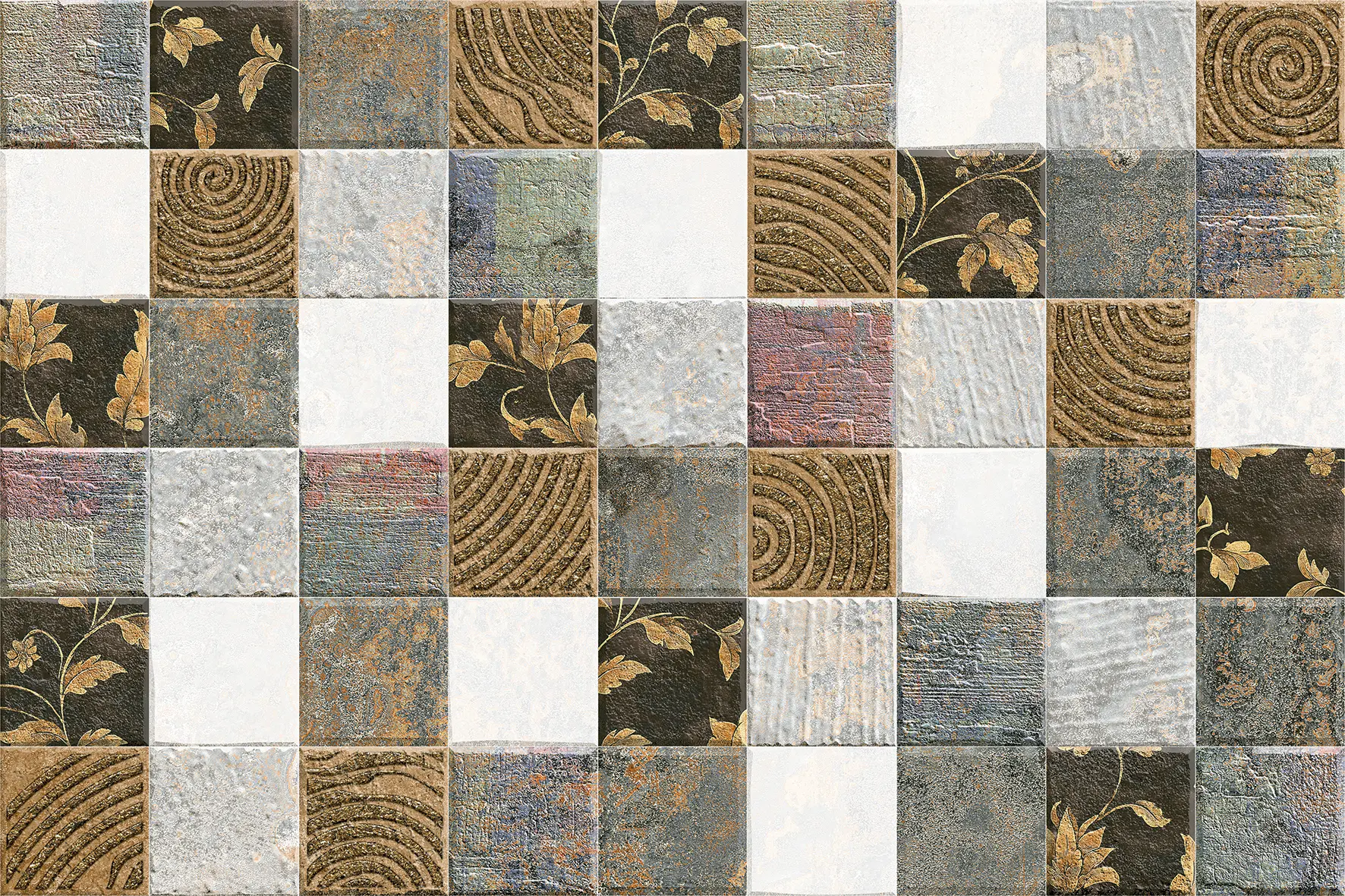
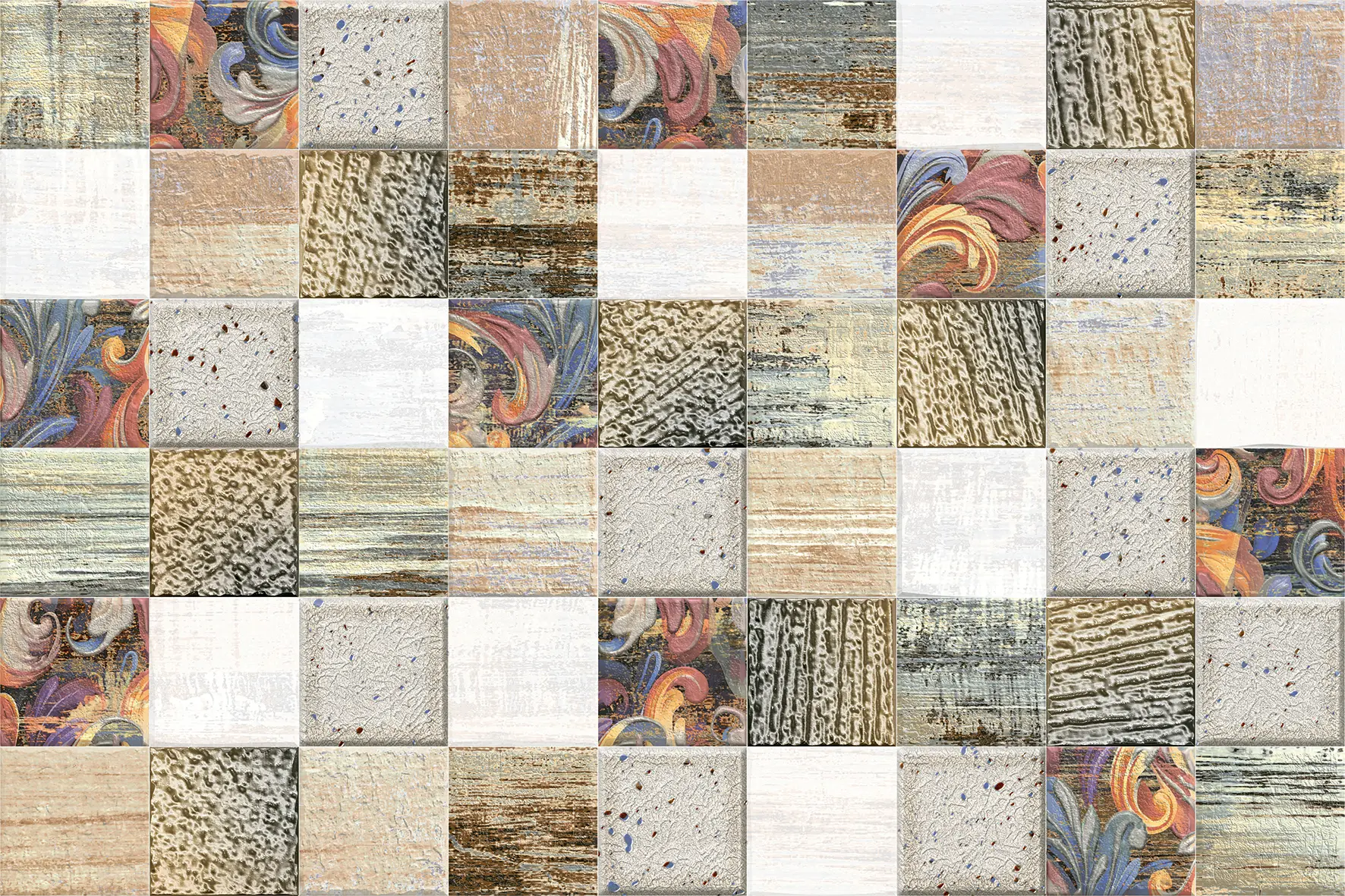
Patchwork walls mix several patterns in one design, so a wall looks collected over time, like a room tiled with leftover antique tiles. It is personal, playful and photographs well.
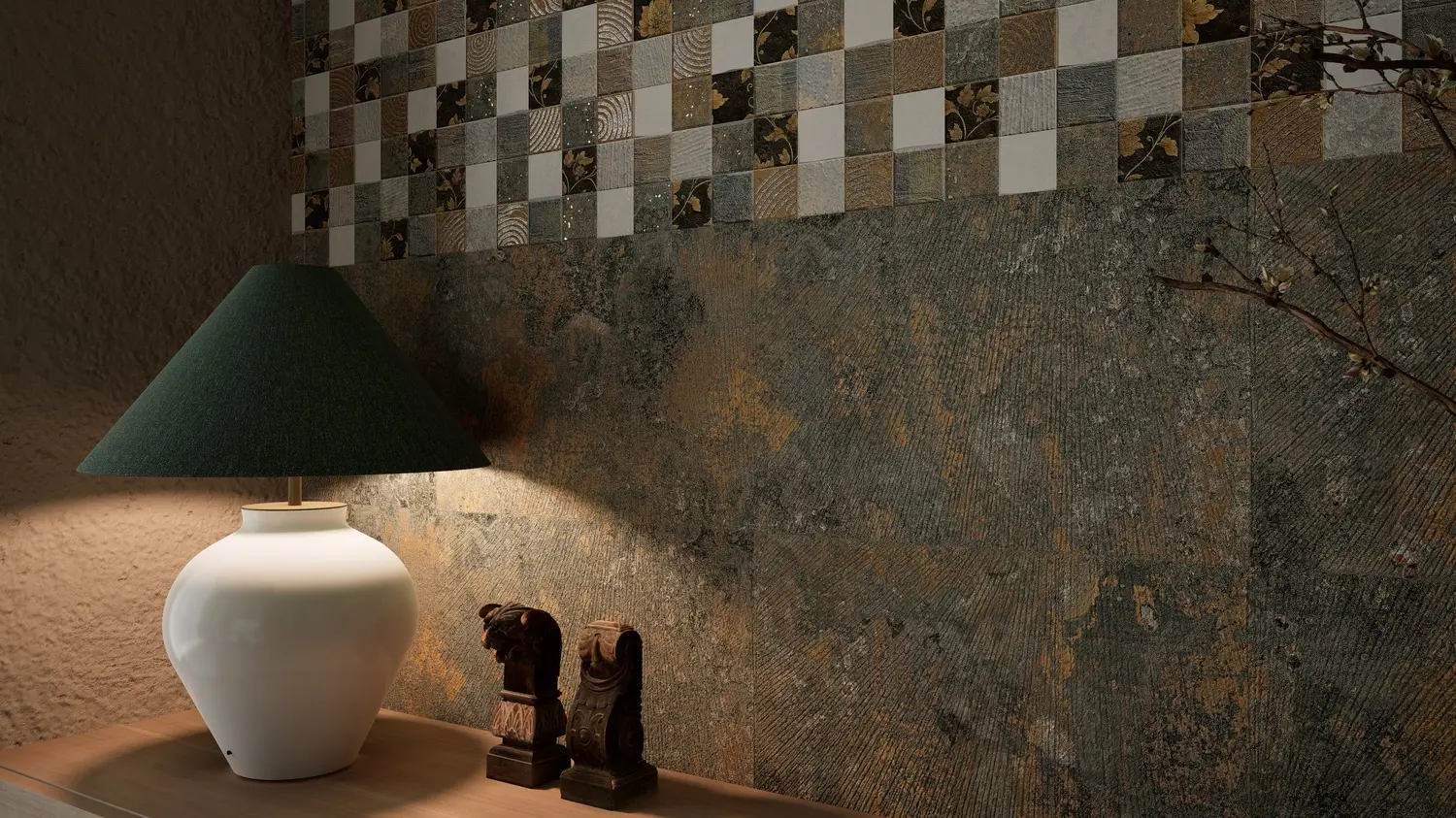
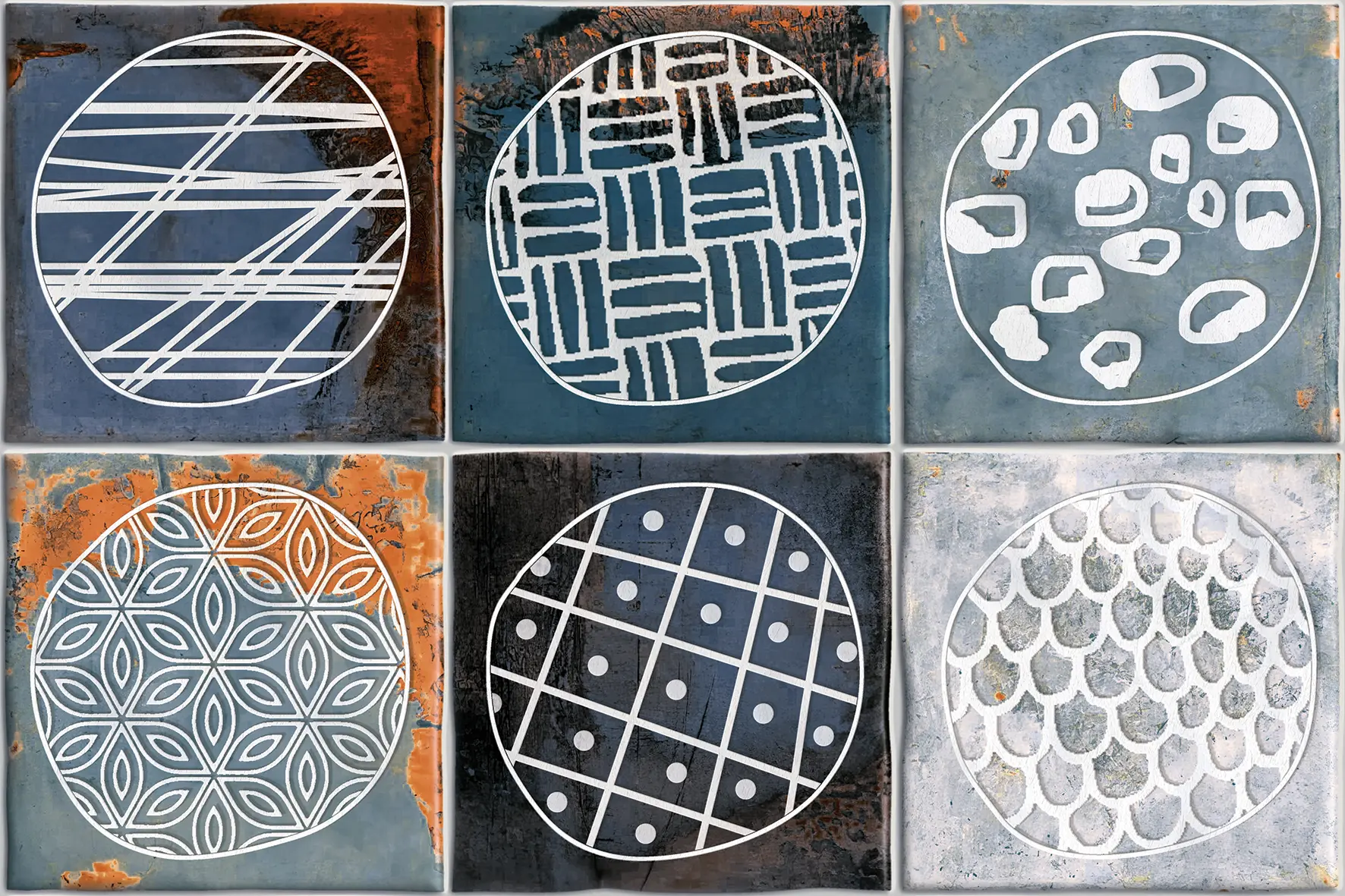
- Designs: Nordic (gold swirl, black, white and grey squares), Ronda (wood, stone, linen and floral squares), Marvecca (aged rust, charcoal, green and ochre with botanical and cross-stitch decors) and Eclipse Grove (a patchwork of circles).
- How to use it: on one wall or a band, with a plain base from the same set around it. Patchwork on every wall is too much.
4. The Moroccan and encaustic revival
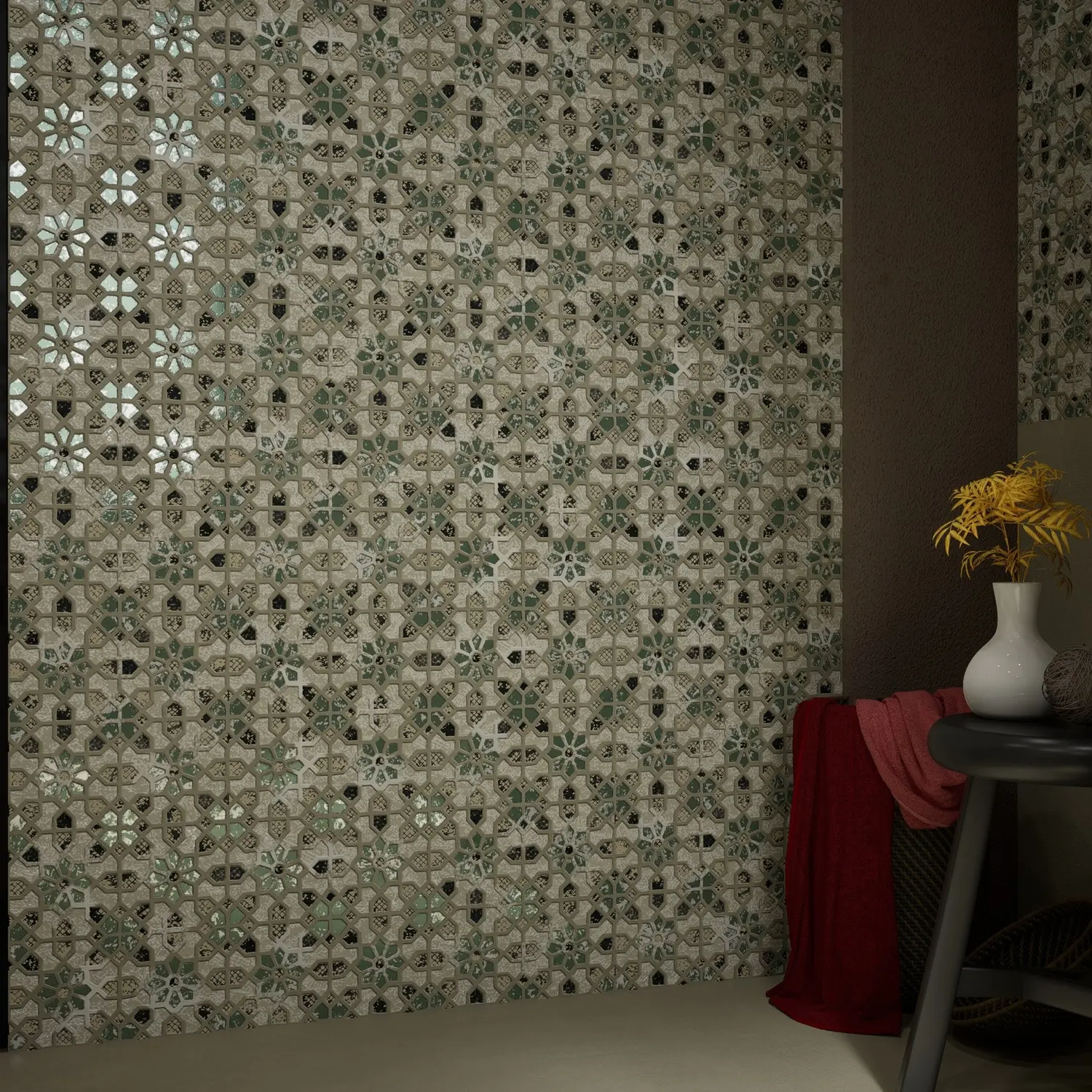
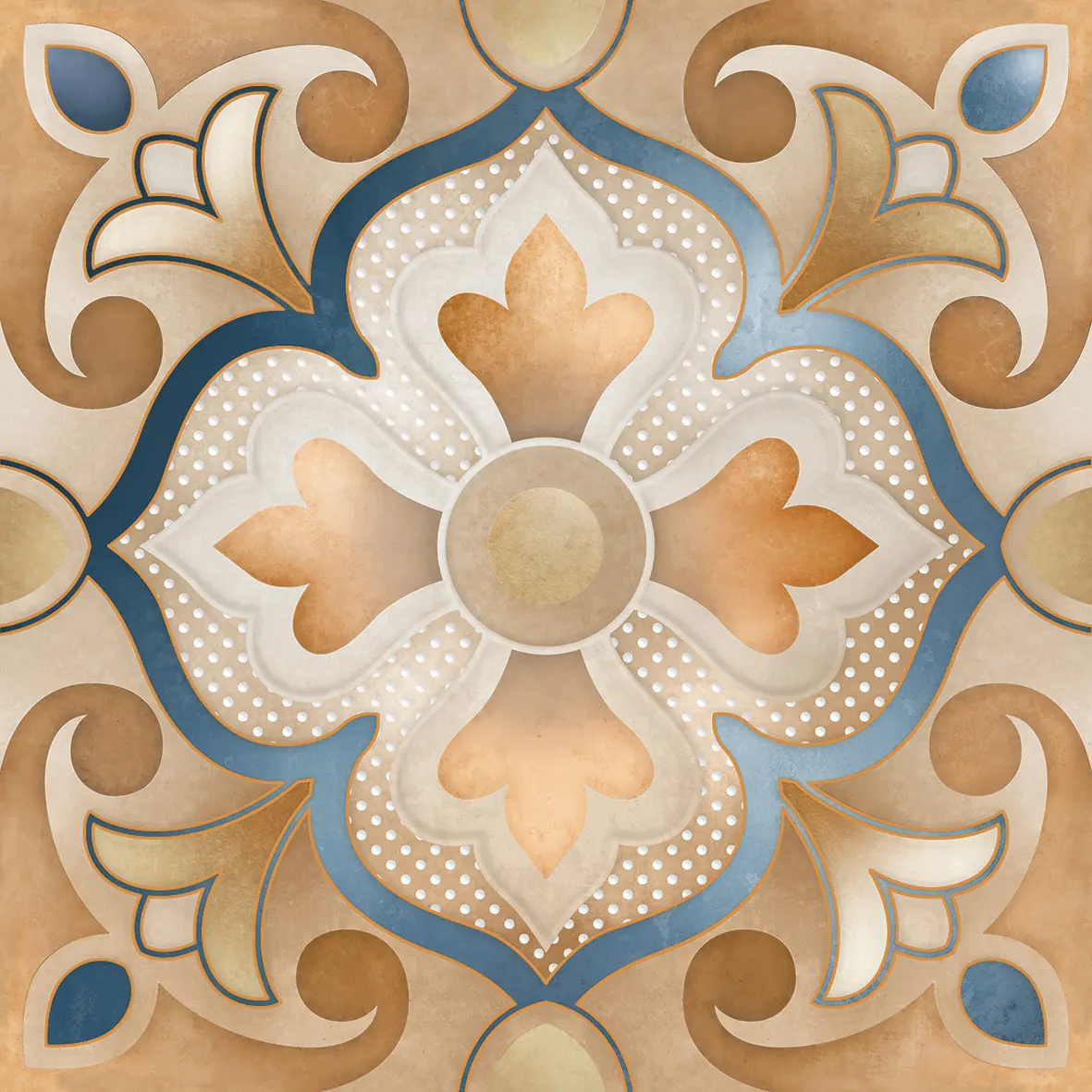
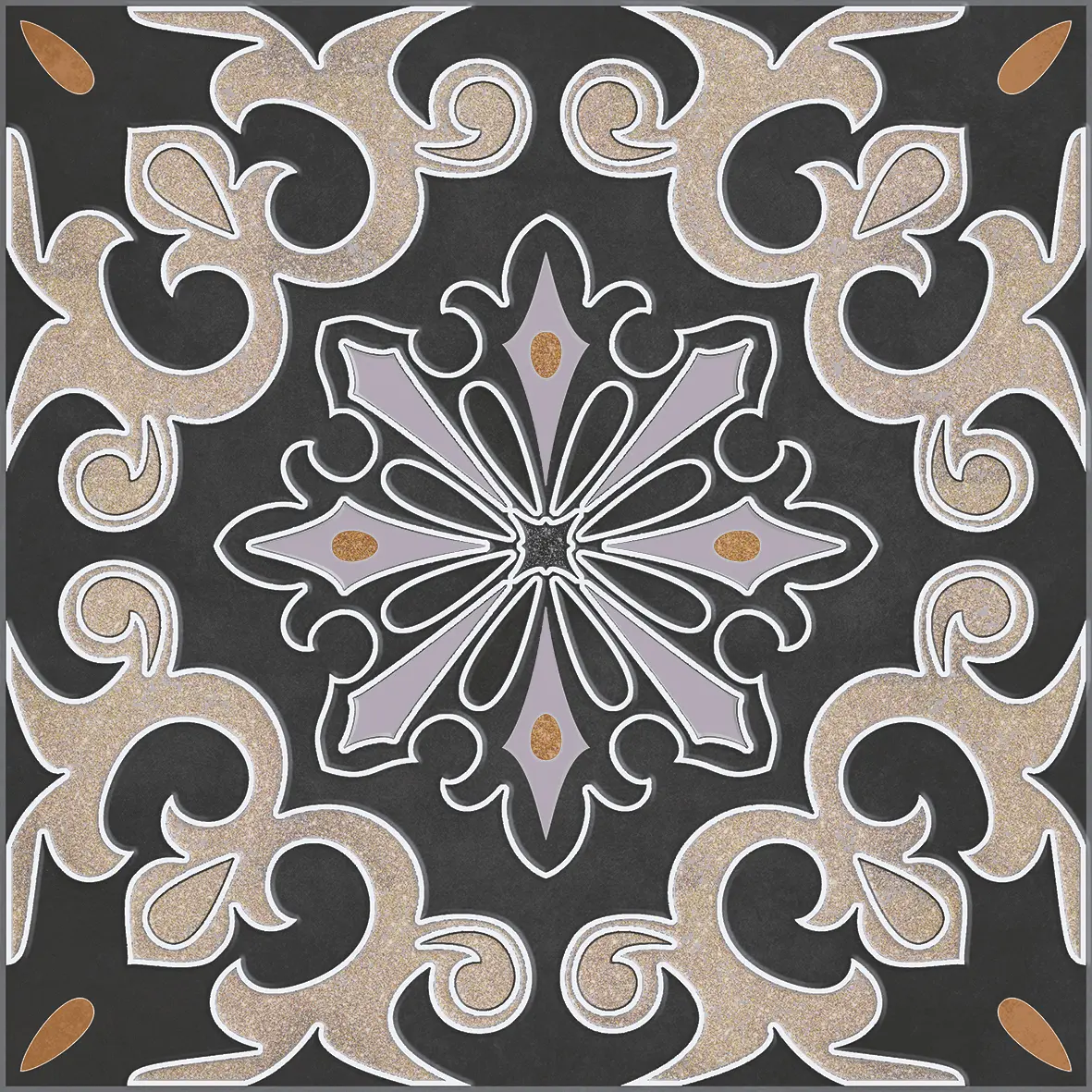
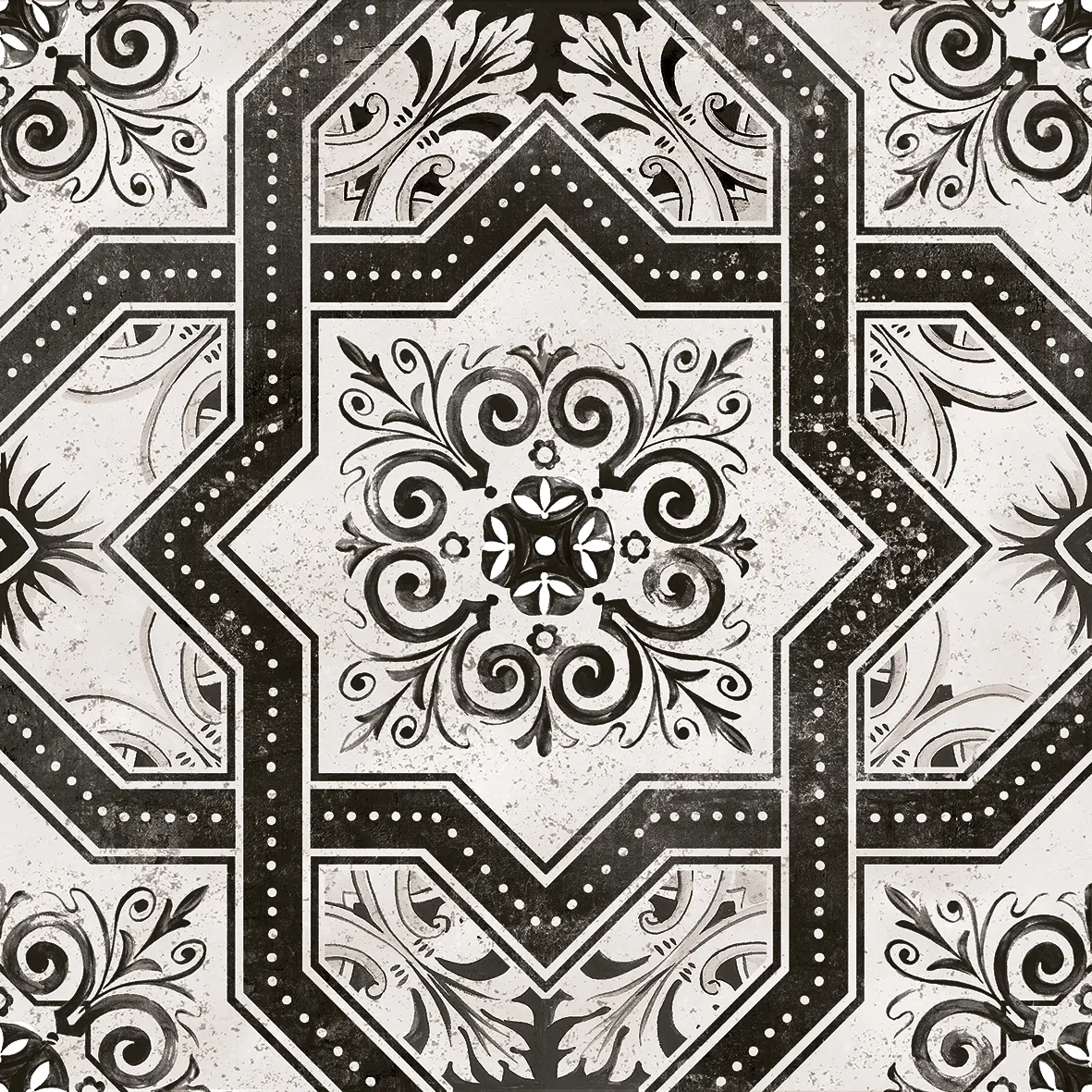
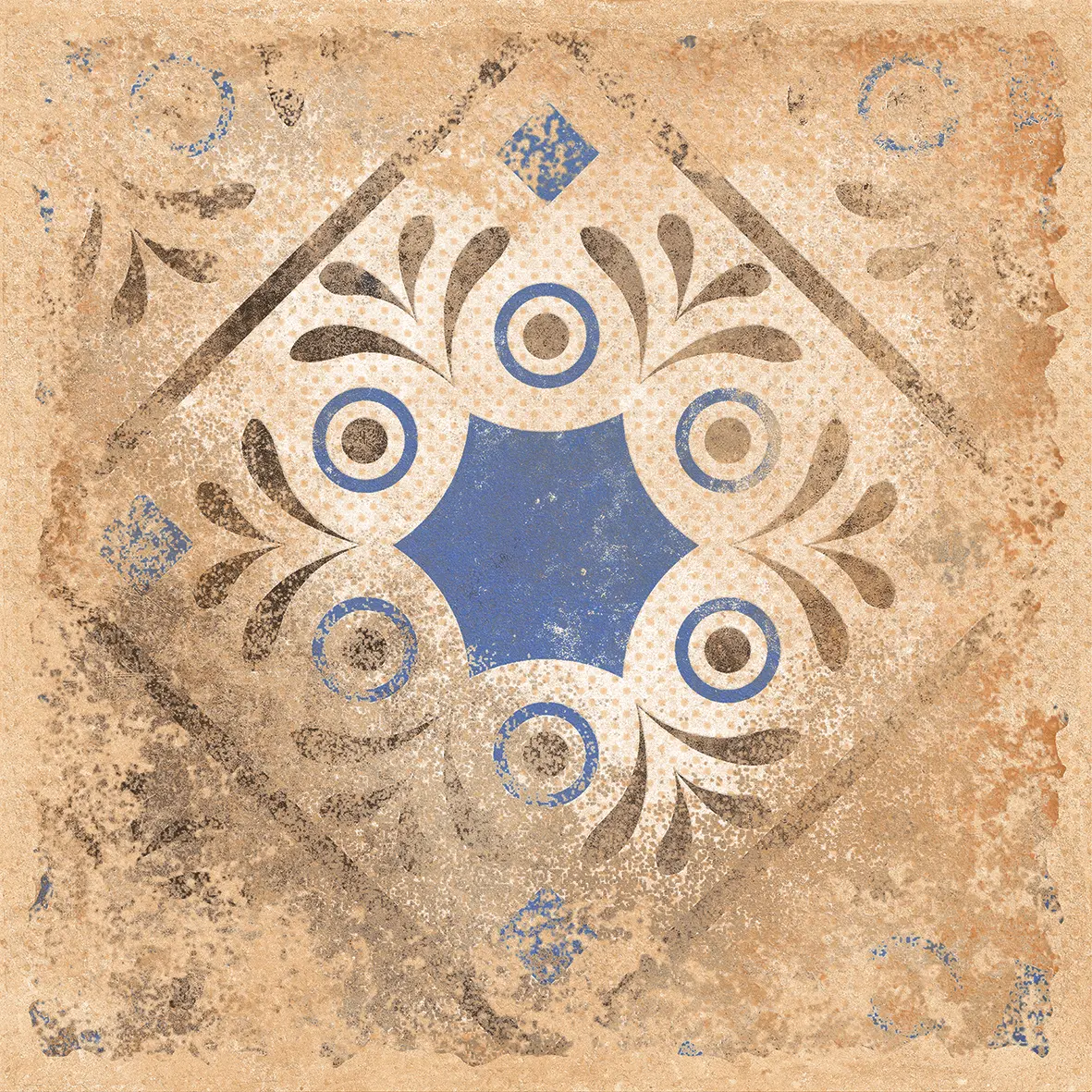
Medallions, eight-point stars and lattices from Moroccan and encaustic cement tiles are back, now printed on ceramic so they need no sealing. They are especially popular on bathroom walls, kitchen backsplashes, cafe counters and patterned floors.
- Designs: Melisa Art (orange, blue and sand), Vienna Black (beige scrollwork on black), Porto Fatima (black and white star) and Sklep Orno Art (grey and weathered gold).
- Trend within the trend: faded, sun-worn versions such as Burn Mont Art, which look like old tiles in a courtyard.
See Moroccan tiles and encaustic and cement look tiles.
5. Stacked strips and vertical lines
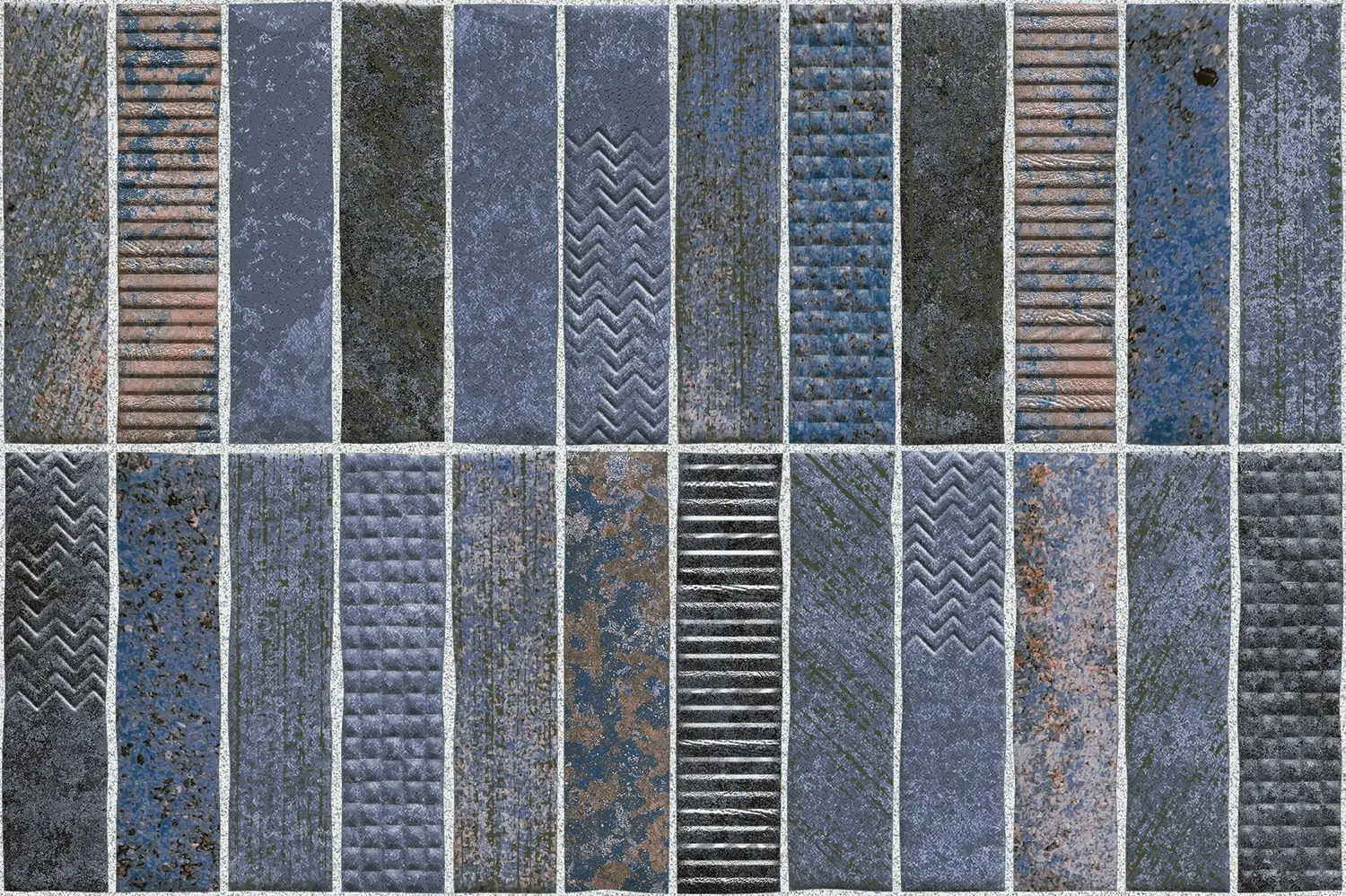
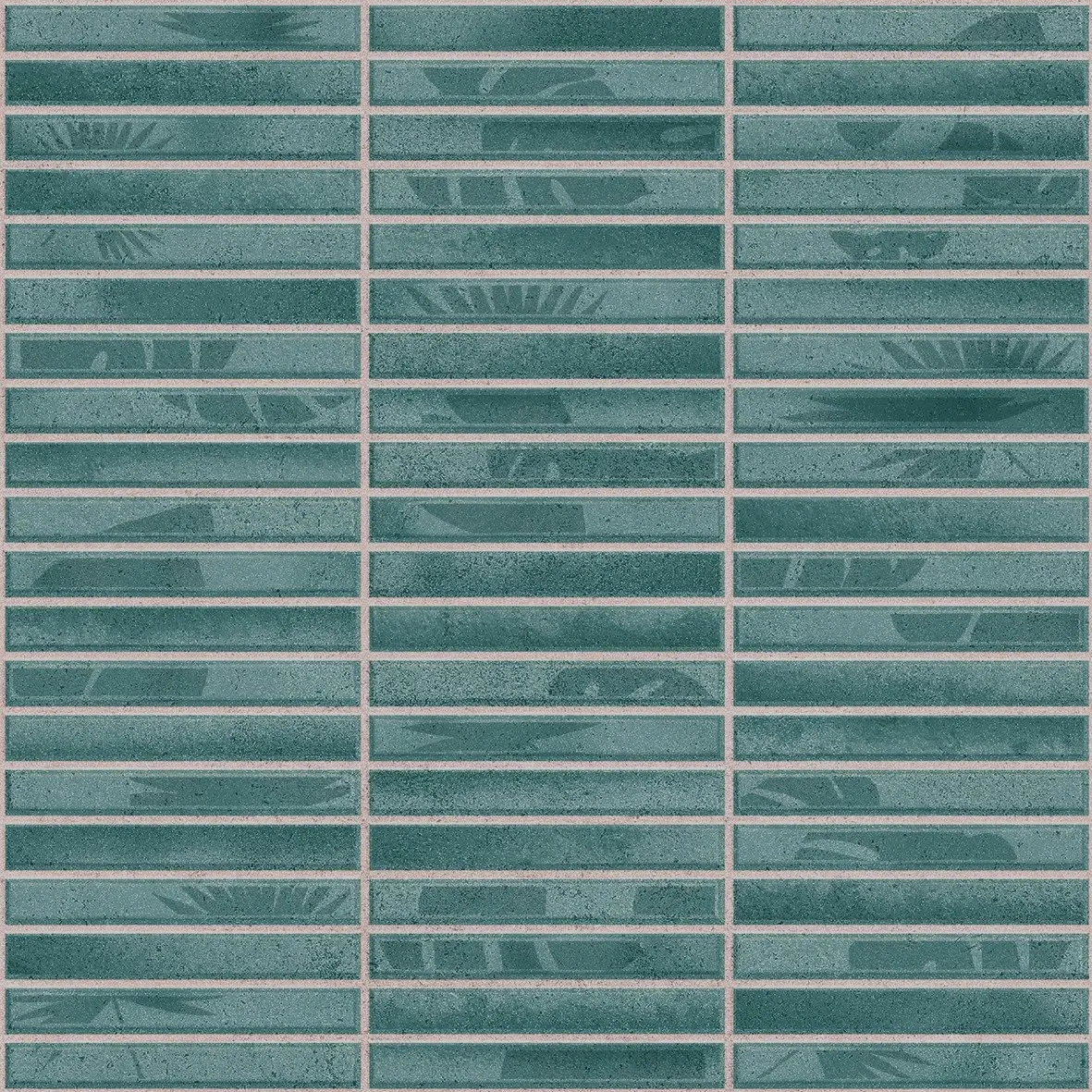
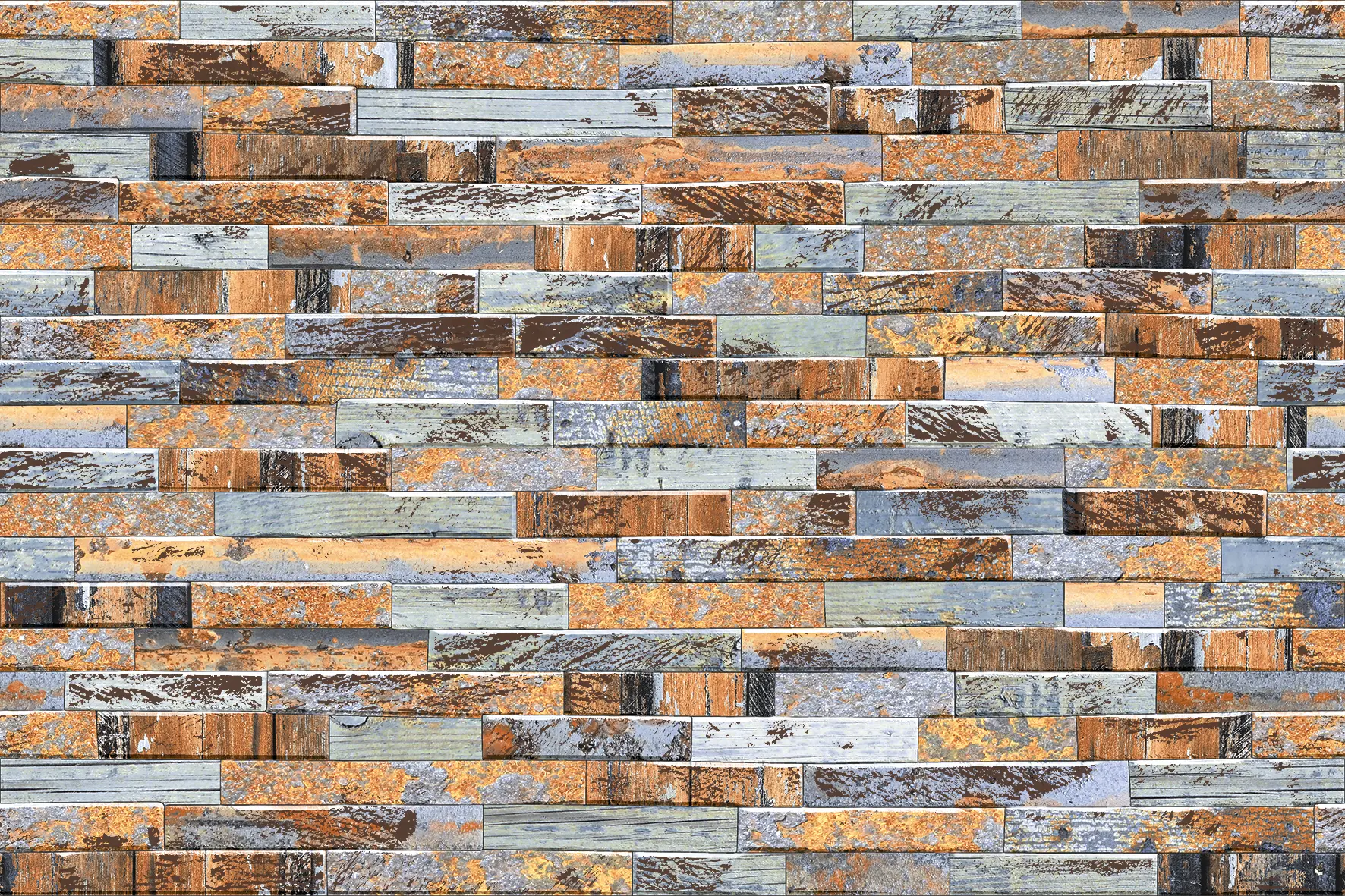
Long, thin strips stacked vertically or horizontally, sometimes called finger or stack-bond tiles, give walls rhythm and make ceilings look higher. Printing the strips onto a full tile avoids hundreds of tiny pieces.
- Designs: Textura Mist (denim blue, slate and charcoal strips), Pigmento Aqua (aqua and teal strips) and Pigmento Beige.
- Where: behind beds, TV walls, kitchen backsplashes, shelving walls.
6. Carved stone, slate and real texture
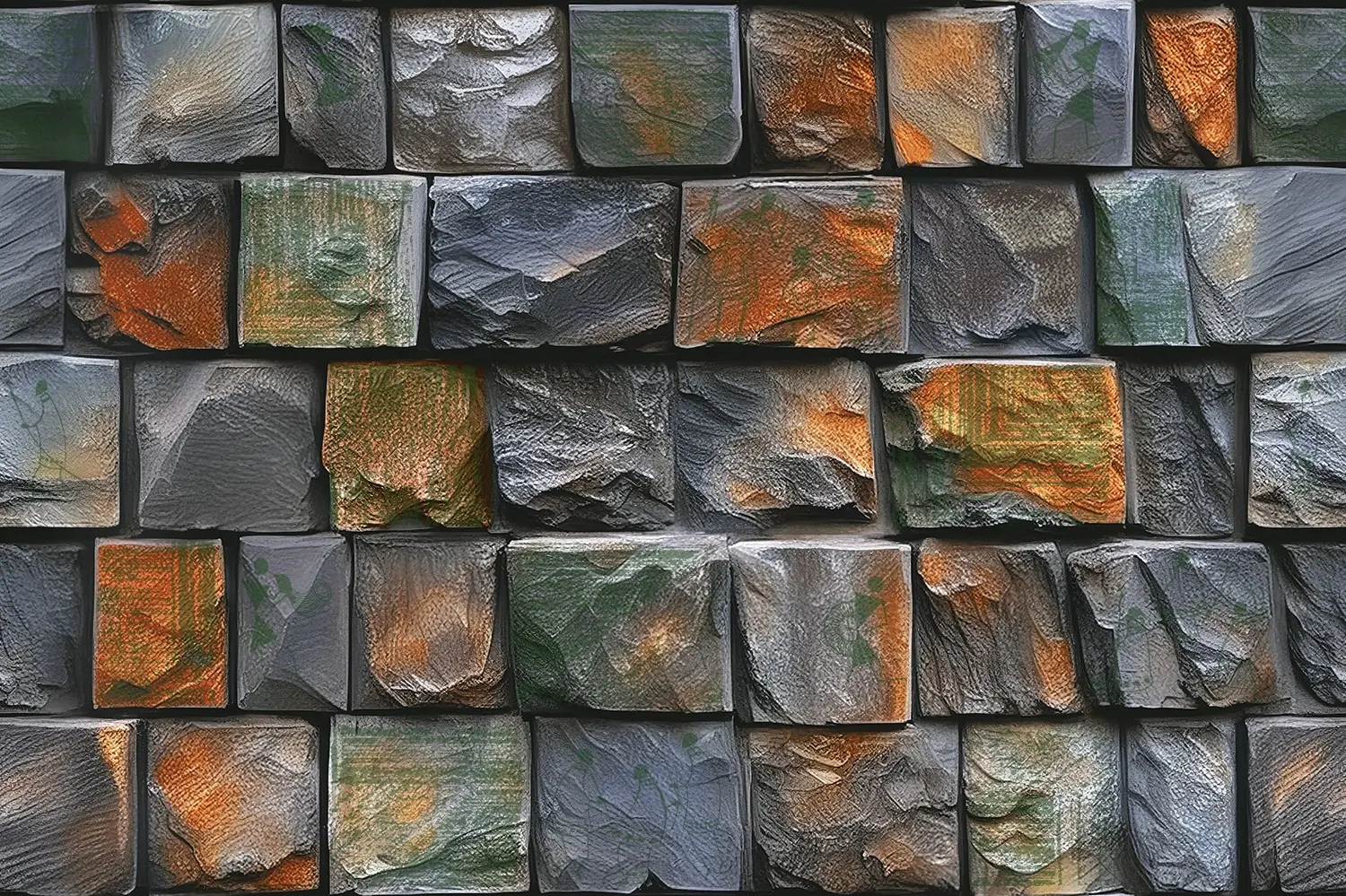
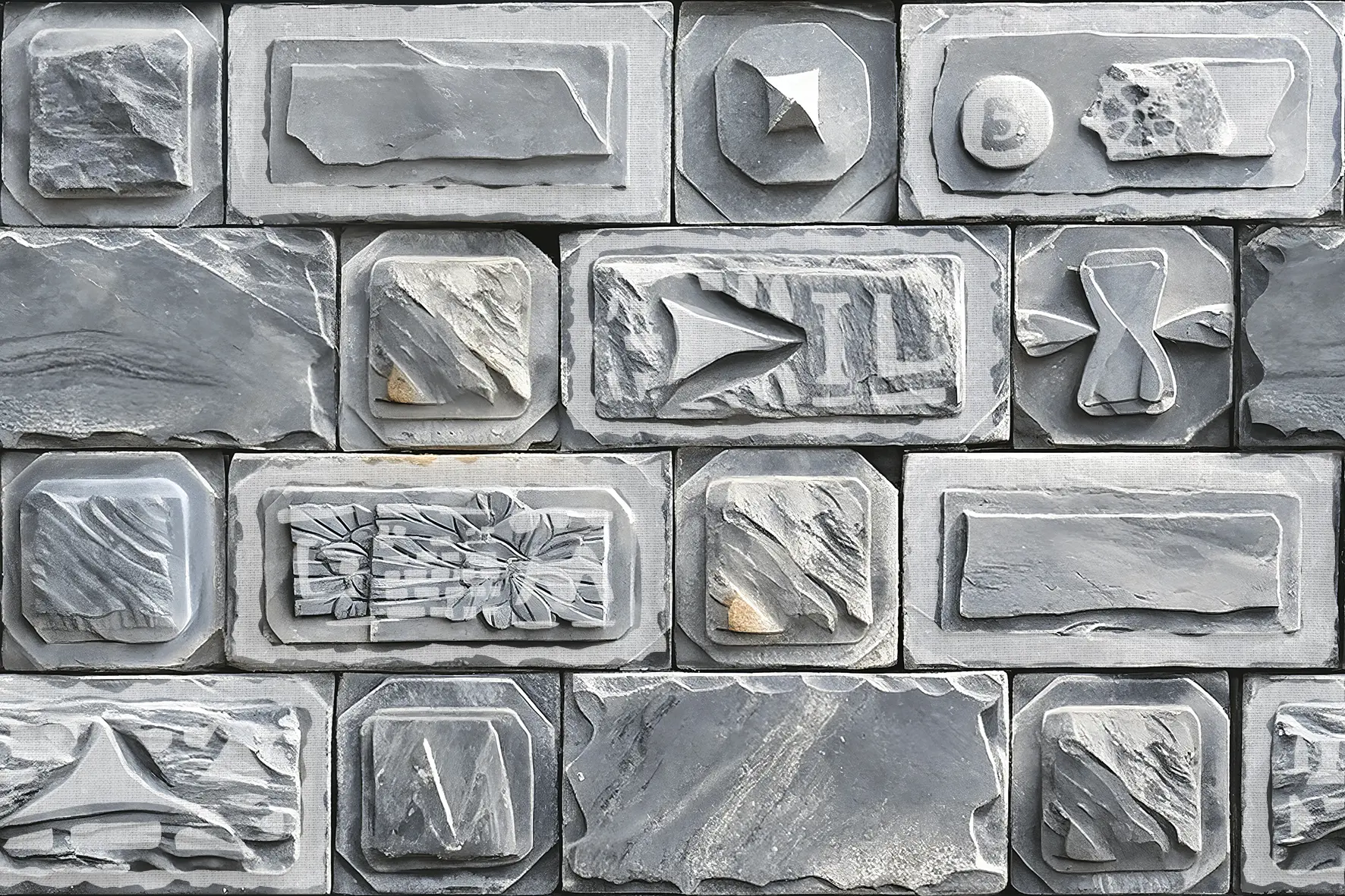
Elevations and feature walls are moving from flat stone prints to tiles that show depth: split-face slate, ledger stone strips, rough-cut blocks and carved relief. Matt and rustic finishes catch light like real stone.
- Designs: Augitoo Art (split-face slate), Coprica Pencil (ledger stone strips), Arritage Square (rough-cut grey blocks) and Shiner Craft (grey stone with carved relief motifs).
- Where: house fronts, terrace walls, courtyards and living room feature walls.
7. Botanical prints
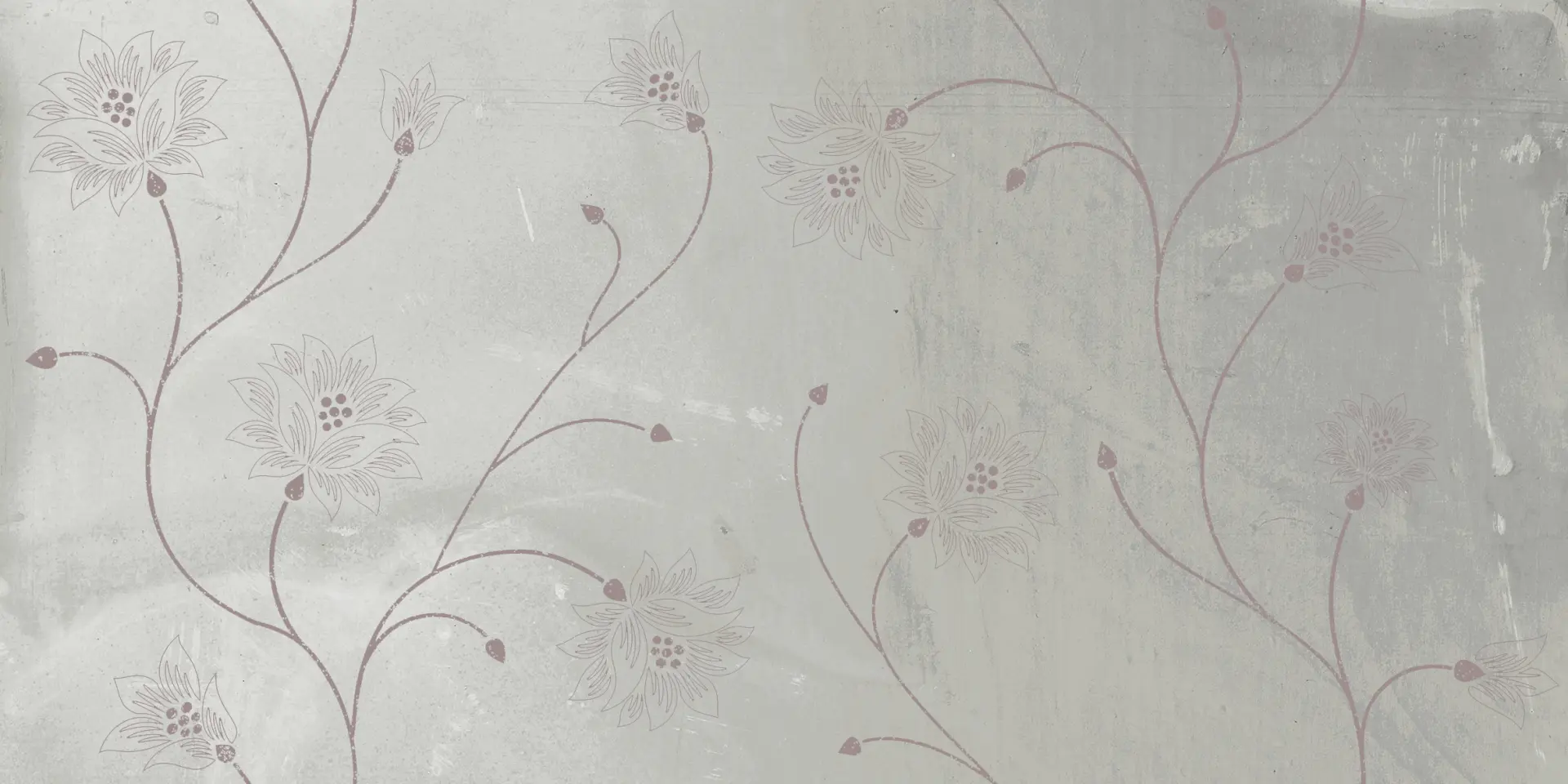
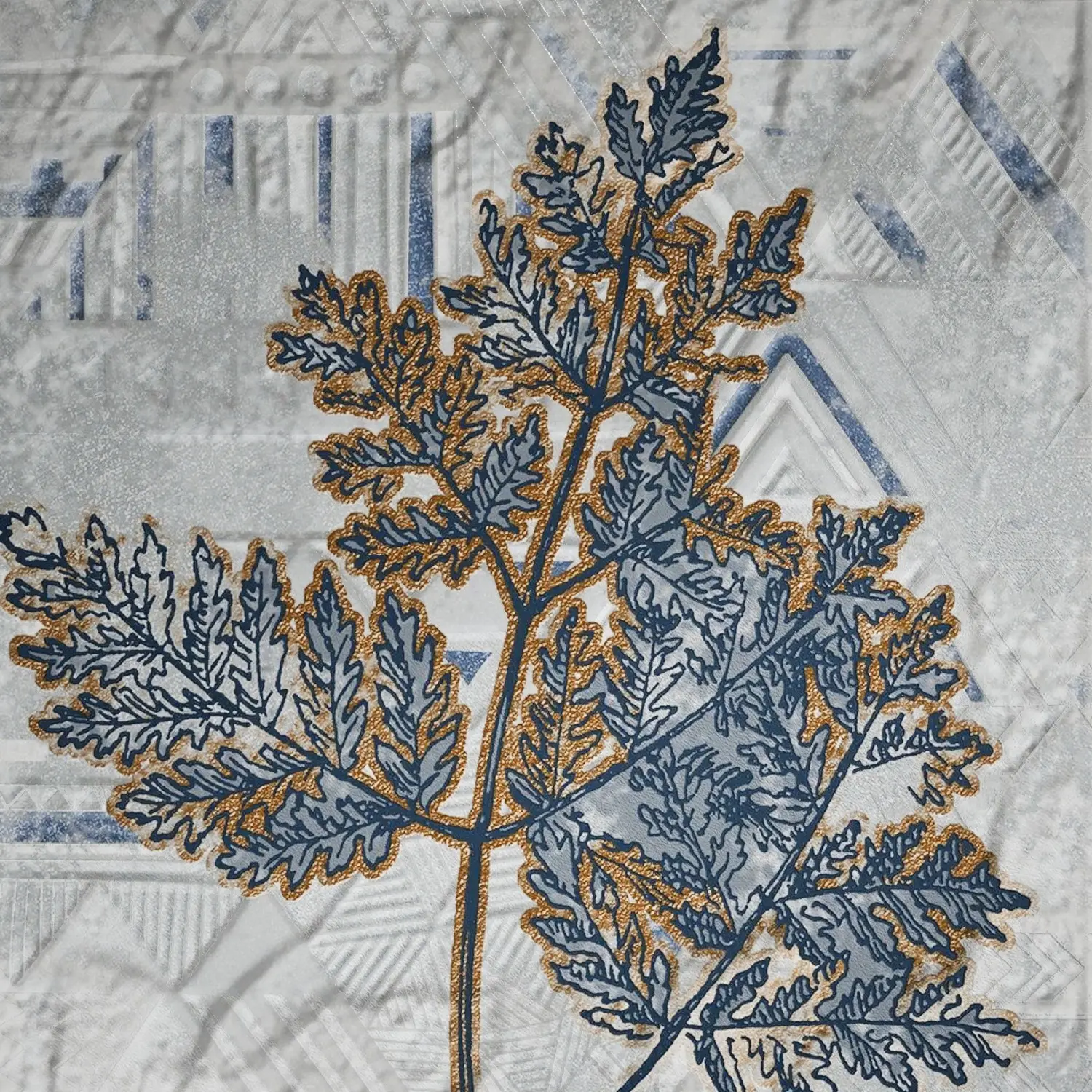
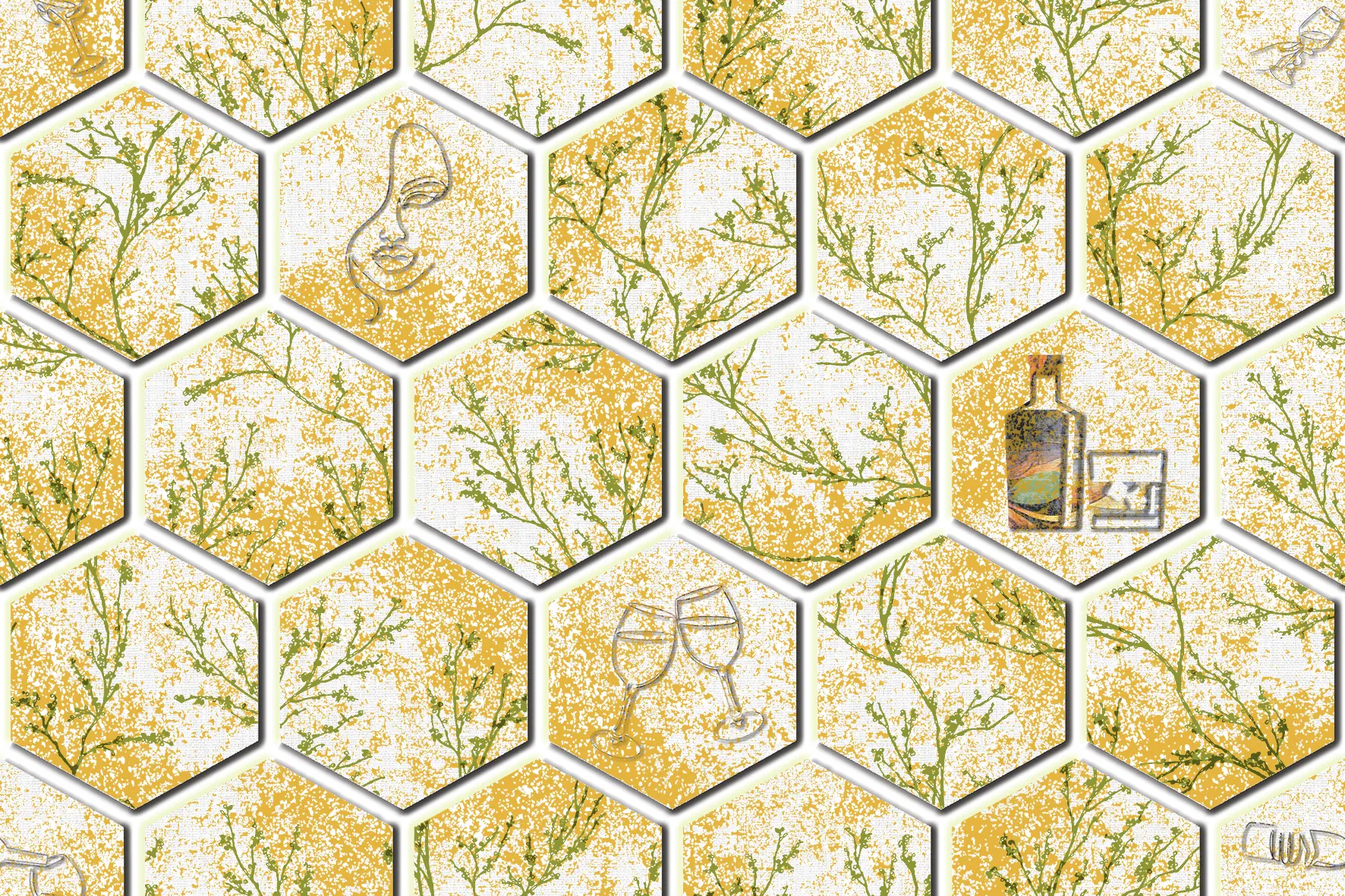
Leaves, ferns, vines and herbs remain popular, now in softer, more painterly styles and in calmer colours than the bold tropical prints of a few years ago.
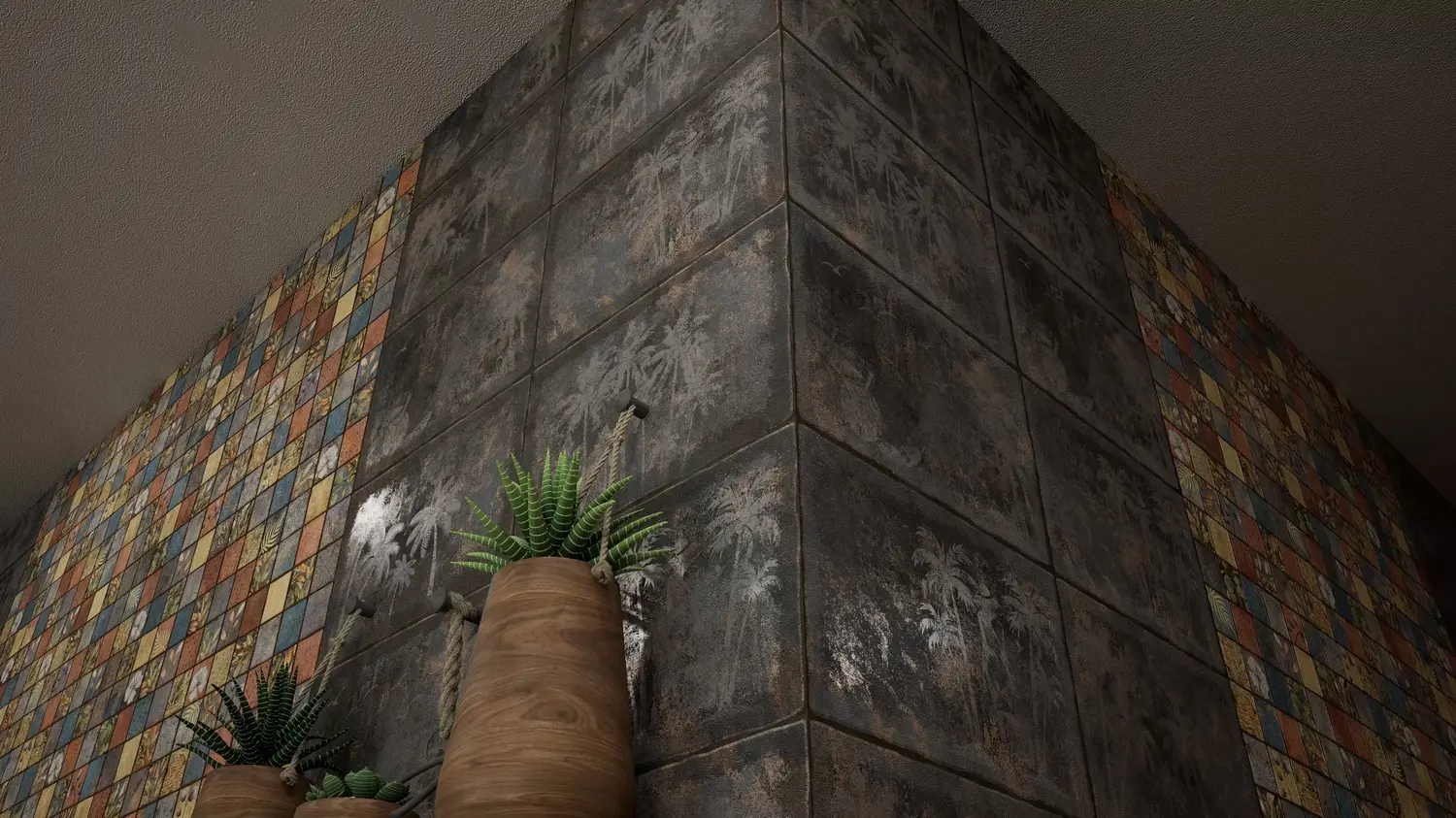
- Designs: Velveno, Qubonic (framed botanical decors), Graph (navy and gold ferns), Jasper (palm leaves in relief) and Bondy Relex (herbs inside a hexagon grid).
See botanical and floral wall tiles.
8. Geometric shapes, softened
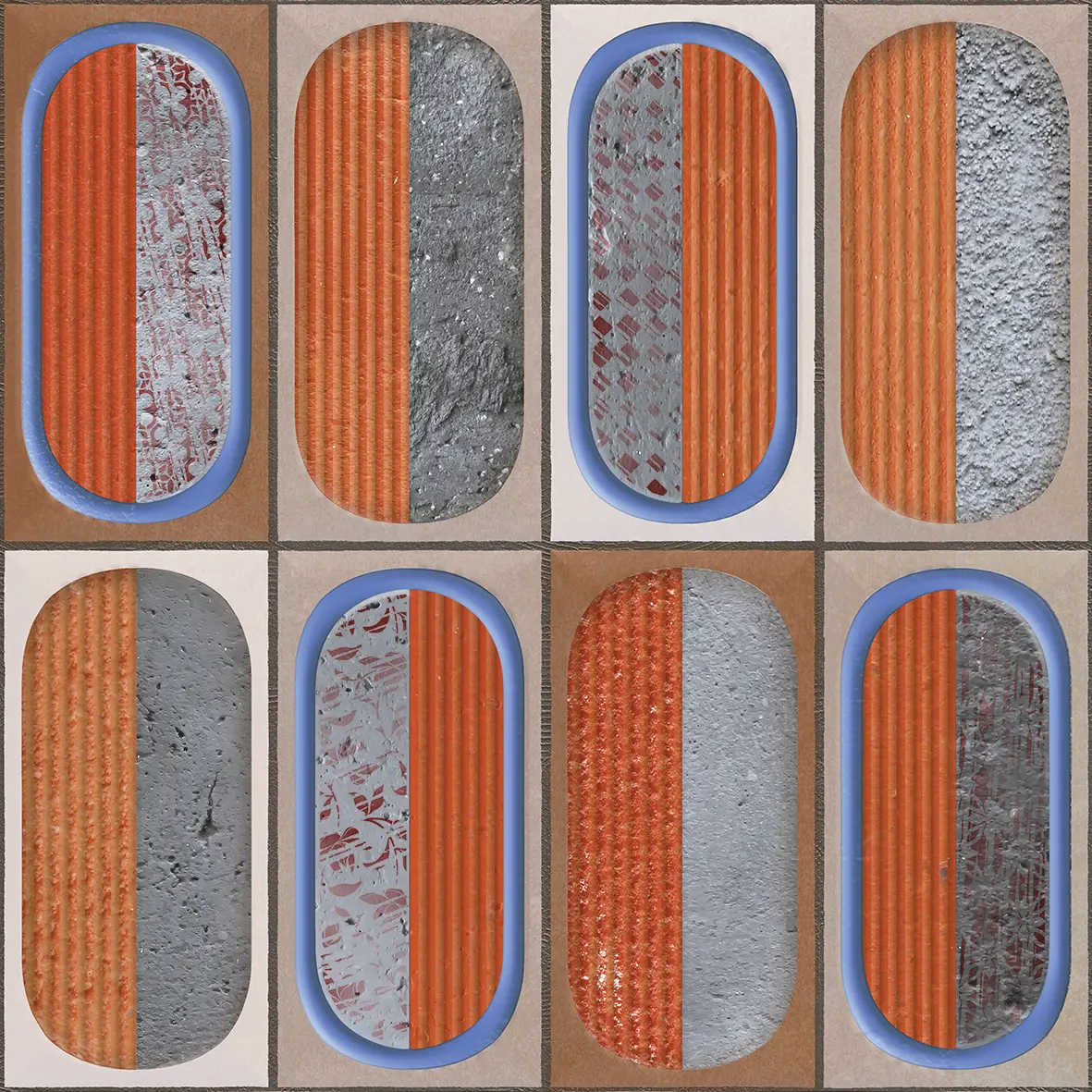
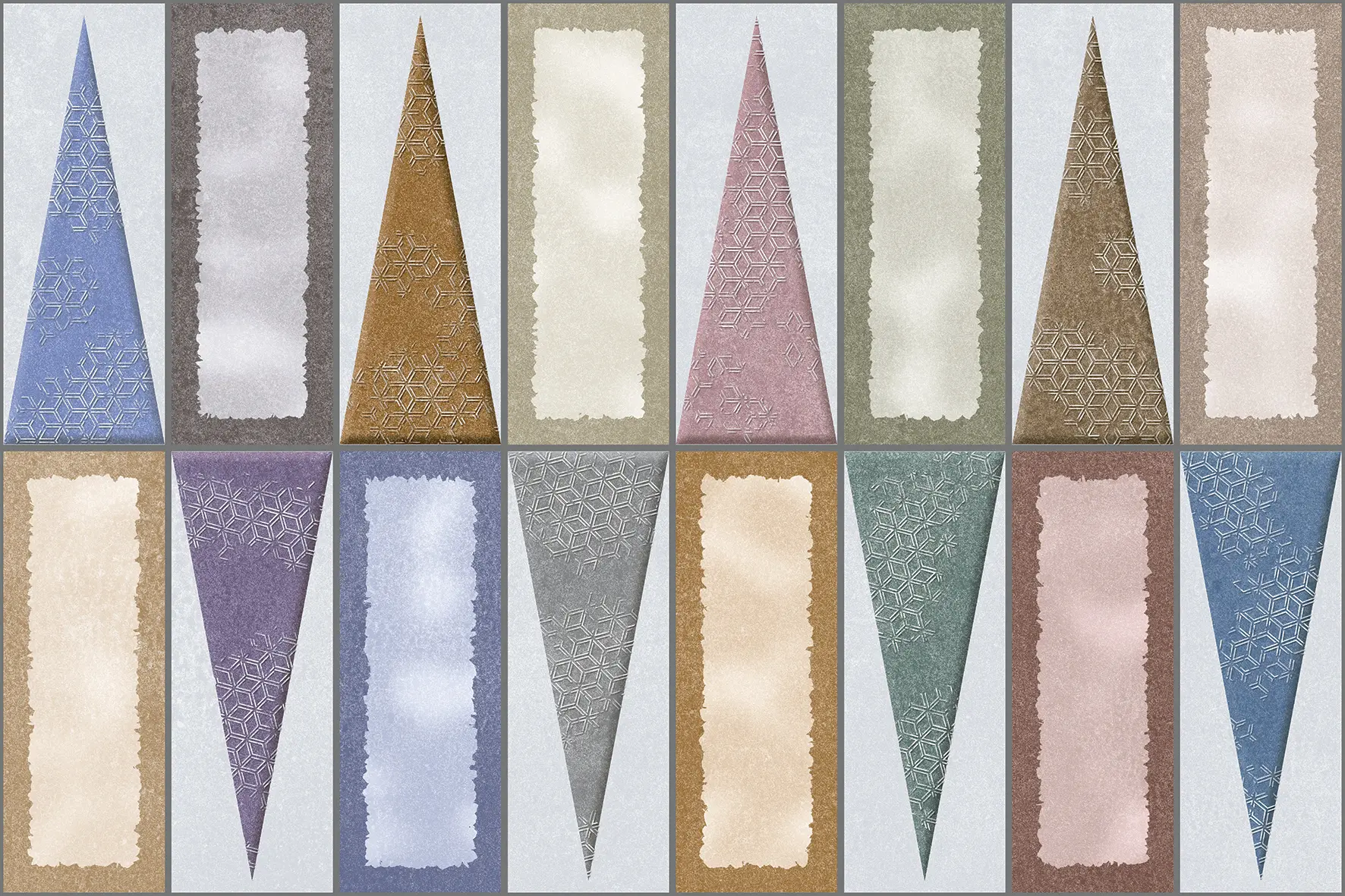
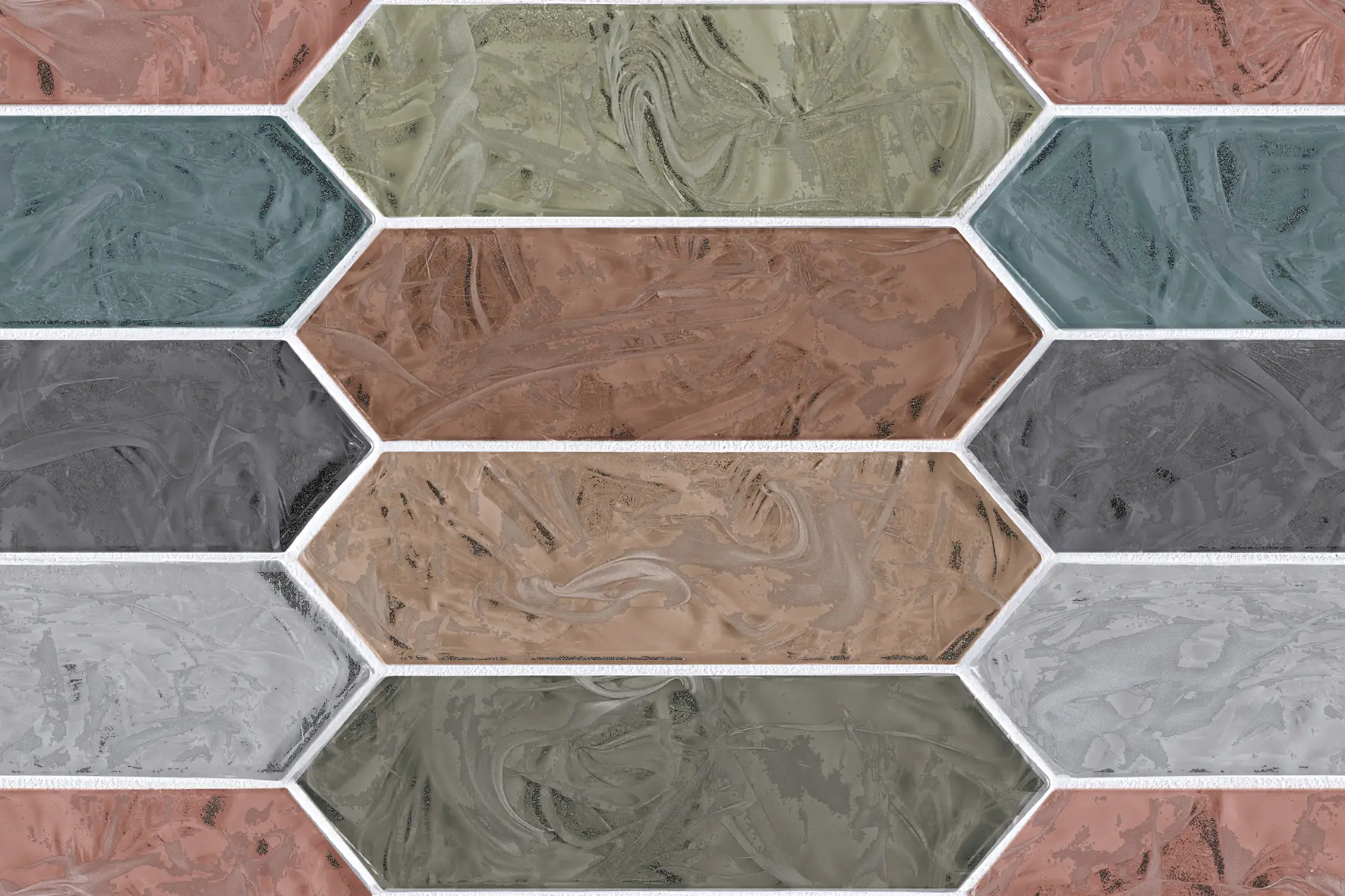
Herringbone, hexagons, chevrons, pickets, capsules and triangles continue, but with softer edges, aged surfaces and gentler colours.
- Designs: Stepler Brick (rounded capsules), Squra Prizo (pastel triangles with torn edges), Specturm Smoke (pickets in sage, teal, rust and pink) and Chevron.
See herringbone, hexagon and geometric tiles.
9. Devotional feature walls
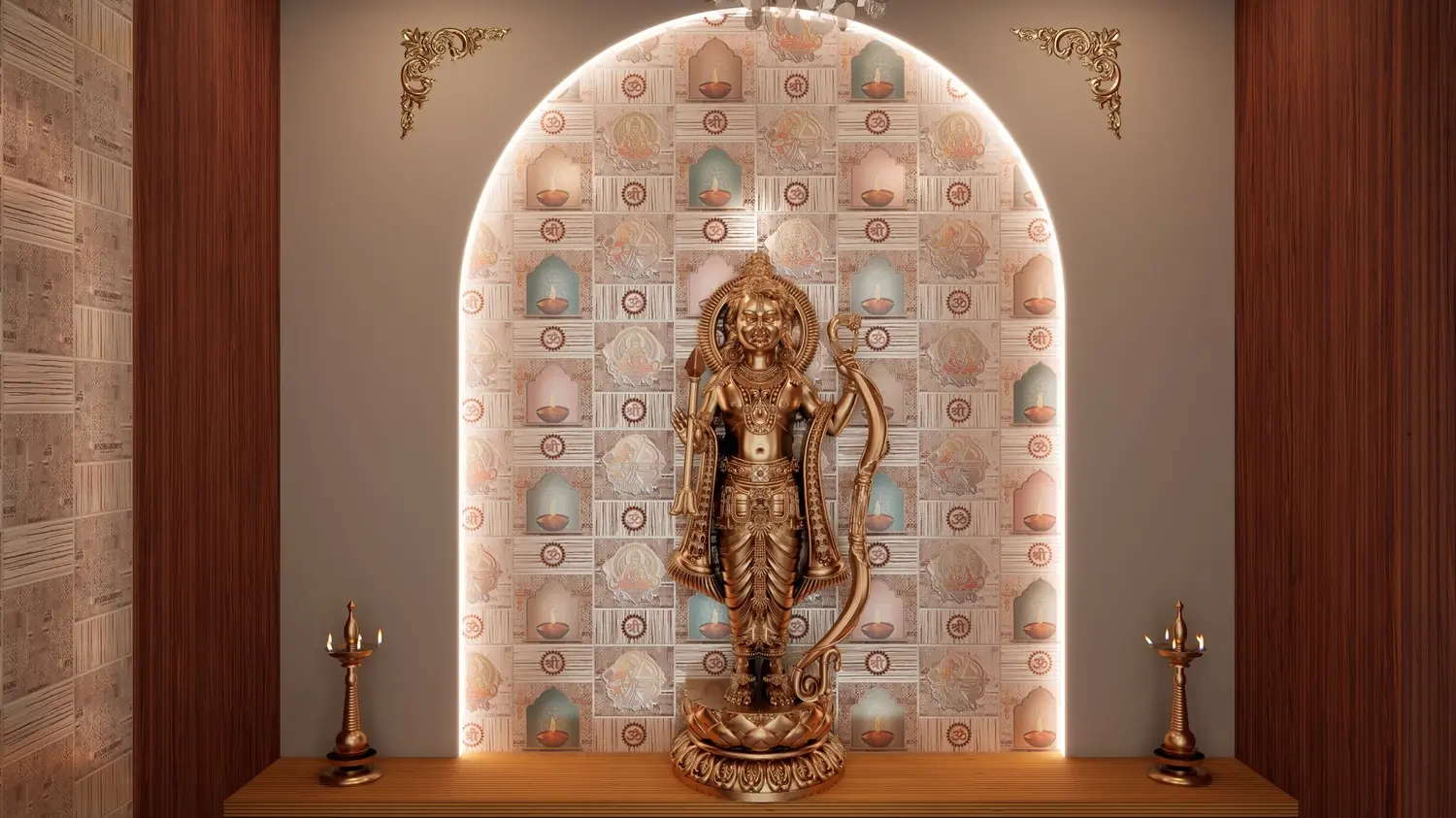
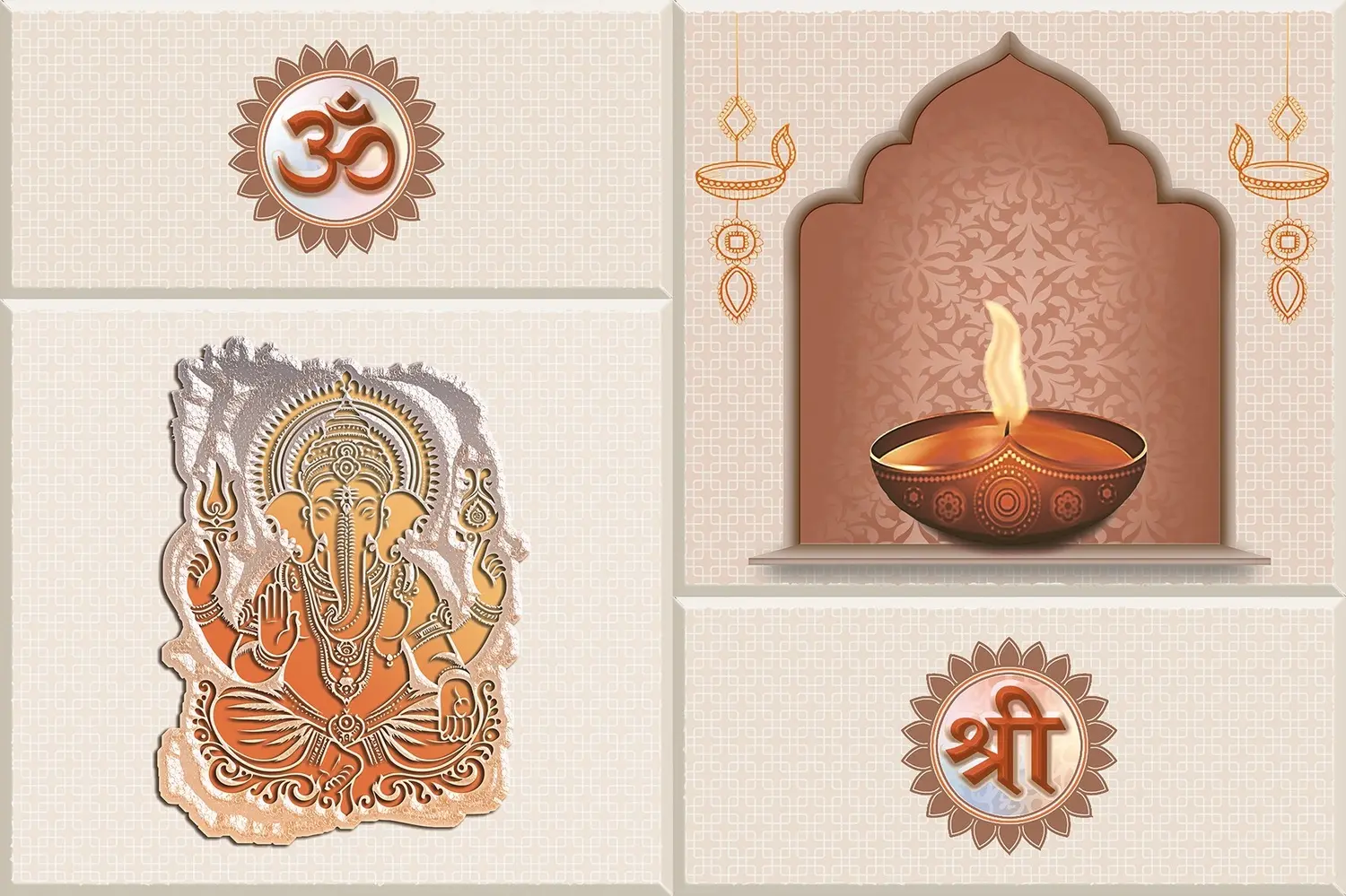
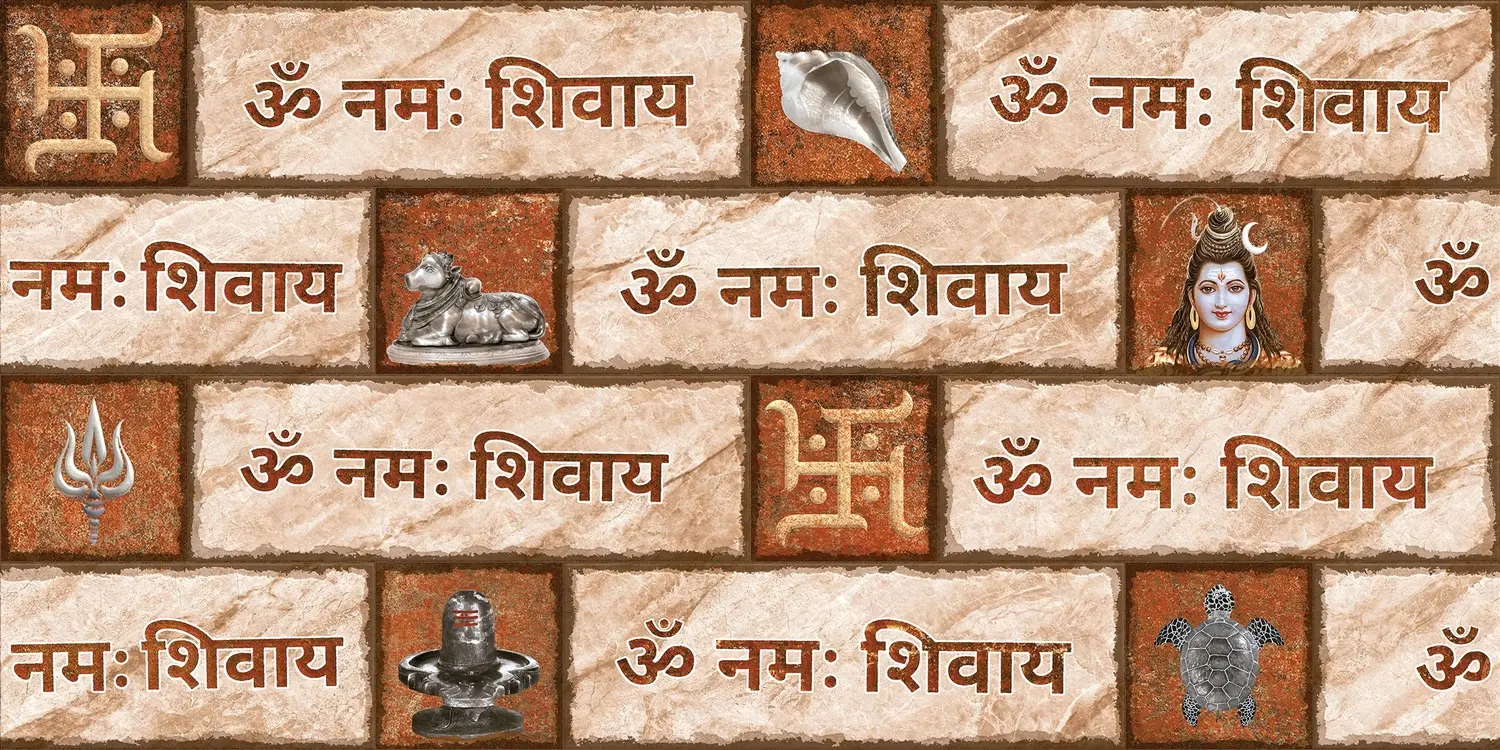
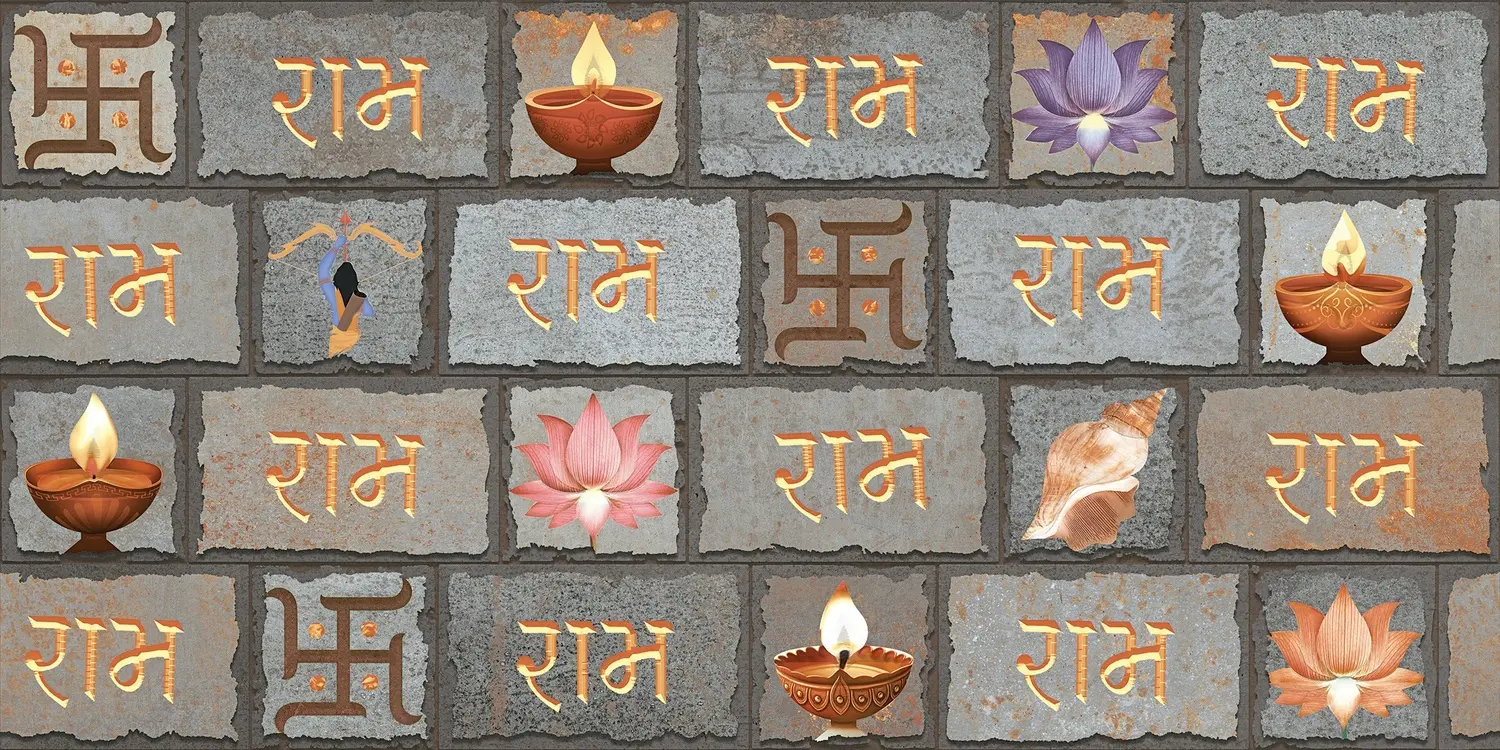
In Indian homes, the mandir wall has become a designed feature: a full wall of mantra tiles, a temple arch behind the idols or a devotional wall at the entrance or in the garden. Tiles with Om Namah Shivaya, Ram naam, Lord Ganesh and Shree are printed in the glaze, so they never fade or peel.
- Designs: Divyam God, Angira Ishvara and Nimohay Raghav.
See pooja room tiles.
10. Matt everywhere, with glossy accents
Matt finishes dominate feature walls, bedrooms and exteriors: they look natural, avoid glare and hide marks. Glossy tiles are returning in a different role, as colourful, handmade-looking kitchen backsplashes and accents, such as Sky Lark and Willow Kitchen. See matt vs glossy tiles.
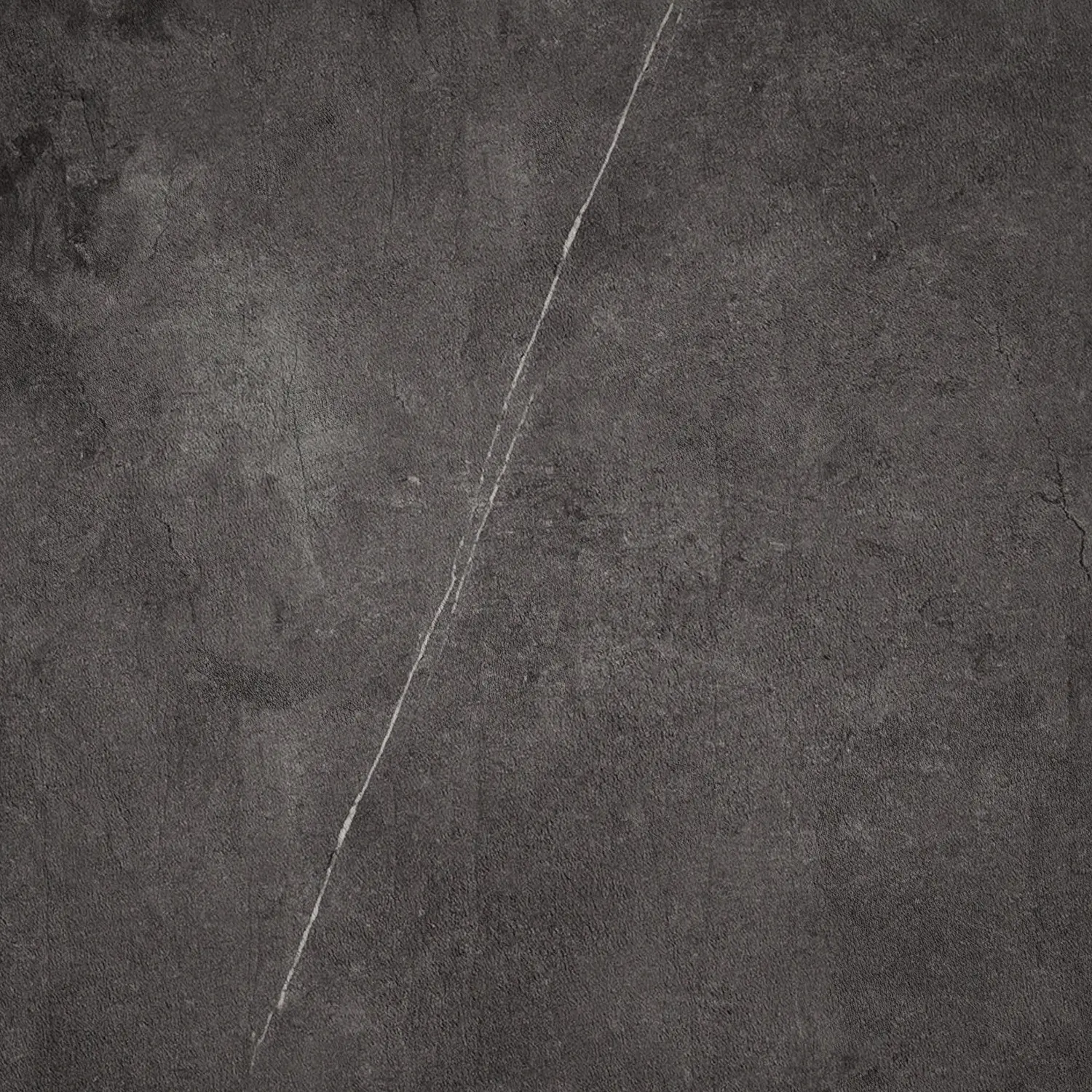
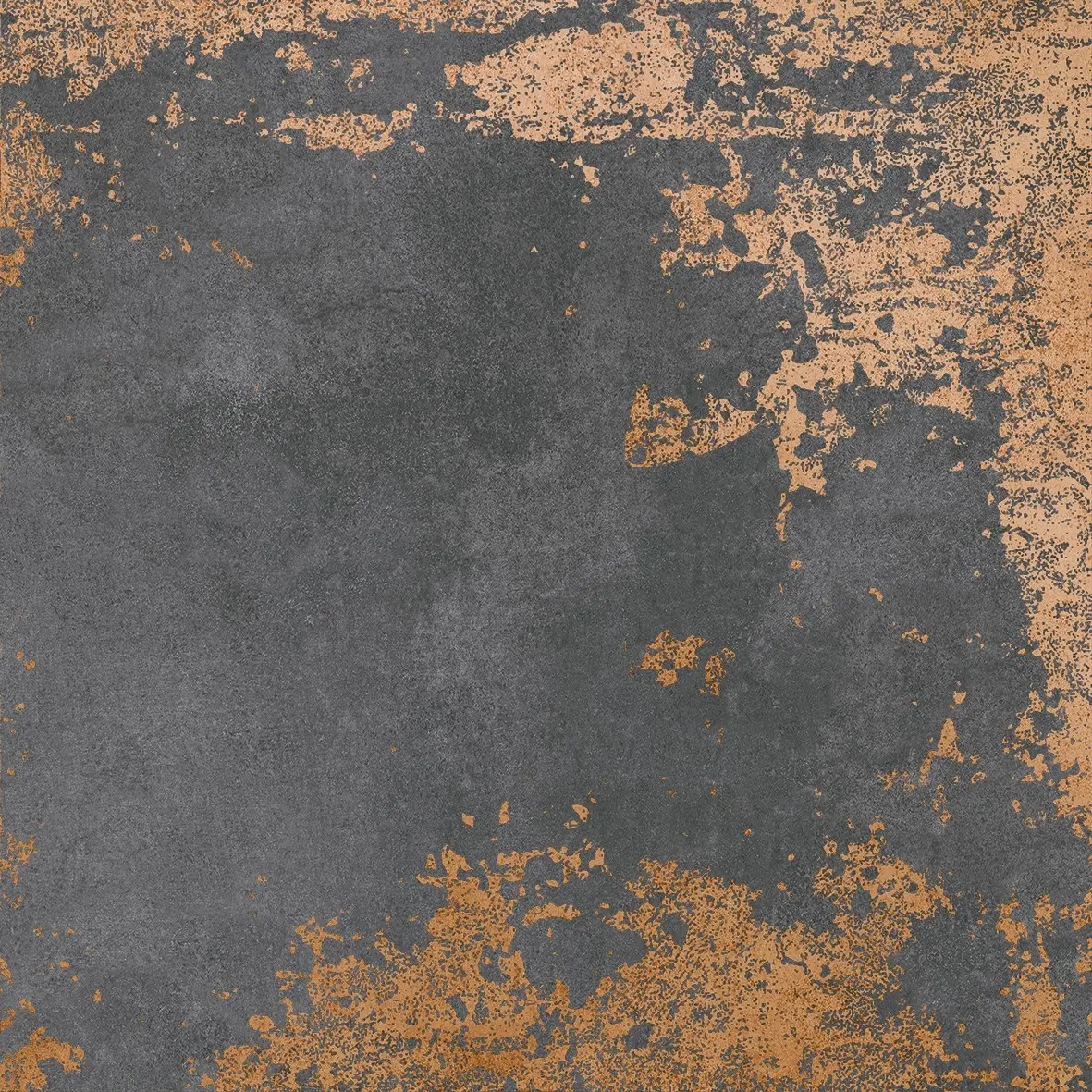
11. Dark, moody rooms
Charcoal, black and deep green walls in powder rooms, bars, bedrooms and studies, with warm lighting and brass, give a room a cosy, hotel-like feel.
- Designs: Clinker (charcoal stone with golden leaves), Daous Caramel (oxidised metal with copper patina) and Vienna Black.
12. Outdoor rooms
Balconies and terraces are being designed like living rooms, with stone walls, patterned floors, seating and lighting. See balcony and terrace tiles and the pebble mosaic floor of Kolum Multi.
Trends room by room
Bathrooms
Bathrooms are moving away from the all-white or all-beige box. The look for 2026 is a calm base with one strong wall: a patterned panel behind the basin or in the shower, a dark moody powder room, or floor-to-ceiling tiles in a single warm colour. Sage, terracotta, denim blue and charcoal are the popular colours; Moroccan stars, stacked strips and botanical prints the popular patterns. Matt walls hide water marks; glossy accents add sparkle. See bathroom wall tiles.
Kitchens
Backsplashes have become the jewellery of the kitchen. Handmade looks with glossy glazes, green and mint tones, terracotta and grid-printed tiles like Willow Kitchen are replacing plain white. Many kitchens tile the whole wall to the ceiling behind open shelves, or run the backsplash up behind the chimney as a feature. Warm wood and sage or cream cabinets complete the look. See kitchen wall tiles.
Living rooms
The TV wall and the wall behind the sofa are where most designer tiles go. Carved stone, terracotta strips, patchwork and large botanical prints are popular, often with a wooden TV unit floating in front and a cove light above to graze the texture. See living room wall tiles.
Bedrooms
Tiled headboard walls are now common in Indian homes: soft terracotta, beige stone, stacked blue strips or a faded Moroccan pattern behind the bed, usually matt and lit with warm wall lights. See bedroom wall tiles.
Elevations
House fronts are mixing materials: a stone-look ground floor or entrance wall, plain paint above, wood or metal details, and a devotional or carved feature at the gate. Grey slate, rust ledger stone and red sandstone looks lead, in matt and rustic finishes that weather well.
Cafes, shops and hotels
Commercial interiors want walls that customers photograph: patterned counter fronts, patchwork walls behind the till, mosaic-look feature walls in hotel receptions and bold geometric walls in boutiques. See tiles for cafes, restaurants, hotels and shops.
India and abroad
Taste differs by market. In India, warm neutrals, devotional walls, Moroccan patterns and stone elevations lead, and southern and western buyers tend to choose bolder colours than northern ones. In the Gulf, large villas favour beige and stone looks with marble accents. In East and southern Africa, bold patterns and practical finishes sell well. In Europe, the UK and the Americas, encaustic and Moroccan looks, terracotta, zellige-style glossy tiles and green kitchens are strong. Our export pages describe each market.
Layout trends
- Half-height walls: tiles to about 1.2 m with paint above, in kitchens, dining rooms and bedrooms.
- Panels and bands: a patterned panel behind a basin, bed or sofa rather than a whole room of pattern; see highlighter tiles.
- Tile meets paint: tiles that stop in an arch, a curve or a step instead of a straight line.
- Matching grout: grout in the tile's colour, so the wall reads as one surface.
- Floor to ceiling in small bathrooms, for a seamless, bigger-looking room.
Colour trends at a glance
| Colour | Mood | Where it works |
|---|---|---|
| Terracotta and rust | Warm, earthy | Living rooms, kitchens, terraces |
| Sage and olive | Calm, natural | Kitchens, bathrooms, bedrooms |
| Warm white and cream | Soft, light | Everywhere, as a base |
| Denim and teal | Fresh, cool | Bathrooms, bedrooms, kitchens |
| Charcoal and black | Dramatic | Powder rooms, bars, single walls |
| Sand and beige | Timeless | Whole homes, elevations |
Trends that last and trends that date
Likely to last: natural stone and clay looks, warm neutrals, matt finishes, botanical prints in soft colours, Moroccan and encaustic patterns used with restraint, and devotional walls, because they are rooted in materials and traditions that have lasted for centuries.
Use with care: very bright colours on whole rooms, busy patterns on every wall, and any look that copies one season's fashion closely. Keep these to a panel, a band or a small room, where they are easy to enjoy and, one day, to change.
How to use a trend without regretting it
- Put the trend where it is easy to change or small: a backsplash, a panel, a powder room.
- Keep the floor and most walls in calm, natural colours.
- Choose a design you love in person, not one you saw once online.
- Check it in your own light, with samples.
- Buy a spare box: a trend design may not stay in production for ever.
What is fading
Some looks that dominated recent years are giving way:
- Cool grey everything: whole homes in grey are being warmed with beige, terracotta and wood.
- High-gloss white bathrooms: replaced by warmer colours, matt finishes and one bold wall.
- Busy 3D effects on every wall: replaced by real texture used sparingly.
- Very large, plain slabs on walls in small rooms: replaced by tiles with character and human scale.
- Matching everything: replaced by deliberate contrasts of pattern and plain, smooth and rough.
Trends in Indian homes specifically
- The designed mandir: devotional feature walls instead of a shelf in a corner.
- The tiled headboard wall: now common in new Indian homes.
- Stone-clad entrances and boundary walls: in slate, ledger stone and sandstone looks.
- Kitchen backsplashes to the ceiling: behind chimneys and open shelves.
- Balconies as outdoor rooms: with patterned floors and stone walls.
- Moroccan powder rooms: a bold pattern in the smallest room.
How to see trends for yourself
Trends are easier to judge in person than online. Visit showrooms, look at recently finished homes, cafes and hotels in your city, and save photos of rooms (not single tiles) you like. When you find yourself saving the same kind of wall again and again, that is your taste, and it will outlast any trend.
A trend checklist for a 2026 renovation
- One designer wall per room, not every wall.
- Warm colours or natural textures on the feature wall: terracotta, sage, stone, botanical.
- Matt finishes on feature walls; a glossy backsplash only if it adds colour.
- Matching grout.
- Tiles to the ceiling in small bathrooms and behind open kitchen shelves.
- A designed mandir wall, if your home has one.
- A stone-look entrance or boundary wall outside.
- Warm, layered lighting on every feature wall.
Tick most of these, and the result will feel current in 2026 and still comfortable years later.


See the newest designs in our designer wall tiles collection, or contact us for samples and the latest catalogue. For a deeper look at what makes a tile designer, read designer wall tiles.