
Bedroom wall tiles design: headboard walls, layouts, colours and ideas for every style
How to use wall tiles in a bedroom without making it feel cold: the headboard wall, panel and half-height layouts, how many tiles, designs for each style, colours, finish, lighting and the mistakes to avoid.
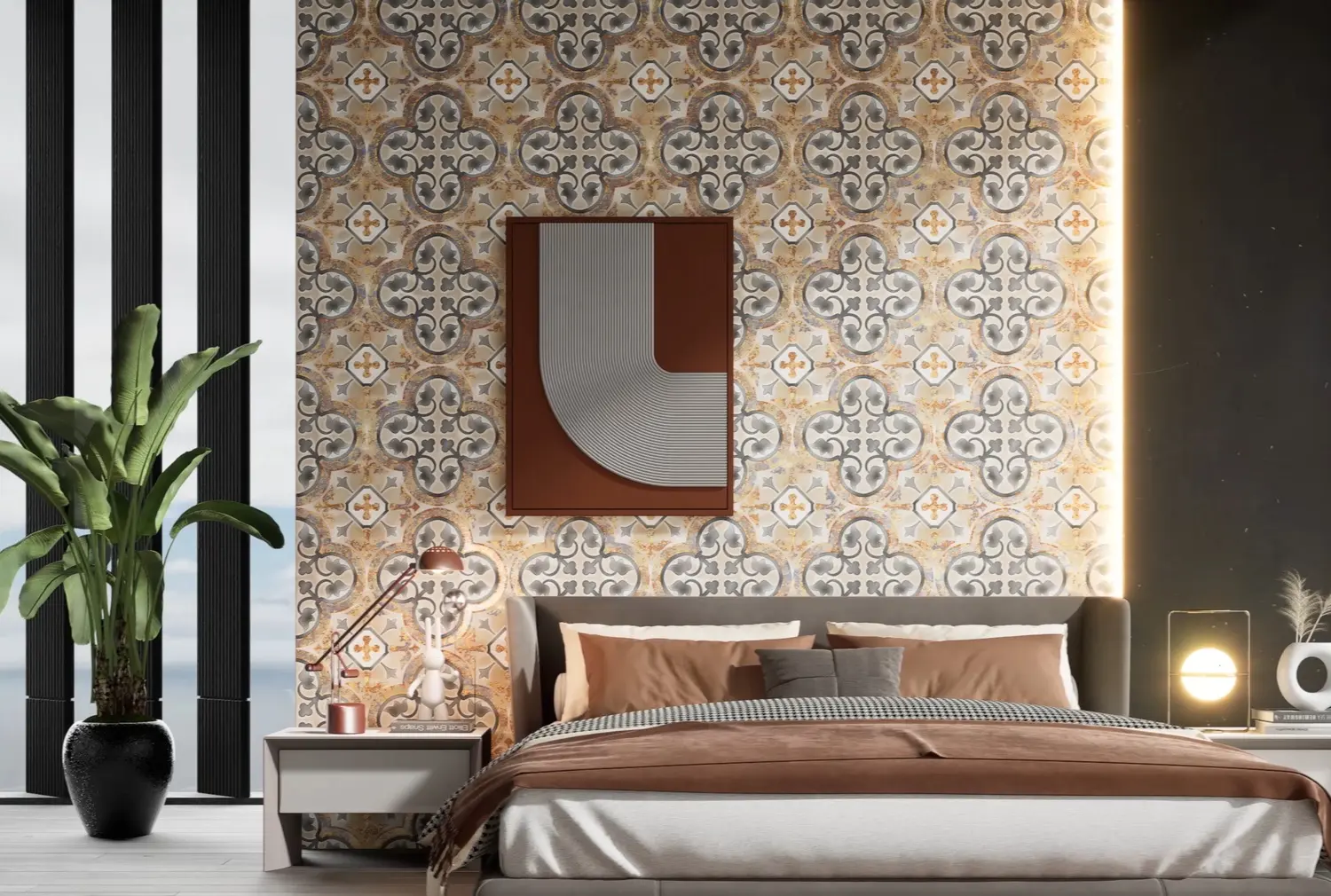
Tiles used to stop at the bathroom door. Now the wall behind the bed is one of the most popular places for a designer tile in Indian homes. A tiled headboard wall gives a bedroom the character of wallpaper or wood panelling, but it never peels, fades or needs repainting, and a damp cloth keeps it clean.
The trick is restraint. One well-chosen wall makes a bedroom feel finished; four tiled walls make it feel like a bathroom. This guide explains where to use tiles in a bedroom, how big the panel should be, which layouts and designs suit which style, and how colour, finish and lighting bring it together. The examples come from our own designs, many of which are photographed behind beds.
Should you tile a bedroom wall?
What tiles do well in a bedroom:
- They last for decades without repainting, and they do not fade in sunlight the way paint and wallpaper can.
- They wipe clean: hair oil marks on the wall behind the pillows, dust and children's crayon all come off a glazed tile.
- They add pattern and texture that paint cannot: stone, terracotta, Moroccan medallions or botanical prints.
- They are a permanent feature that adds value to the room.
What to keep in mind:
- Hard surfaces reflect sound. One tiled wall is fine; a room with tiled walls and a tiled floor can echo. Rugs, curtains and upholstered furniture balance it.
- Tiles feel cool to the touch, which is welcome in a hot climate but means they are best kept away from where you lean.
- Tiles are a long-term choice. Pick a design you will still like in ten years, or keep the tiled area to a panel.
- Tiles do not cure damp. If a bedroom wall is damp, fix the cause first.
Where to use tiles in a bedroom
- The headboard wall. The most popular choice: the wall behind the bed is what you see as you walk in, and the bed and side tables frame it.
- A TV wall. In a bedroom with a TV opposite the bed, a tiled wall behind the screen hides cables in a groove and gives the room a second focus. Keep it calmer than the headboard wall, so the two do not compete.
- A dressing area or wardrobe niche. A patterned panel behind a dressing table or between wardrobes turns a corner into a feature. Our Ronda patchwork is shown behind a dressing table.
- A study corner. A strip of pattern behind a desk defines a work area in a shared room.
- A window wall. Tiles framing a window seat or a bay make it a destination.
Layouts for the headboard wall
- The full wall. Tiles from floor to ceiling across the whole wall. Bold and seamless; best with calm or textured designs and in rooms of medium size and up.
- The panel. A tiled panel as wide as the bed plus the side tables, running to the ceiling, with paint on either side. It frames the bed and keeps the tile area, and the budget, under control.
- The half-height wall (wainscot). Tiles from the floor to about 1.2 m (4 ft), a little above the headboard, with paint above and a trim or a band of decor tiles along the top edge. Classic and cosy, and the most practical choice behind a bed that leans against the wall.
- The band. A single horizontal band of decor tiles at headboard height, on a plain base or painted wall. The lightest touch.
- Vertical strips. One or two vertical columns of pattern behind each side table, with the bed between them. A good choice for a wide room or a low budget.
Patterned sets of a plain base and decor tiles make most of these layouts easy: the base fills the wall and the decor forms the panel, band or strips. Our highlighter tiles guide shows proportions.


How big should the panel be?
Start from the bed. Indian bed sizes vary, but a queen bed is usually about 5 ft (1.5 m) wide and a king about 6 ft (1.8 m). Add the side tables, usually 1.5 to 2 ft each, and a little margin.
| Bed | Bed width | Panel width with side tables | Panel to a 10 ft ceiling | Boxes of 300 × 600 mm with 10% |
|---|---|---|---|---|
| Double | about 4.5 ft | about 8 ft | 80 sq ft | 11 |
| Queen | about 5 ft | about 9 ft | 90 sq ft | 13 |
| King | about 6 ft | about 10 ft | 100 sq ft | 14 |
For a half-height wainscot, multiply the wall width by 4 ft instead. Use the tile calculation guide for your exact room, and keep one spare box.
Centre the panel on the bed, not on the wall: if the bed sits off-centre because of a door or wardrobe, the panel moves with it. Mark the bed's position on the floor before tiling.
Bedroom tile designs by style
Calm and modern
For a quiet, hotel-like room, choose soft greys, beiges and blues with gentle pattern or texture.
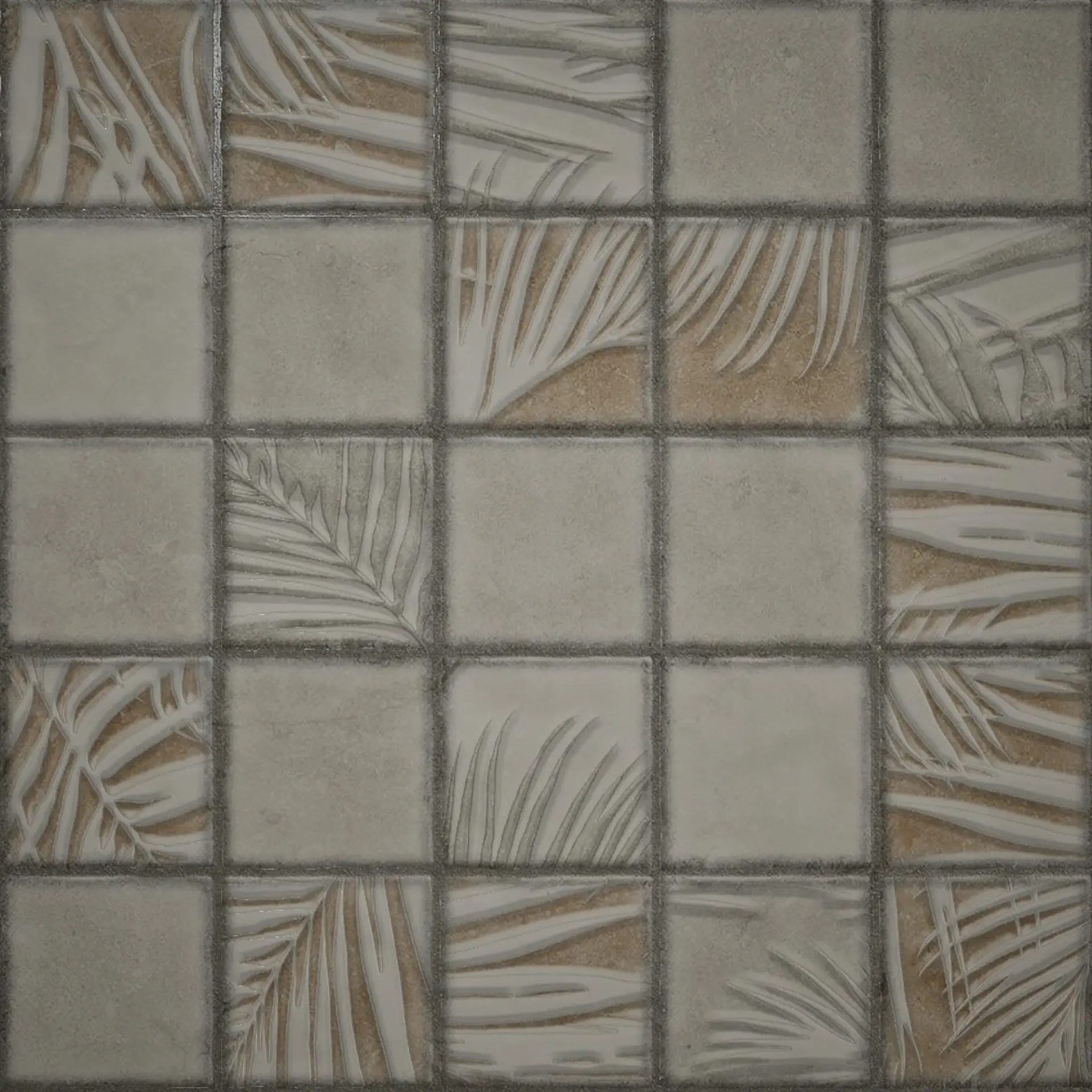
- Jasper: grey tiles in a small square grid with palm leaves in soft relief, with a plain grey tile to control how much pattern shows.
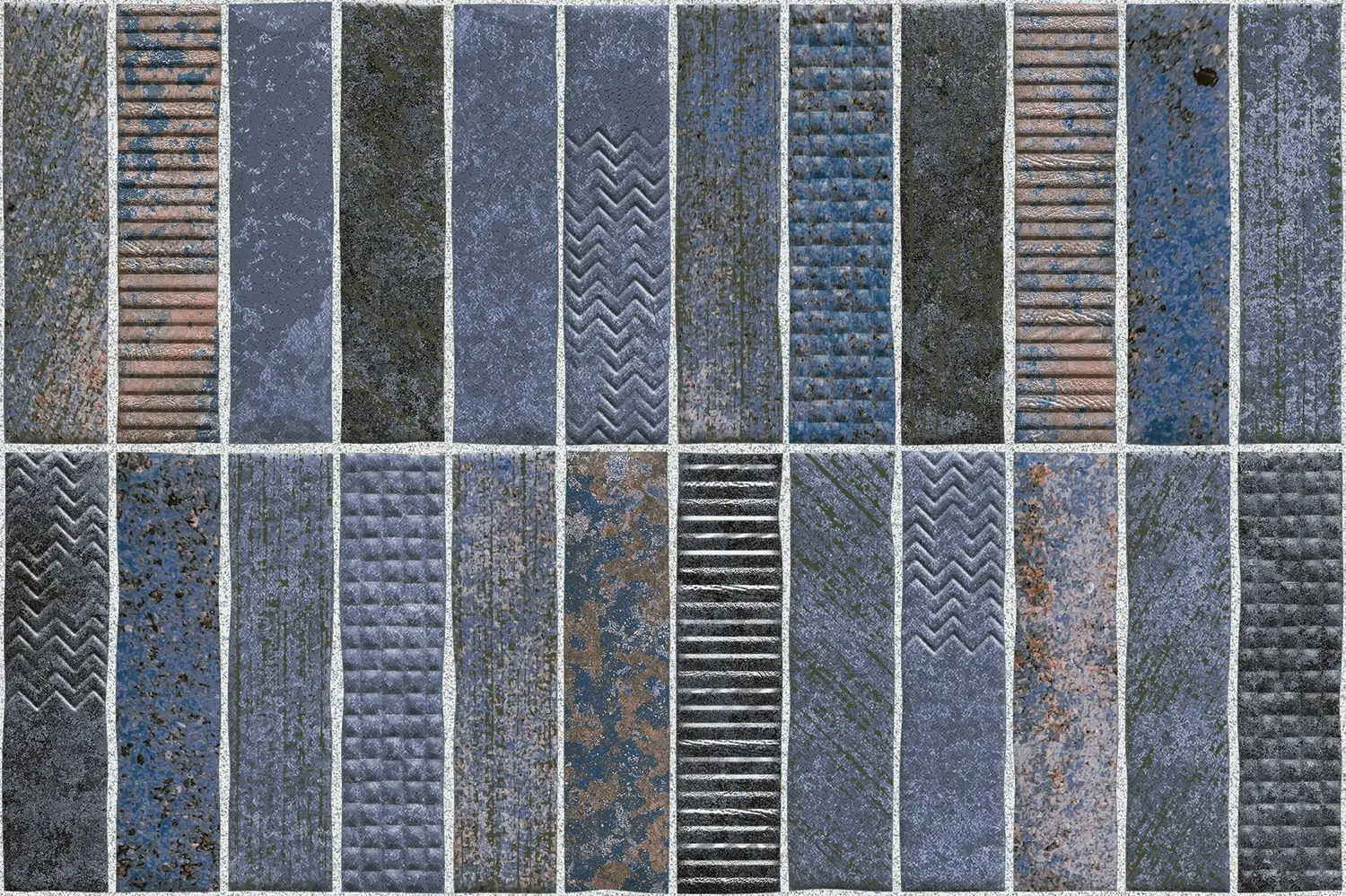
- Textura Mist: narrow vertical strips in denim blue, slate and charcoal, shown behind a bed. The vertical lines make a low room look taller.
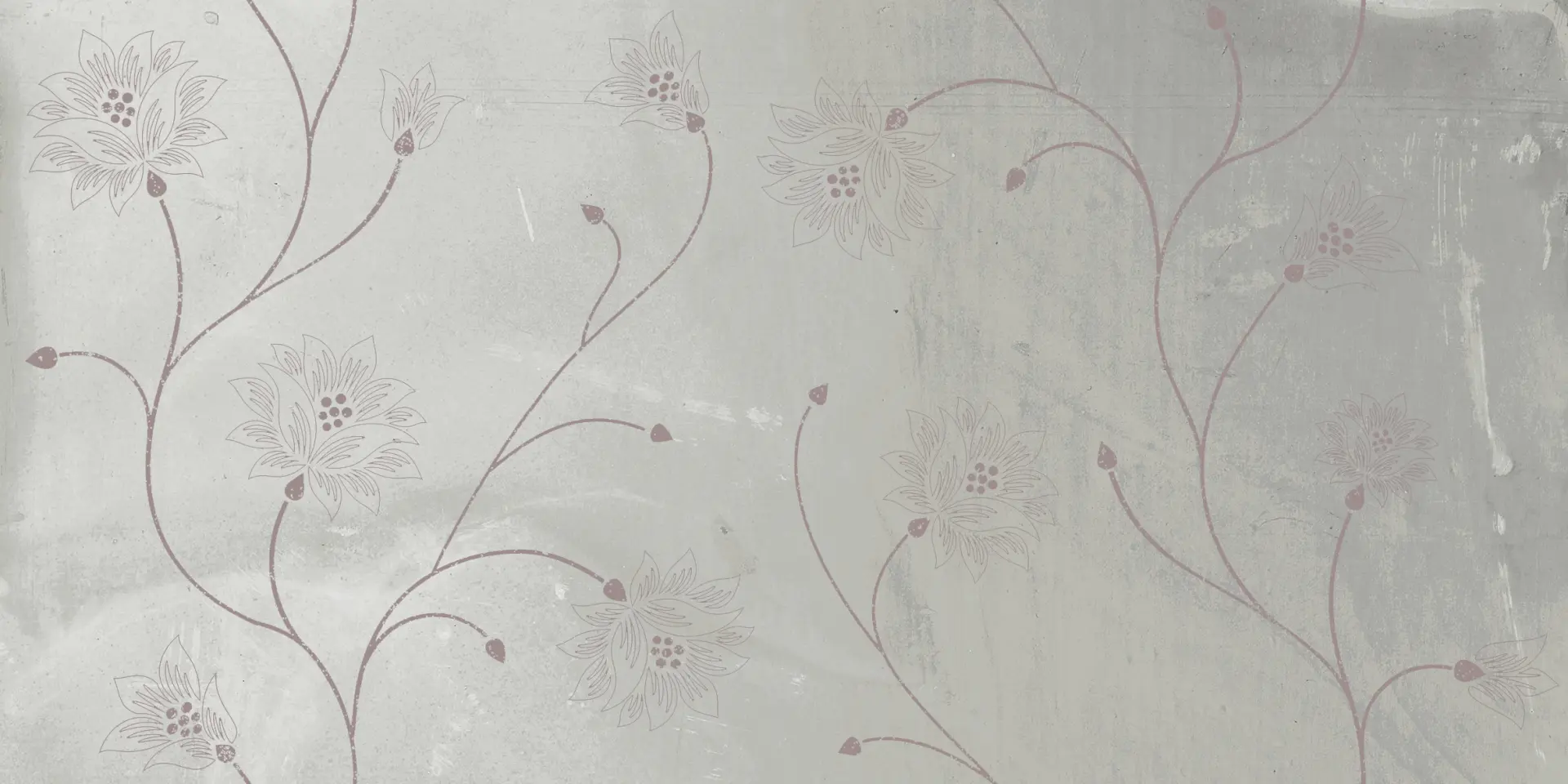
- Qubonic: a light grey base with fine floral sprigs and framed botanical decors.
Warm and earthy
Terracotta, rust, beige and stone tones make a bedroom feel warm and grounded, and they suit wooden furniture and cane.
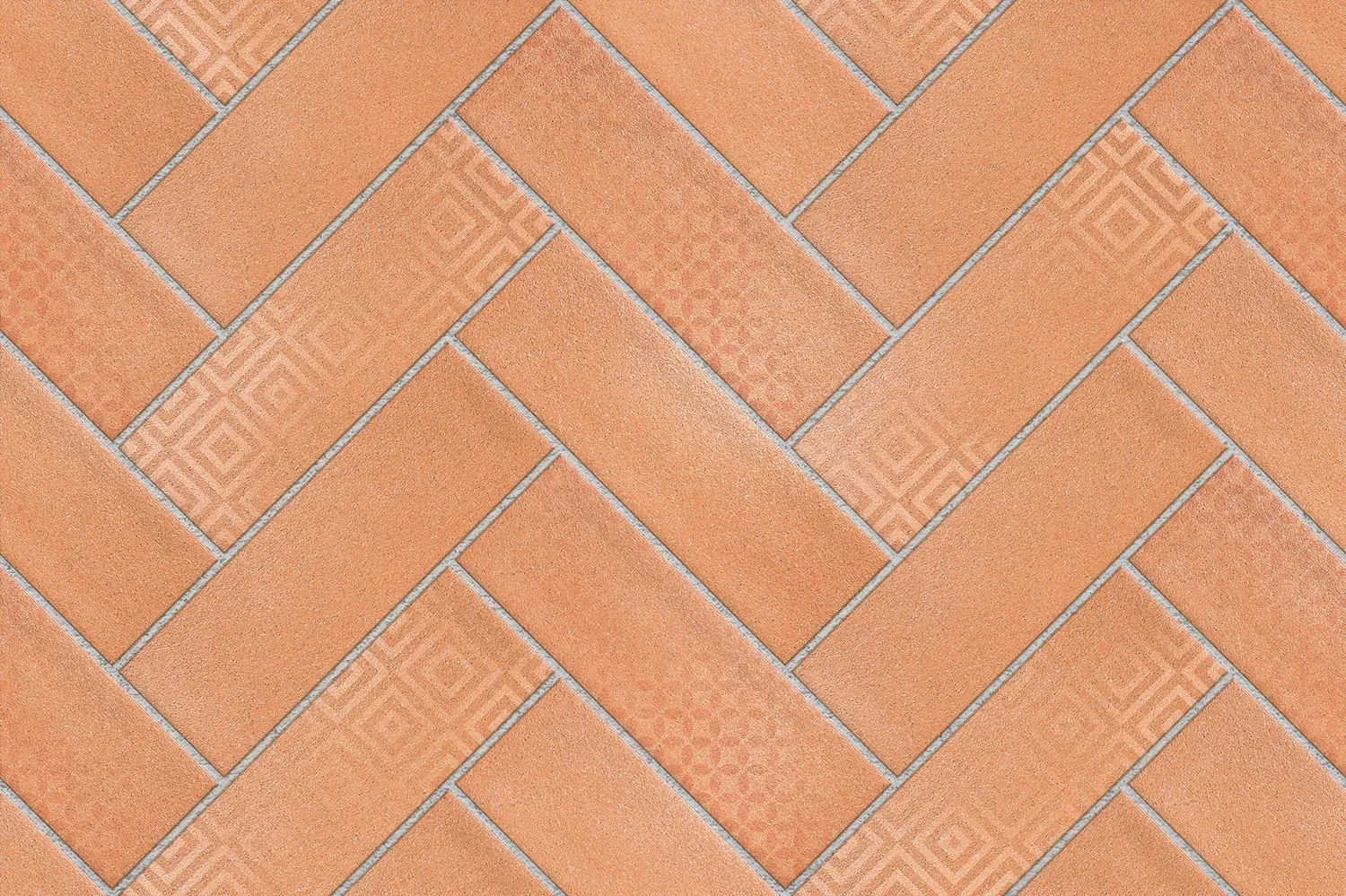
- Emola: rust terracotta with a soft, cloudy surface, and decors with a grey lattice or star, shown behind a bed.
- Belfist: a soft beige stone look with floral arch and gold line decors.
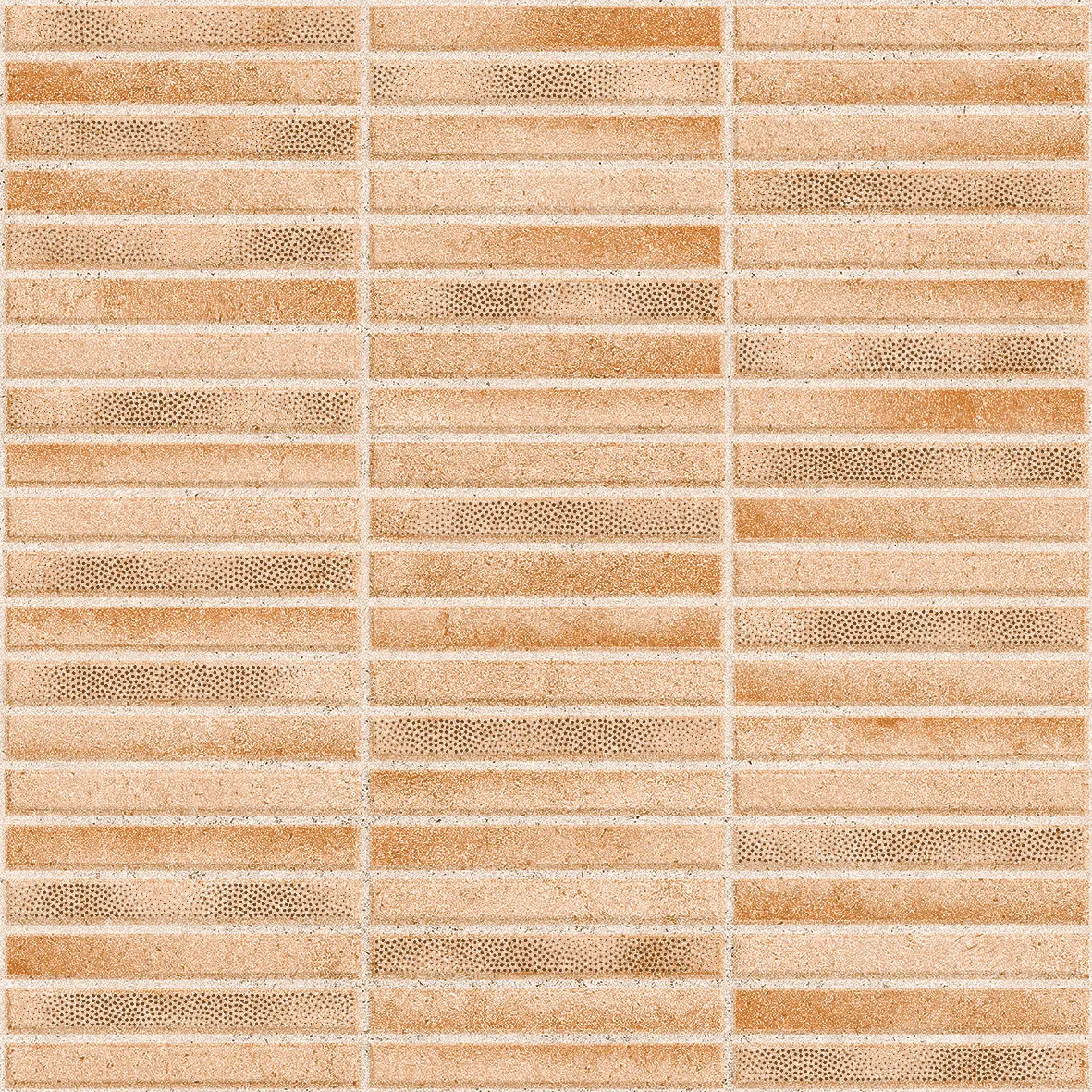
- Pigmento Beige: stacked strips in peach, sand and soft terracotta, for a calm handmade brick look.
- Delice Bricks: a terracotta herringbone printed on each tile.

Moroccan and boho
Medallions, stars and lattices bring colour and craft, and suit layered textiles and plants.
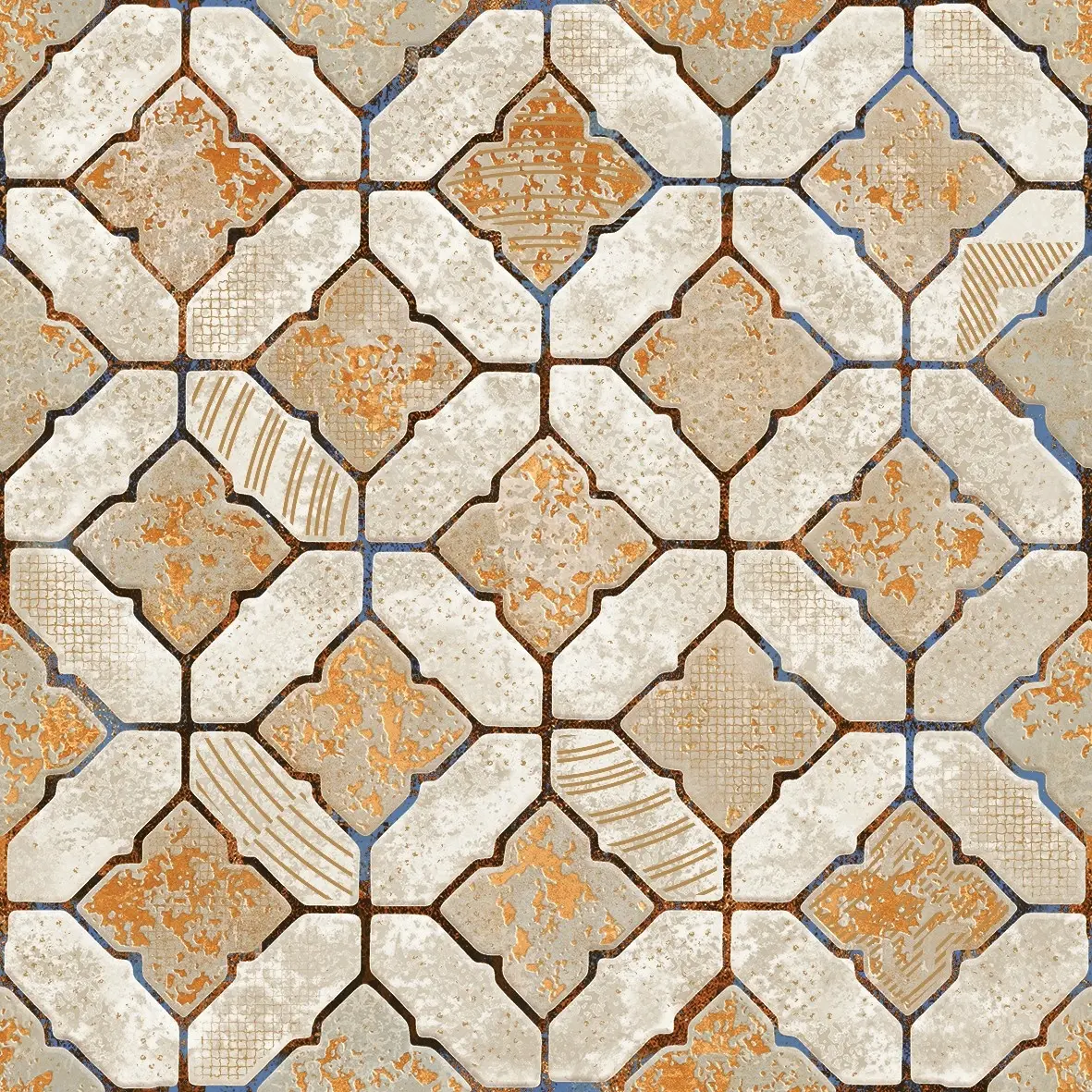
- Sklep Orno Art: curved petals and arrows in grey, white and weathered gold, shown behind a bed.
- Melisa Art: a four-petal medallion in soft orange, dusty blue and sand, shown on a bedroom wall.
- Elton Craft: quatrefoil lanterns in cream with rust patina, shown on a bedroom wall.
- Mitica Vintage: an ornamental medallion in silver-grey relief inside orange, teal and grey borders, for a pressed-tin look behind the bed.
Our Moroccan tiles guide has more on patterns and colours.


Botanical
Leaves and flowers suit bedrooms that open onto a garden or balcony.
- Velveno: a beige base with trailing sage-green leaf vines, with striped and triangle decors.
- Graph: large fern sprays in navy and gold.
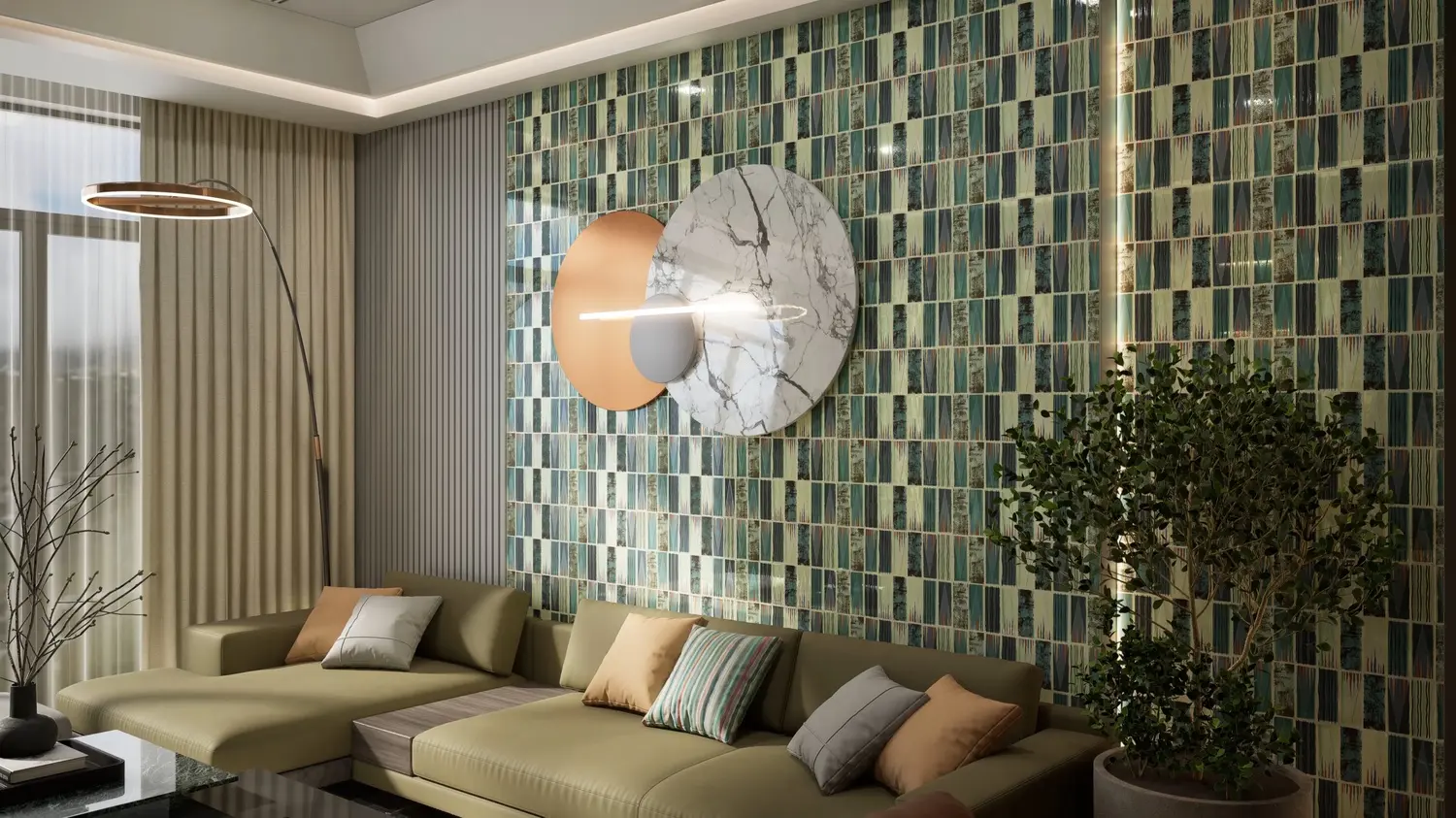
- Valia: a teal, orange and gold Moroccan pattern with a grey-green marble look, shown on a bedroom wall with its diamond pattern on the floor.
See botanical and floral wall tiles for more.
Dramatic and dark
A dark wall behind the bed makes a bedroom feel enclosed and cosy, like a hotel suite, especially with warm lamps.
- Clinker: dark charcoal stone with golden leaves in relief.
- Vienna Black: beige scrollwork and a lilac star on deep black.
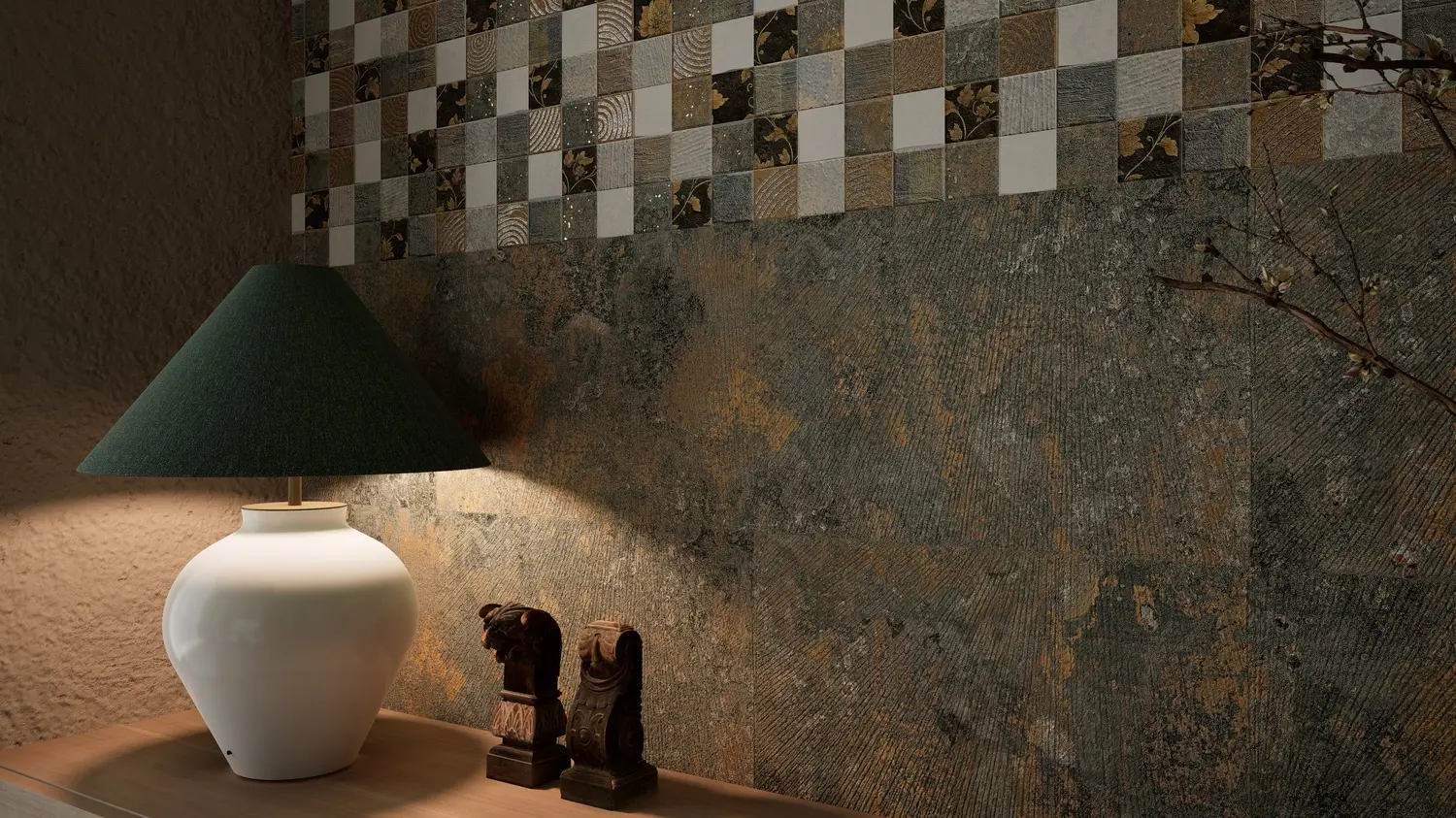
- Daous Caramel: oxidised metal with copper-rust patina and white line art.
Dark walls work best in rooms with good daylight, on one wall only, with lighter floors and bedding.



Artistic
For a statement, choose a design that reads almost like art.
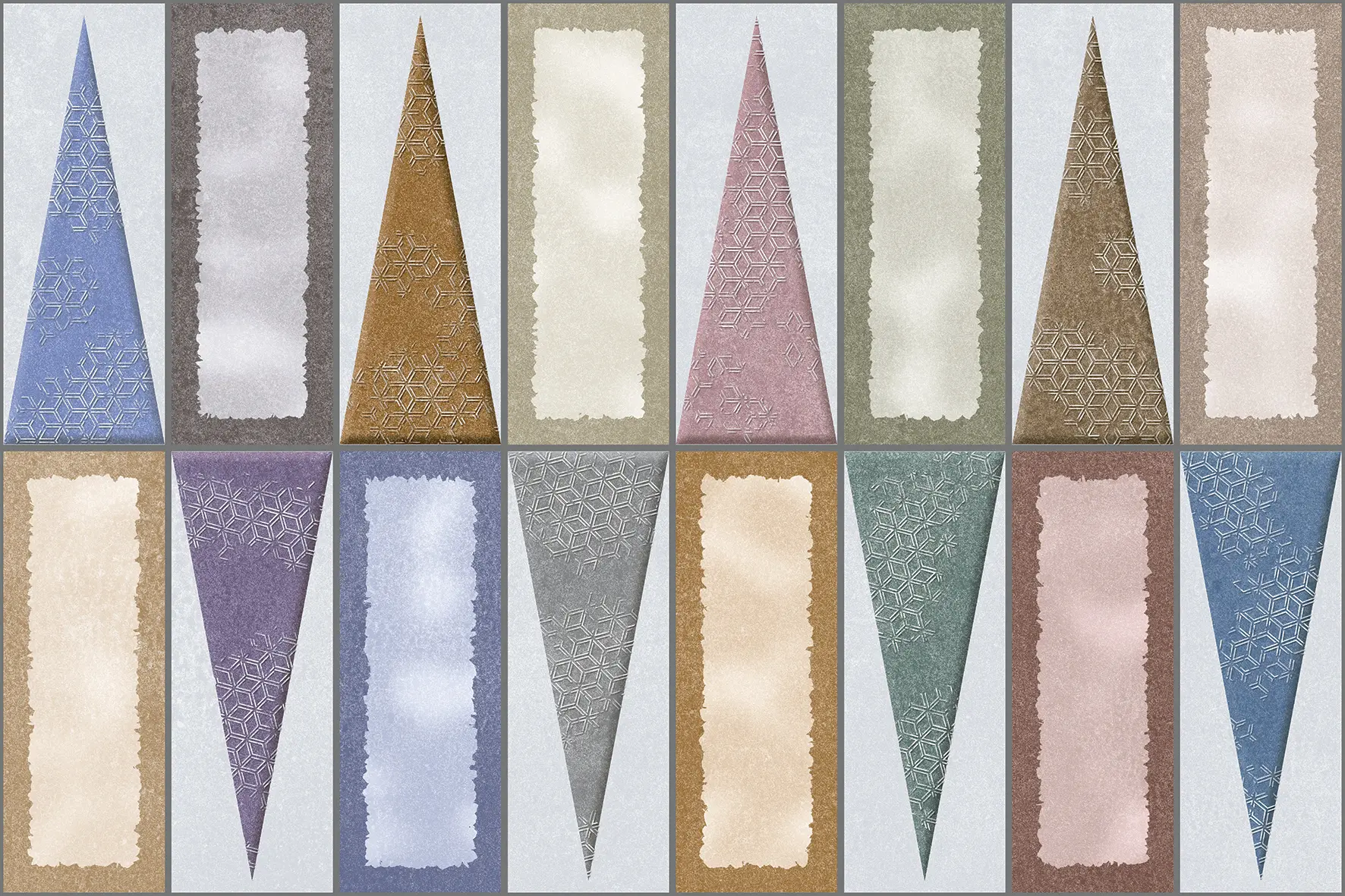
- Squra Prizo: tall triangles in lilac, olive, pink, blue and mustard with soft cream panels, shown behind a bedside lamp.
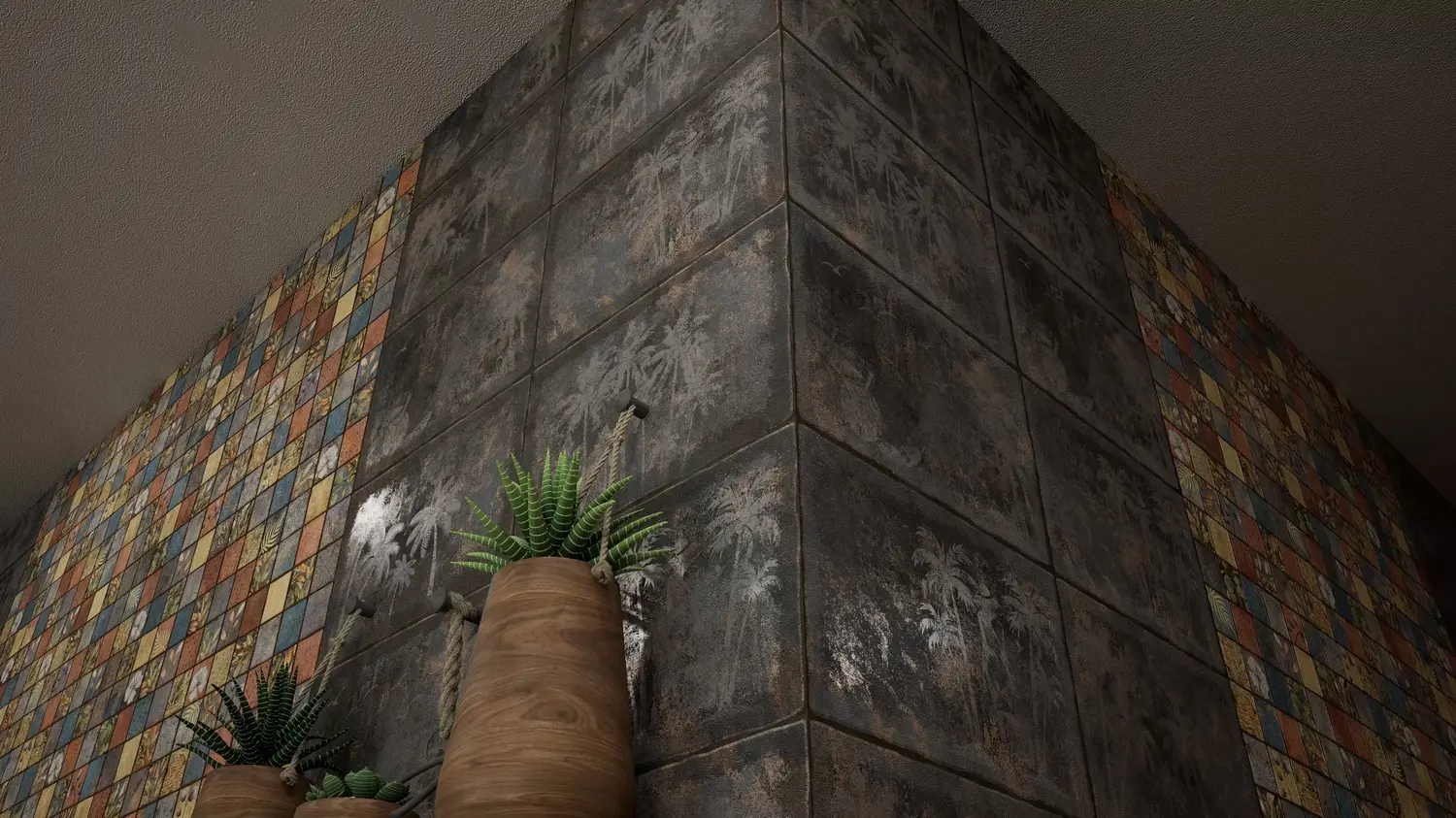
- Abstract Art: Egyptian hieroglyphs, palm trees and figures in warm sand beige, shown behind a bed.
Children's and guest bedrooms
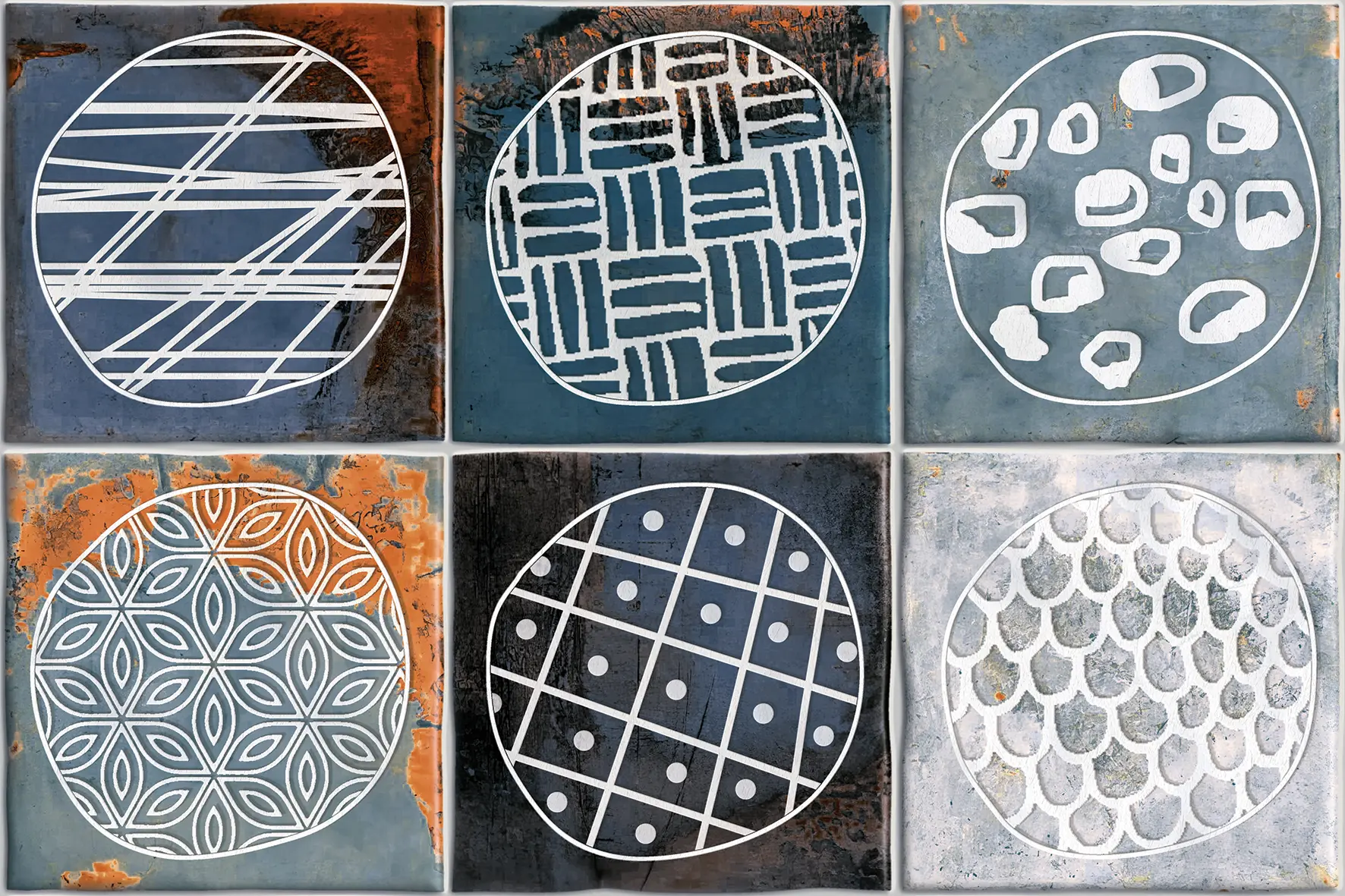
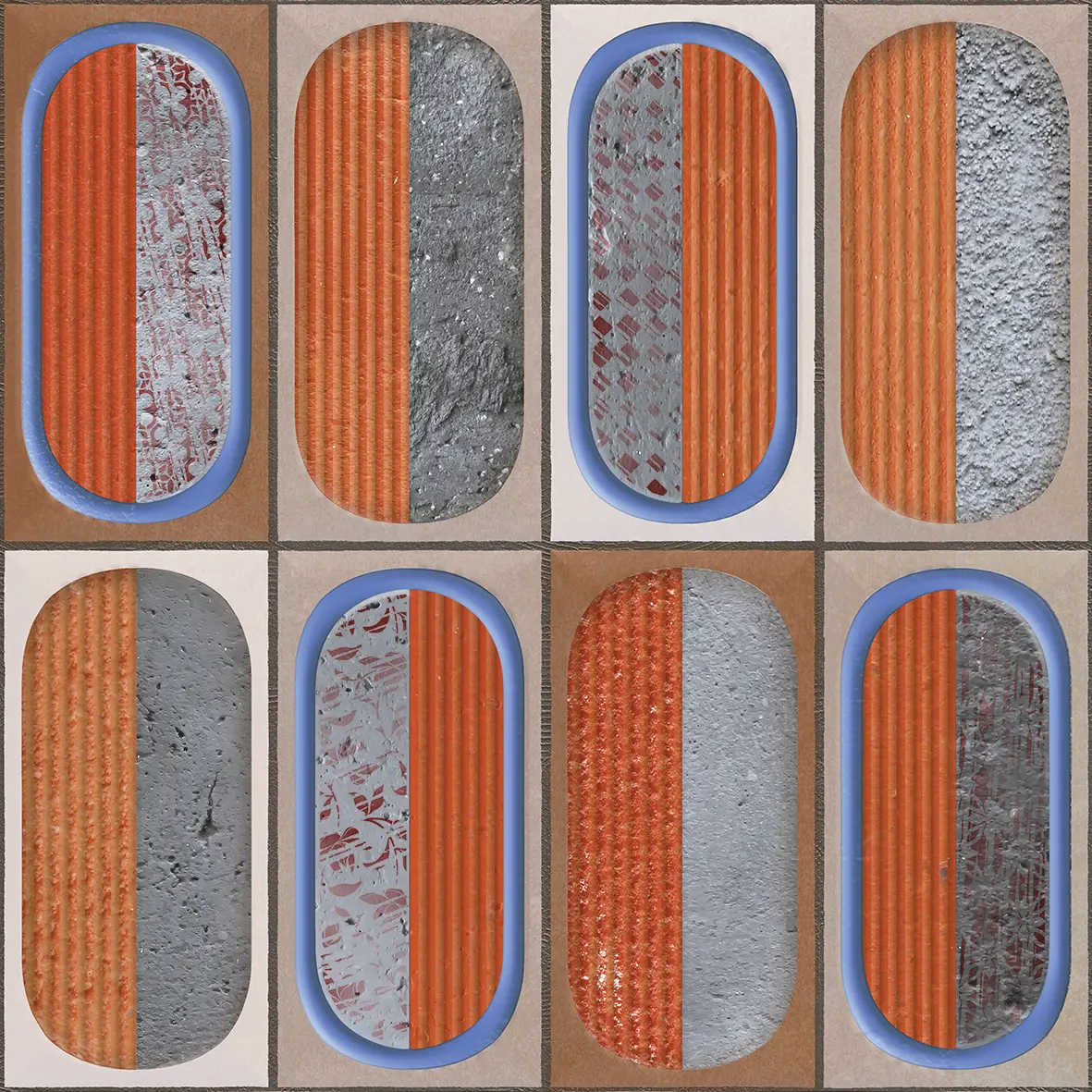
Children's rooms are where tiles earn their keep: crayon, stickers and sticky hands come off a glazed wall with a damp cloth. Playful patterns such as the circles of Eclipse Grove, the capsules of Stepler Brick or the pastel triangles of Squra Prizo suit them. A half-height wainscot is ideal: it protects the part of the wall children touch, and the paint above can change as they grow.
Guest rooms suit neutral, welcoming designs that please most visitors: beige, light grey and soft botanical sets.
Small bedrooms
- Choose light colours and a matt finish to keep the room open.
- Use vertical strips or a vertical layout to make the ceiling look higher.
- Keep the pattern to a panel or a half-height wall rather than the whole room.
- Larger tiles (300 × 600 mm) give fewer joints and a calmer surface.
- Light the tiled wall from above, so it becomes a soft source of light.
Colours for bedrooms
Bedrooms are for rest, so most people choose soft, warm or calm colours: beige, cream, terracotta, sage green, dusty blue and light grey. If you follow Vastu, earthy tones suit a master bedroom in the south-west; see tile colours as per Vastu. For pairing tile colours with walls, floors and furniture, see wall tile colour combinations.
Pairing tiles with furniture and fabrics
A tiled wall is the backdrop for the bed, so plan the two together.
- Wooden beds and side tables in teak or walnut tones look rich against terracotta, rust and beige stone looks, and crisp against light grey.
- White or light oak furniture suits grey, blue and sage designs for a Scandinavian feel.
- Upholstered headboards in velvet or linen soften a patterned wall; choose a fabric colour taken from the tile.
- Brass and gold lamps pick up gold accents in designs like Belfist, Sklep Orno Art and Clinker.
- Bedding in plain colours lets a patterned wall lead; with a plain or textured wall, patterned bedding can take over.
- Curtains and rugs absorb sound and balance the hard surface of the tiles.
A simple rule: if the wall is busy, keep everything in front of it plain, and if the wall is plain, let the furniture and fabrics carry the pattern.
With or without a headboard
A tiled wall can replace a headboard altogether: the pattern frames the bed, and a narrow ledge or floating shelf along the top of a half-height panel holds a lamp, books or a plant. If you do use a headboard, keep it lower than the tiled panel so the pattern shows above it, and choose a slim headboard in front of a bold design. Wall-fixed headboards should be fixed through the tile joints, with the right drill bit, or planned before tiling.
Caring for bedroom wall tiles
Bedroom walls need little care: dust them with a dry microfibre cloth and wipe the area behind the pillows with a damp cloth and a drop of dish soap every few weeks to remove hair oil. The cleaning guide covers the rest.
Finish: matt behind the bed
Choose a matt finish for a bedroom wall. Reading lamps and bedside lights sit close to the headboard wall, and a glossy surface would bounce their light back as glare. Matt tiles look soft, show their pattern clearly and hide fingerprints. A glossy tile can work on a dressing area wall away from the bed. See matt vs glossy tiles.
Lighting a tiled bedroom wall
- Wall washers or a cove light above the panel wash light down the tiles and bring out texture and pattern.
- Warm white light (about 2700 to 3000 K) suits bedrooms and makes terracotta, wood and beige glow.
- Wall-mounted reading lamps can be fixed on the tiled wall; plan their wiring before tiling.
- An LED strip behind a floating headboard or along a ledge makes the wall glow at night.
Practical planning
- Plan switches and sockets first. Decide bedside switches, lamp points, charging sockets and the AC position before tiling, so boxes are set at the finished tile level and centred on tiles or joints.
- Mark the bed. Draw the bed and side tables on the wall so the pattern is centred where it matters.
- Finish the edges. Use a tile trim or a band of decor tiles where tiles stop against paint, and at outside corners.
- Hide the joints. Choose a grout colour close to the tile's background, so the wall reads as one surface.
- Fix properly. Use tile adhesive on cured, dry plaster; see how to install wall tiles.
Mistakes to avoid
- Tiling every wall, which makes the room feel cold and loud.
- A glossy finish right behind the bed.
- A busy pattern on a small wall that is also covered by a tall headboard and lamps.
- Centring the pattern on the wall when the bed is off-centre.
- Forgetting switch and lamp positions until after tiling.
- Ordering too few tiles for a feature wall, so the last boxes come from another batch.
Bedroom floors
Most bedrooms in India have large floor tiles or wood-look floors. If you want pattern underfoot, a patterned 300 × 300 mm floor tile can be used as a rug-like inset at the foot of the bed or in a dressing area; many of our 300 × 300 mm designs are 9.5 mm thick and made for floors, such as Valia's diamond pattern and Melisa Art.
Want help choosing a bedroom design? Contact us with a photo of the room and the bed's position, or browse every designer wall tile. For the rest of the house, see living room and designer wall tiles.
A bedroom tile plan in five decisions
- Which wall: usually behind the bed.
- How much: full wall, panel or half height.
- Which look: calm, earthy, Moroccan, botanical, dark or artistic.
- Which finish: matt.
- Which light: warm wall lights or a cove above the panel.