
Matt vs glossy tiles: which finish to choose for bathrooms, kitchens, living rooms and outdoors
The finish of a tile changes how a room looks and how much work it is. How matt, glossy and rustic finishes differ, the myths about them, and which to choose for each room and wall.
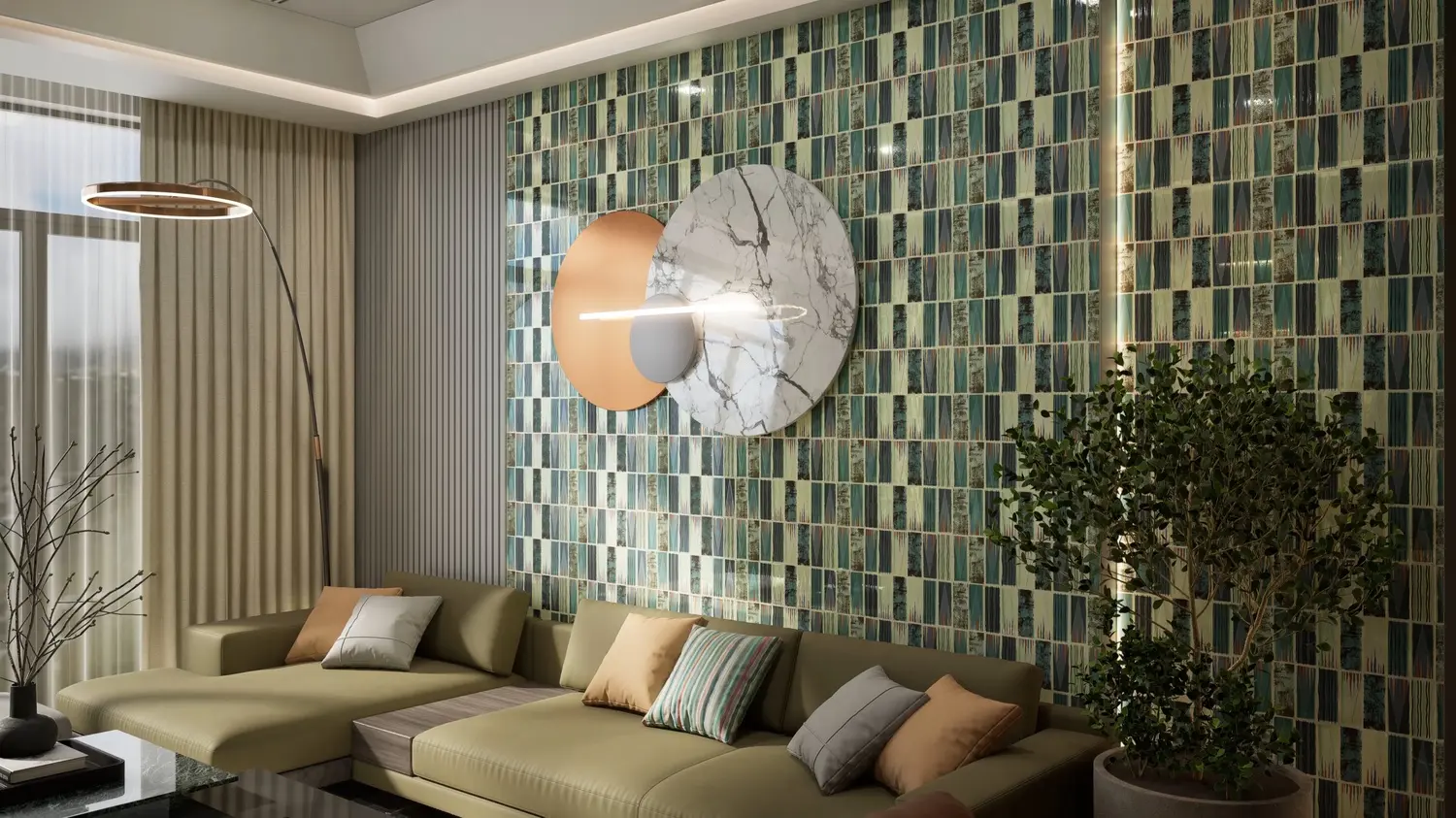
After colour and size, the finish is the choice that changes a tiled wall most. The same design looks bright and polished in glossy, soft and natural in matt, and textured like real stone in a rustic finish. It also changes how a room feels to live in: how it reflects light, how quickly water marks show, how the tile cleans and, on a floor, how it feels underfoot.
This guide compares matt, glossy and rustic tiles, clears up a few myths, and recommends a finish for each room and wall. We make ceramic wall tiles in all three finishes, so the examples are from our own range.
The three finishes
| Glossy | Matt | Rustic | |
|---|---|---|---|
| Surface | Smooth, shiny, reflects light like glass | Smooth or fine-textured, soft sheen or none | Deep texture you can feel, like natural stone |
| Look | Bright, crisp, polished | Calm, natural, modern | Earthy, raw, outdoor |
| Water spots and fingerprints | Show clearly | Hidden | Hidden |
| Cleaning | One wipe on flat dirt | Easy, a soft brush now and then | Brush and rinse |
| Light | Bounces light, brightens a small room | Absorbs glare, even light | Shadows in the texture |
| Best for | Kitchen backsplashes, small bathrooms, mandir niches | Most walls, TV walls, bedrooms, bathrooms | Elevations, terraces, garden and feature walls |
There are in-between finishes too. Satin or lustre tiles have a soft sheen between matt and glossy, and Morbi factories offer special effects such as glitter (often called sugar) and carved finishes, where the glaze or the surface is shaped to follow the print. They are variations on the same three ideas: how smooth the surface is and how much light it reflects.
How a finish is made
Every glazed ceramic tile has a layer of glaze fired onto its face. The finish comes from that glaze and the surface under it.
- Glossy: the glaze melts in the kiln into a smooth, glassy layer, which reflects light in one direction like a mirror. Some glossy tiles are also polished after firing.
- Matt: the glaze contains ingredients that form tiny crystals or a fine texture as it cools, so light scatters in all directions instead of reflecting back.
- Rustic: the tile is pressed with a textured mould, so the body itself has the relief of stone or wood, and then glazed and printed. The print and the texture together make it look like the real material.
In all three, the glaze is sealed and hard. A matt tile is not an unglazed tile, and it does not soak up stains any more than a glossy one does.
Glossy tiles: pros and cons
Why people choose glossy:
- They reflect light, which makes a small or dim room, such as a windowless bathroom, feel brighter and bigger.
- Colours look deeper and patterns sharper under a glossy glaze.
- Grease and dirt sit on a perfectly smooth surface and come off in one wipe, which is why glossy tiles are so common behind a hob.
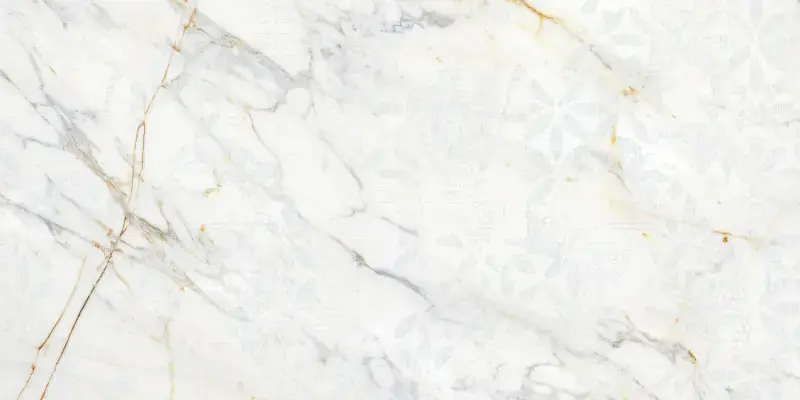
- A glossy marble look, such as our Angel Satavrio statuario, looks closest to polished marble.
What to watch:
- Water spots, soap marks and fingerprints show, especially on dark glossy tiles in hard water areas.
- Reflections: a glossy wall opposite a window or behind a TV reflects light and can cause glare.
- On floors, glossy tiles are slippery when wet and show fine scratches from grit over time. Keep them for walls.
- Any unevenness in the wall shows up as a waviness in the reflections, so the wall needs to be flat.

Matt tiles: pros and cons
Why people choose matt:
- They hide water marks, fingerprints and dust, so a bathroom or a busy hallway looks clean for longer.
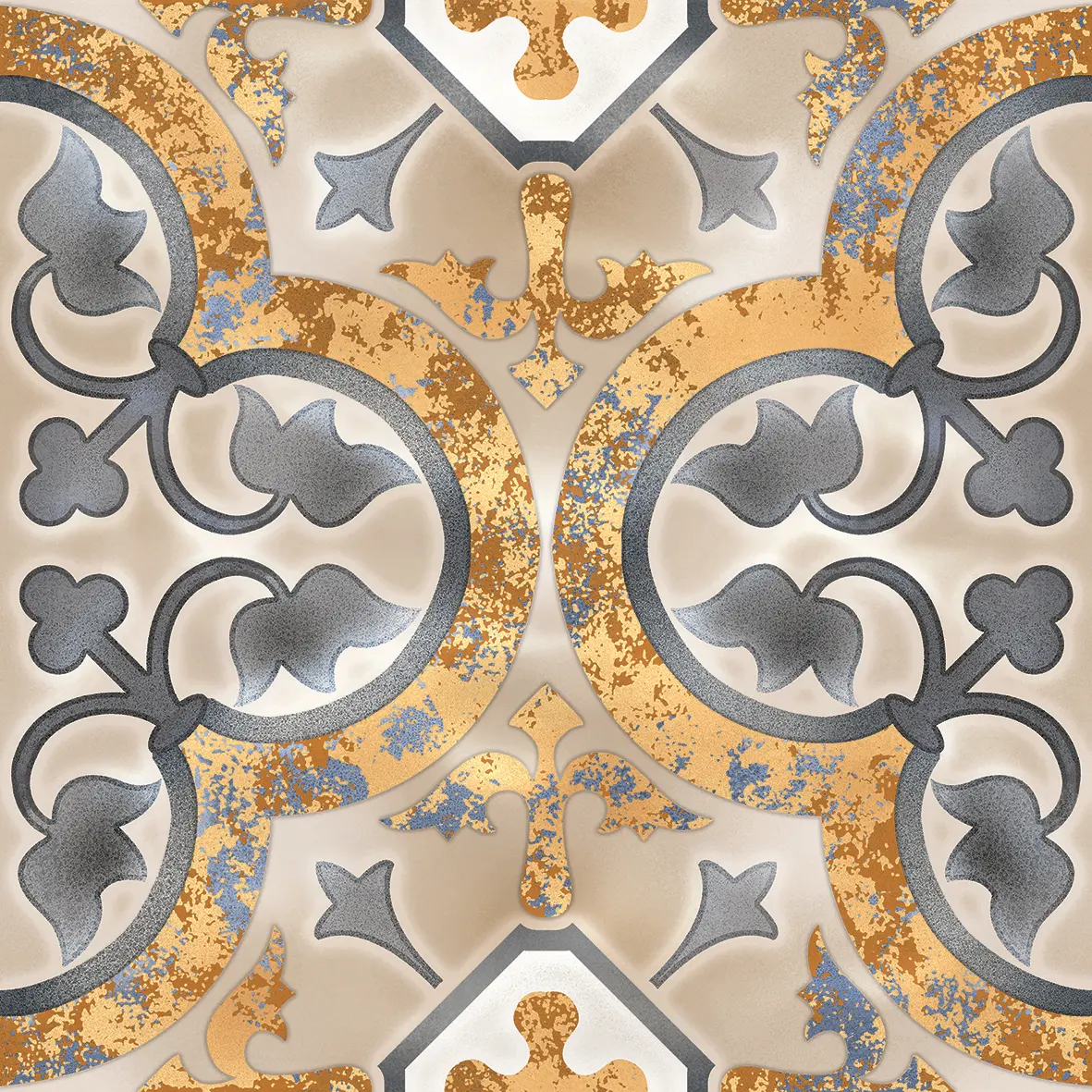
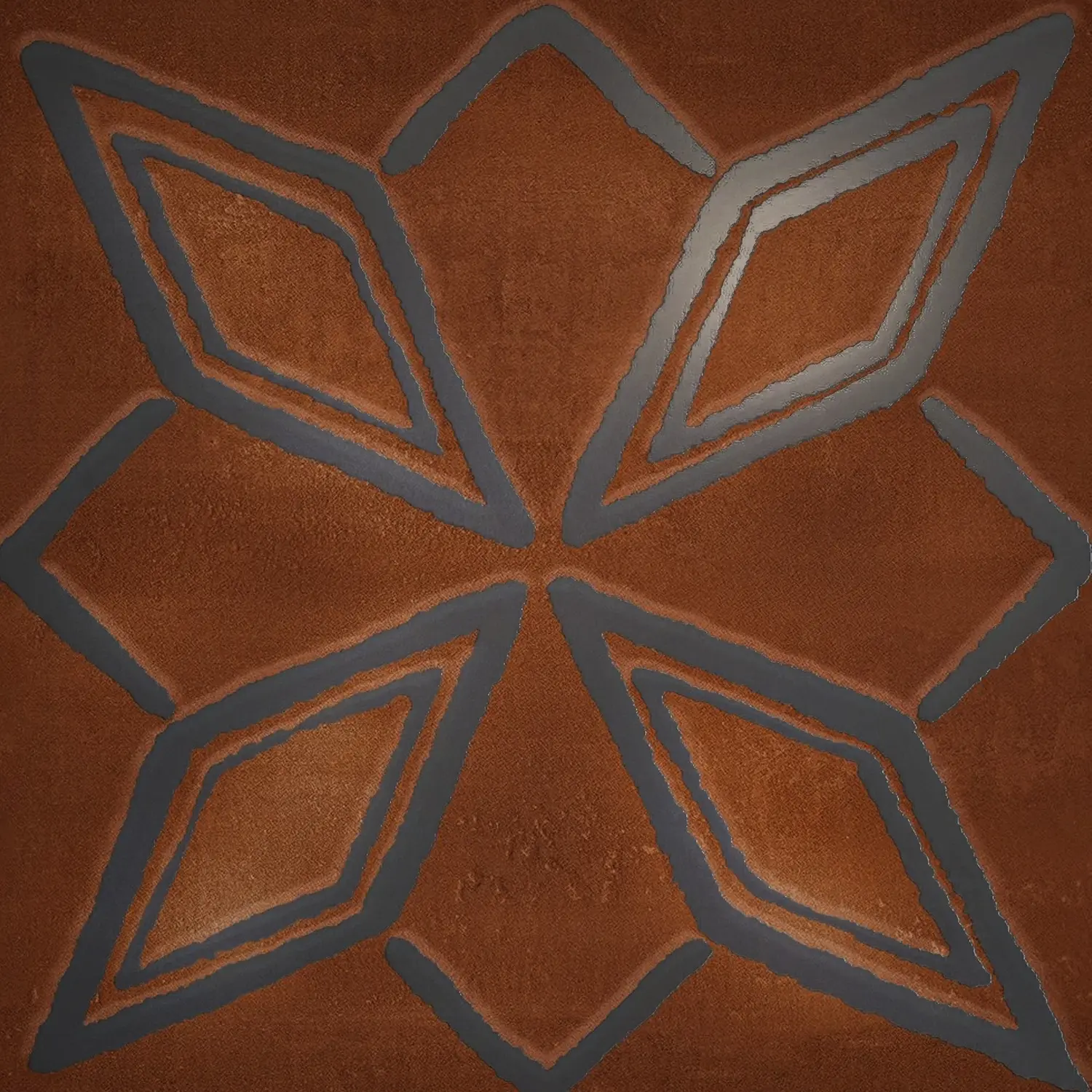
- The soft surface looks natural and calm, and it suits stone, terracotta, concrete and handmade looks, which look fake under a high gloss.
- No glare: a matt wall looks the same from every angle, under any lamp.
- Matt is the finish most designers specify for feature walls today, because it lets the pattern speak without shine.
What to watch:
- Colours look a shade softer than on glossy tiles.
- A fine texture can hold oily dirt, so a matt backsplash needs a brush and soapy water now and then.
- In a very small, dark room, an all-matt wall can feel a little flat; good lighting or a glossy accent solves it.
Rustic tiles: pros and cons
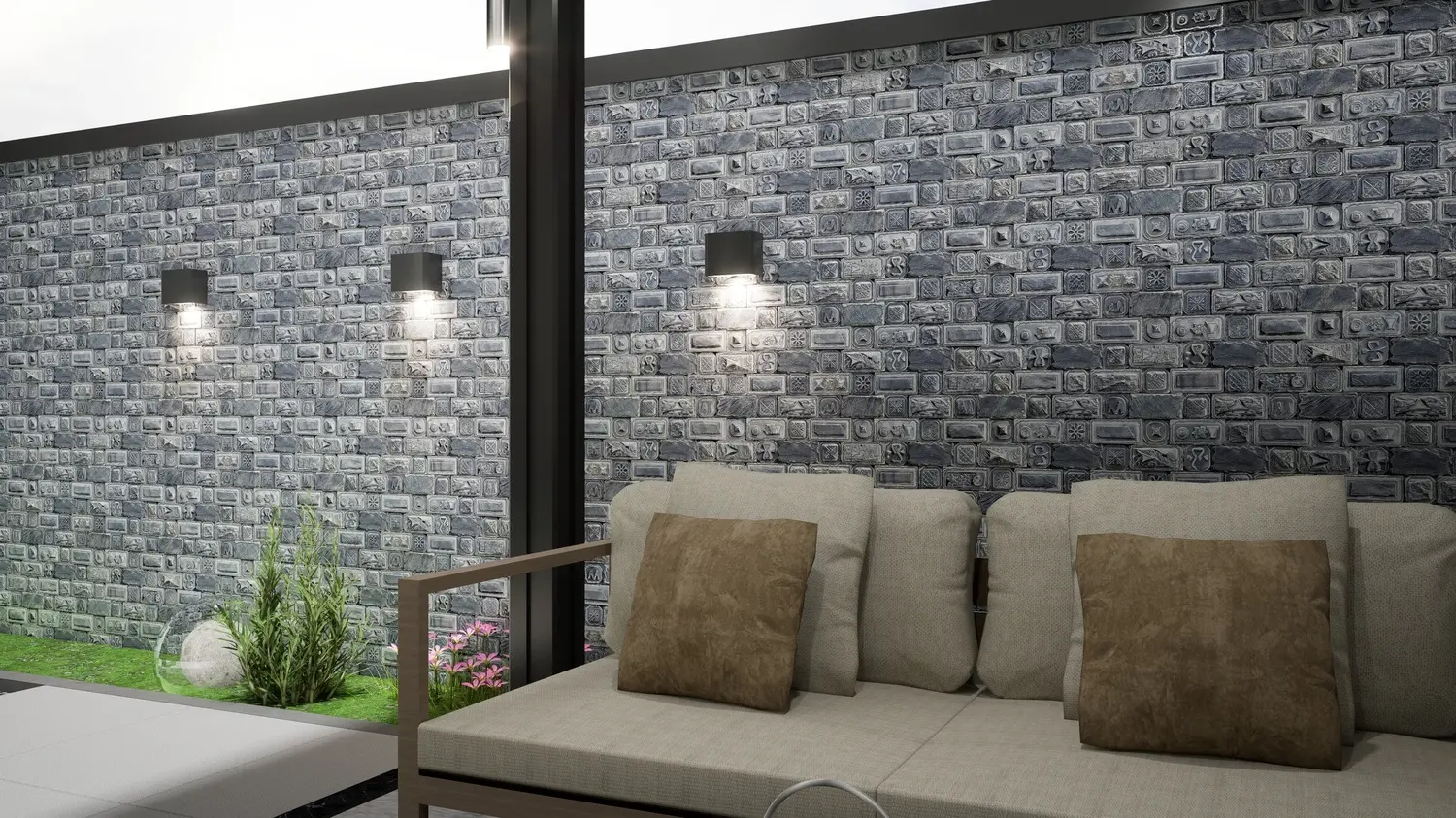
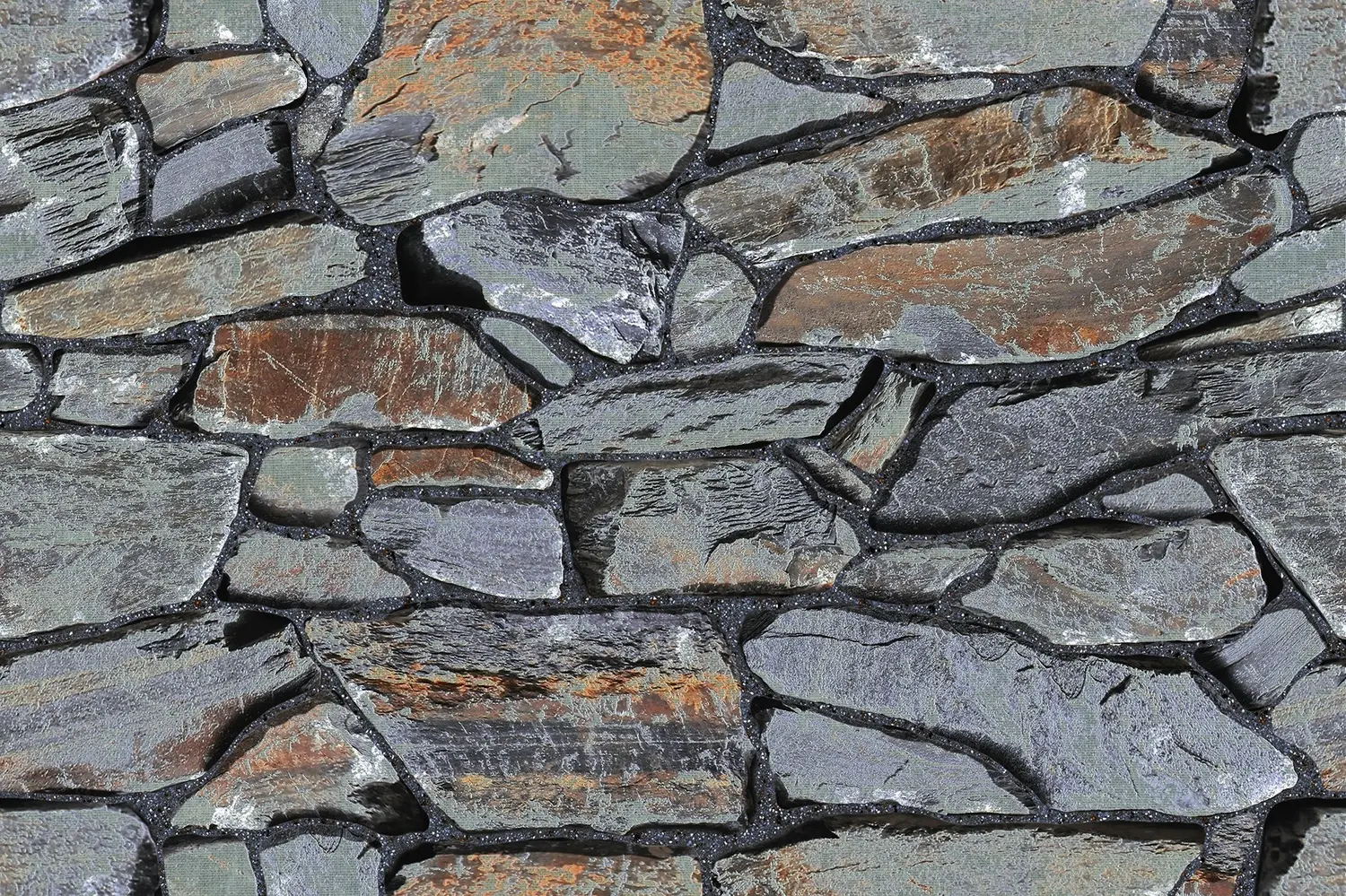
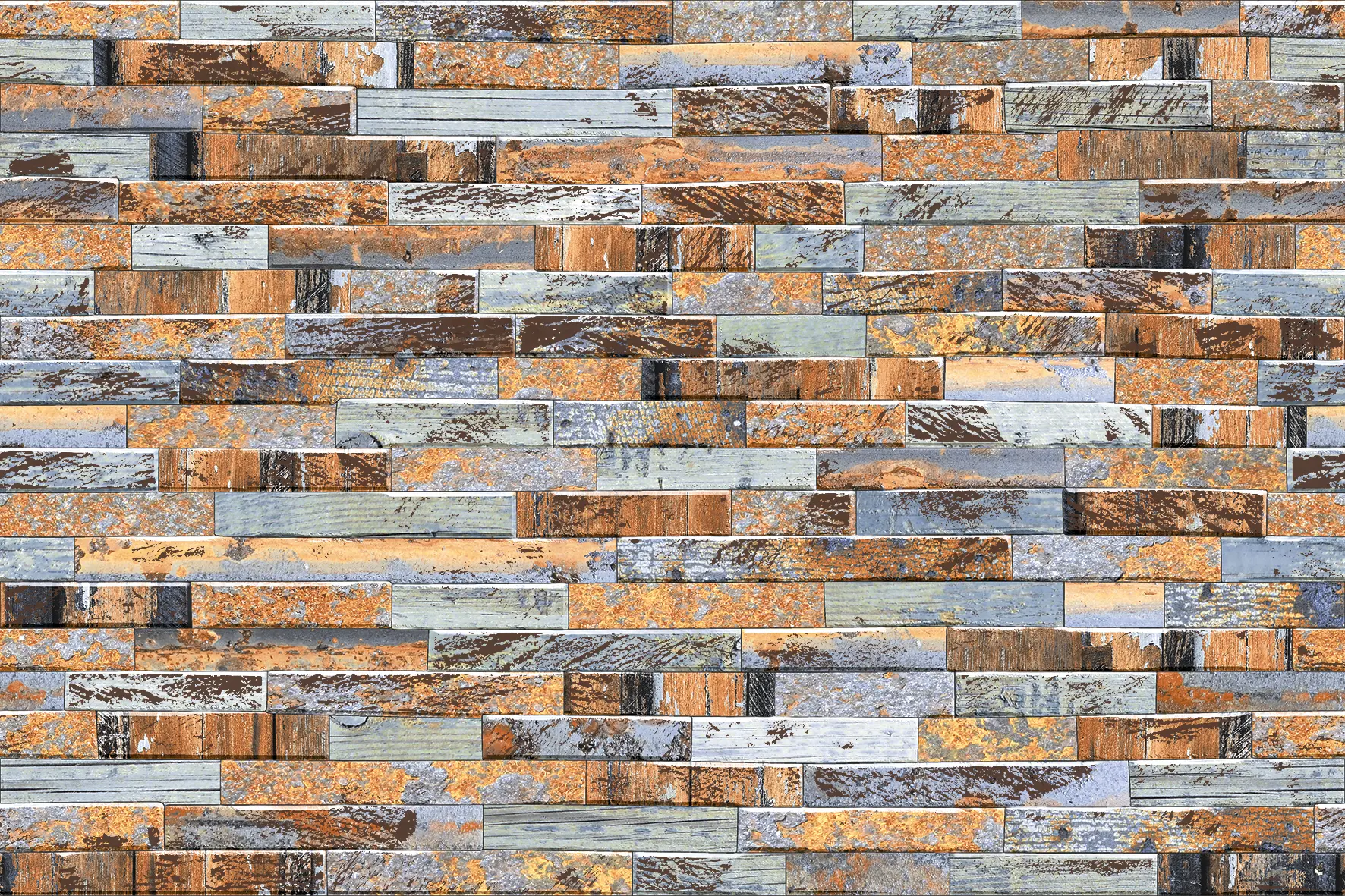
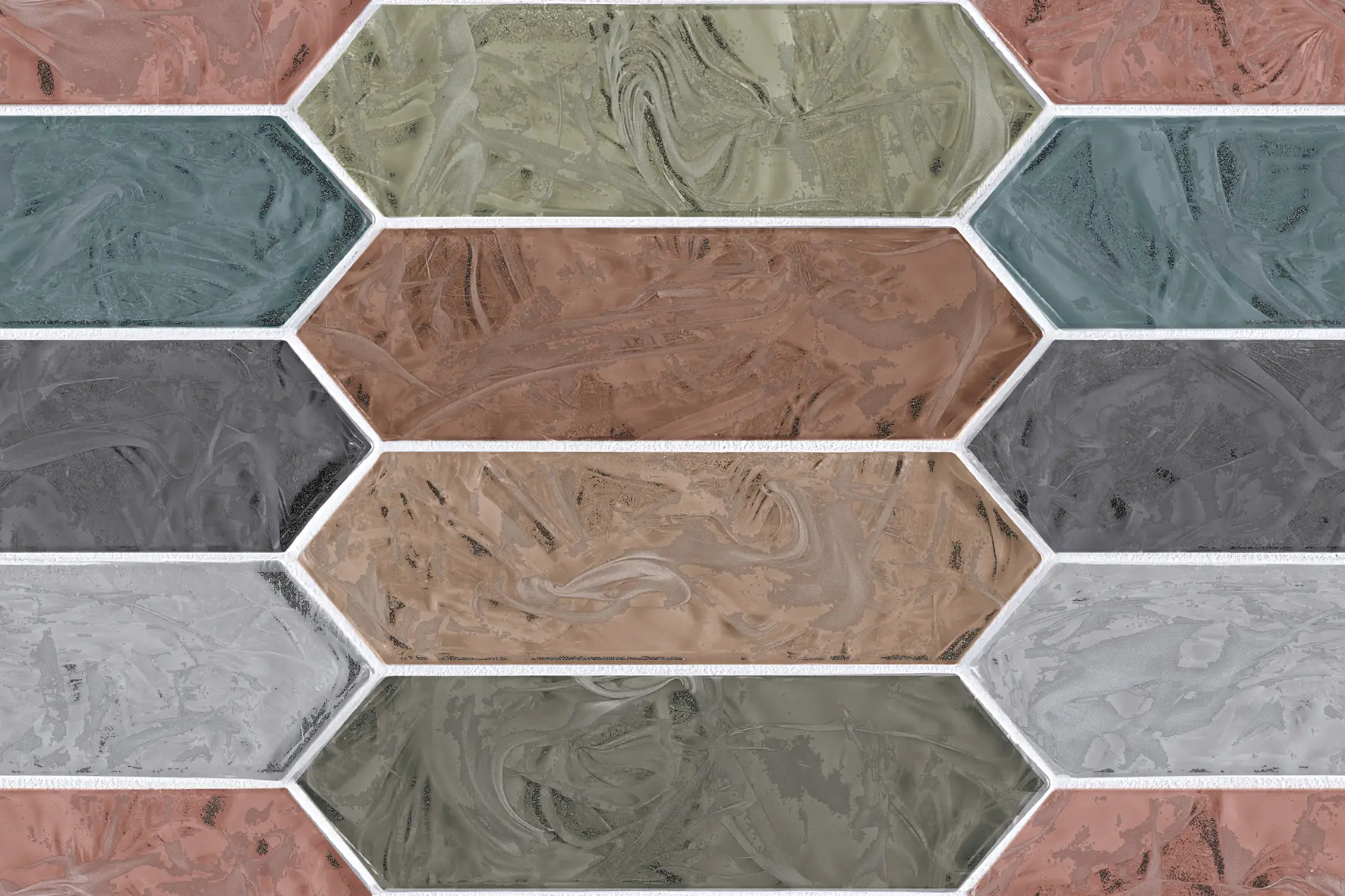
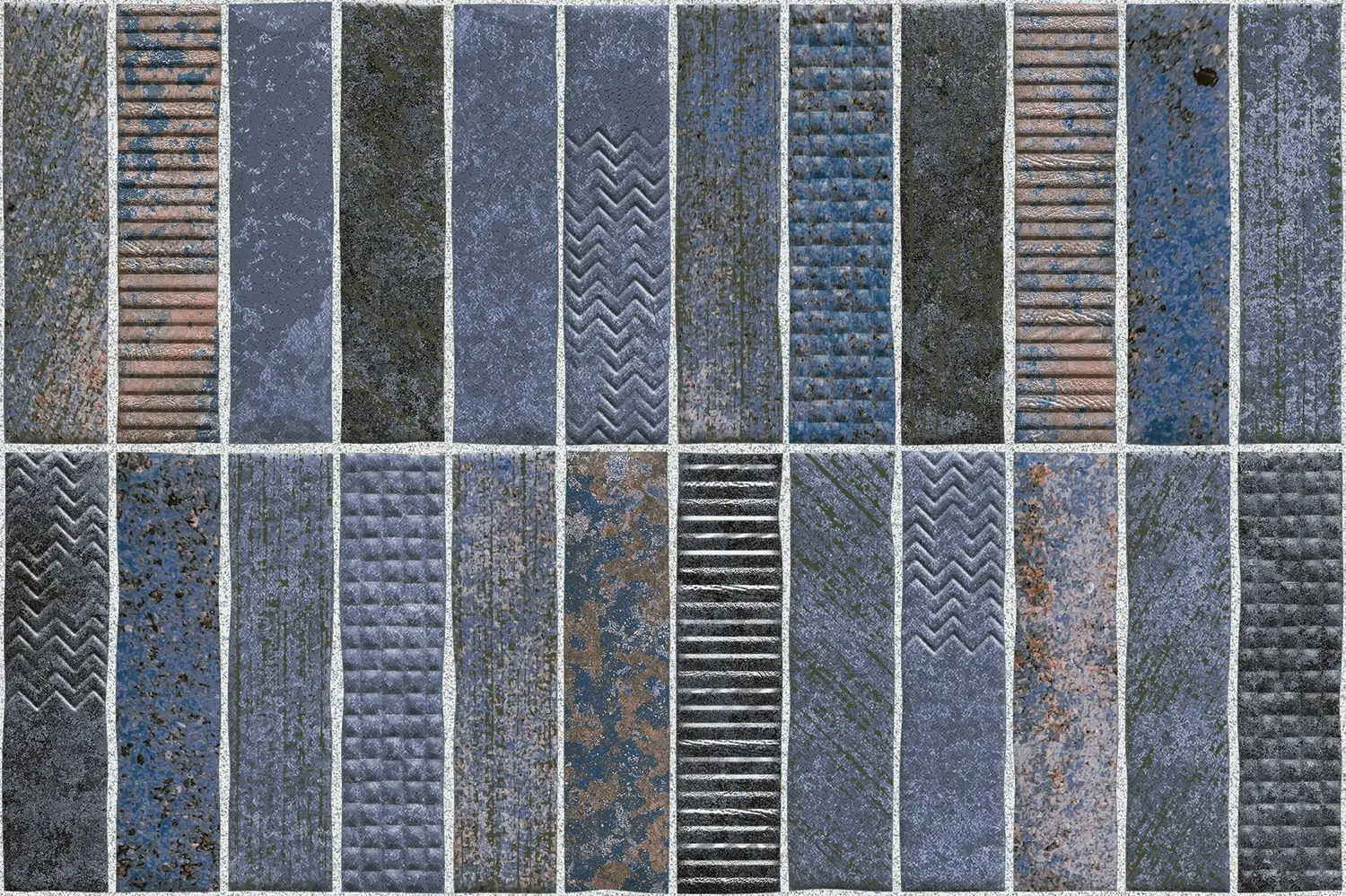
A rustic finish has real texture: split stone, ledger stone, weathered brick. Our Mudy Stone slate, Coprica Pencil ledger stone and Specturm Smoke picket tiles have it.
- Pros: the closest look to natural stone, because light catches the texture as it does on real stone; hides dust and rain marks outdoors; adds depth to a plain wall.
- Cons: dirt can settle in the texture, so outdoor walls need a wash with a brush now and then; best kept away from places that get greasy, such as behind a hob.
Myths about tile finishes
- Glossy tiles are stronger. No. Strength comes from the tile body, its thickness and how it was fired, not from the shine on the glaze.
- Matt tiles stain more easily. Not glazed matt tiles. The glaze is sealed in both cases; what stains is usually the grout.
- Matt tiles never slip. A matt surface is often less slippery than glossy when wet, but slip resistance is measured separately. If a floor tile will be wet, ask for its slip rating rather than going by the finish.
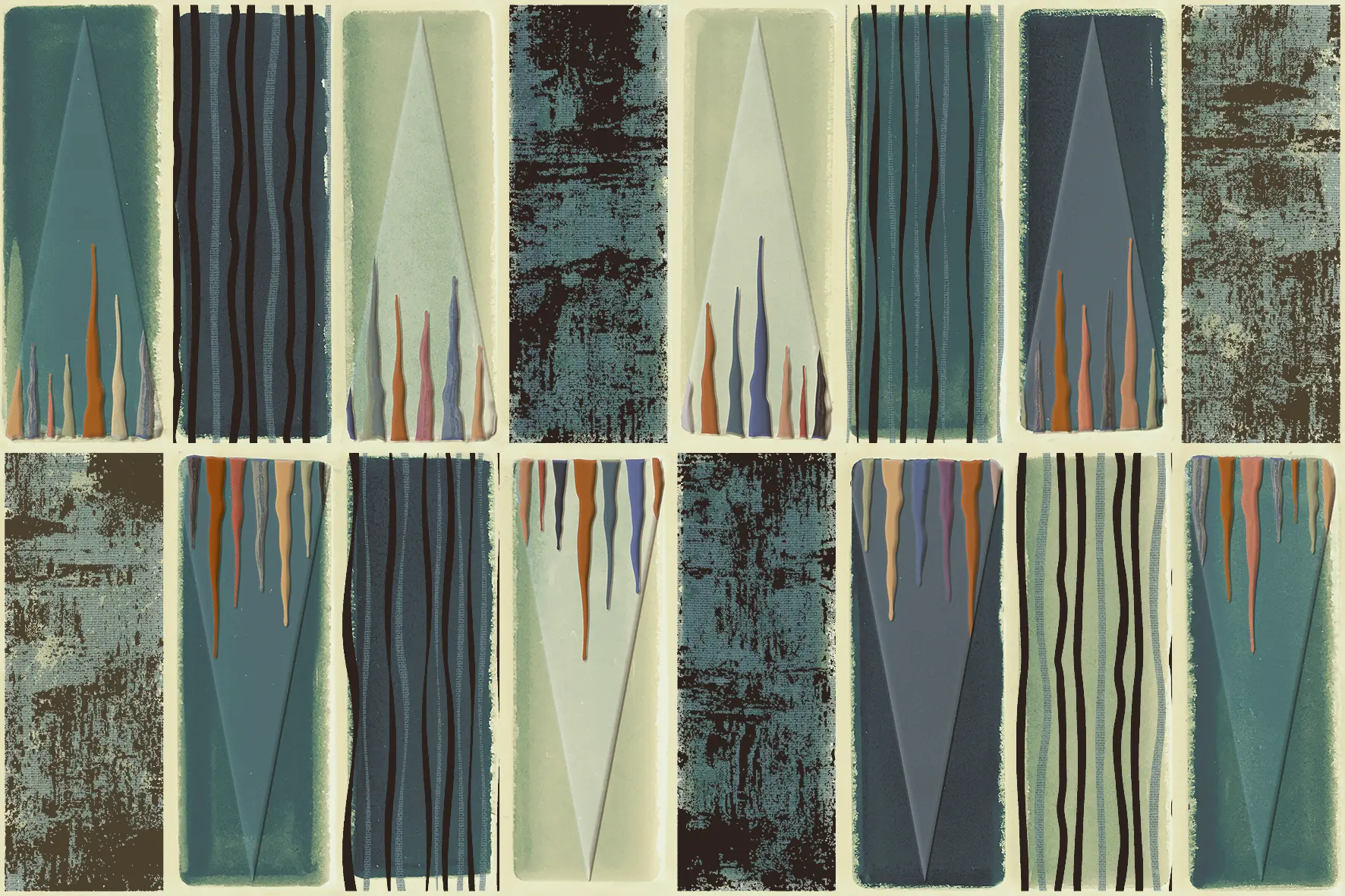
- Glossy tiles are old-fashioned. Glossy is back in fashion in kitchens, in bold colours and handmade looks, such as our glossy Sky Lark and Willow Kitchen.
- You must choose one finish for the house. Mixing finishes is one of the best ways to make a room interesting, as below.
Which finish for each room
Bathroom walls
Both work. Matt is the practical choice for shower walls in hard water areas, because it hides water spots between cleans. Glossy suits a small, windowless bathroom that needs the extra light, and is easy to wipe if you squeegee the walls. A popular mix is a glossy or patterned feature panel behind the basin or in the shower, with matt tiles elsewhere. The floor should be a matt or textured floor tile. See the bathroom wall tiles guide.
Kitchen backsplash
Glossy is the traditional choice behind a hob: oil and turmeric wipe off a glossy surface in one pass, and the tiles reflect the under-cabinet light onto the counter. Matt suits open kitchens that sit next to a living or dining area, where a calmer finish blends with the furniture, and it hides water splashes by the sink. If you choose matt behind the hob, keep a soft brush and dish soap for a weekly wash. Our Kitchen Studio collection has both: glossy Willow Kitchen and matt Mailono Zapta. More in the kitchen wall tiles guide.
Living room and TV wall
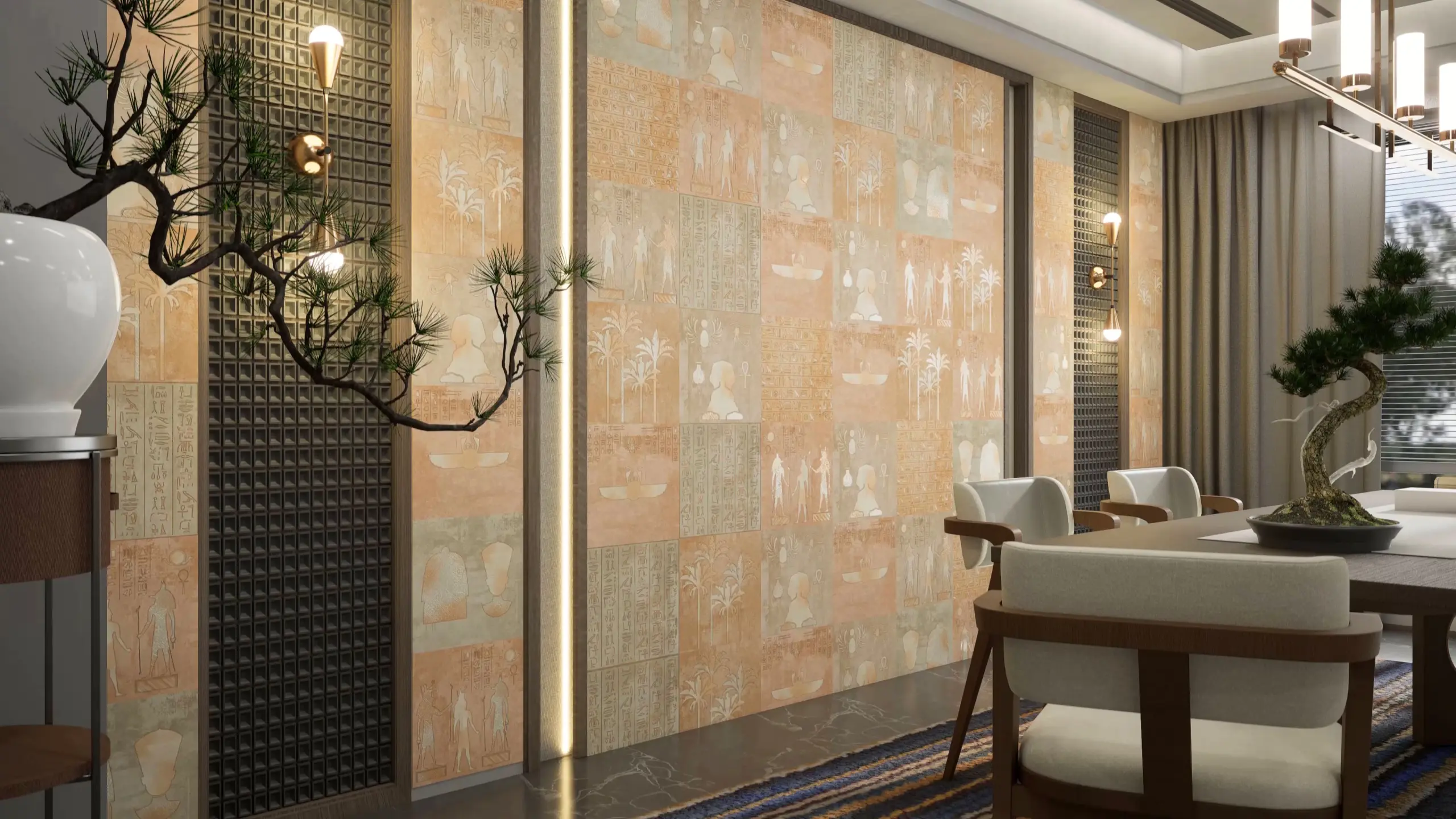
Choose matt behind a TV. A glossy wall reflects the window and the lamps, and the reflections sit right beside the screen. Matt also suits the stone, terracotta, botanical and Moroccan looks that most feature walls use. Glossy can work on a wall away from windows, lit from above, where its reflections add sparkle. See living room wall tiles and highlighter tiles.
Bedroom
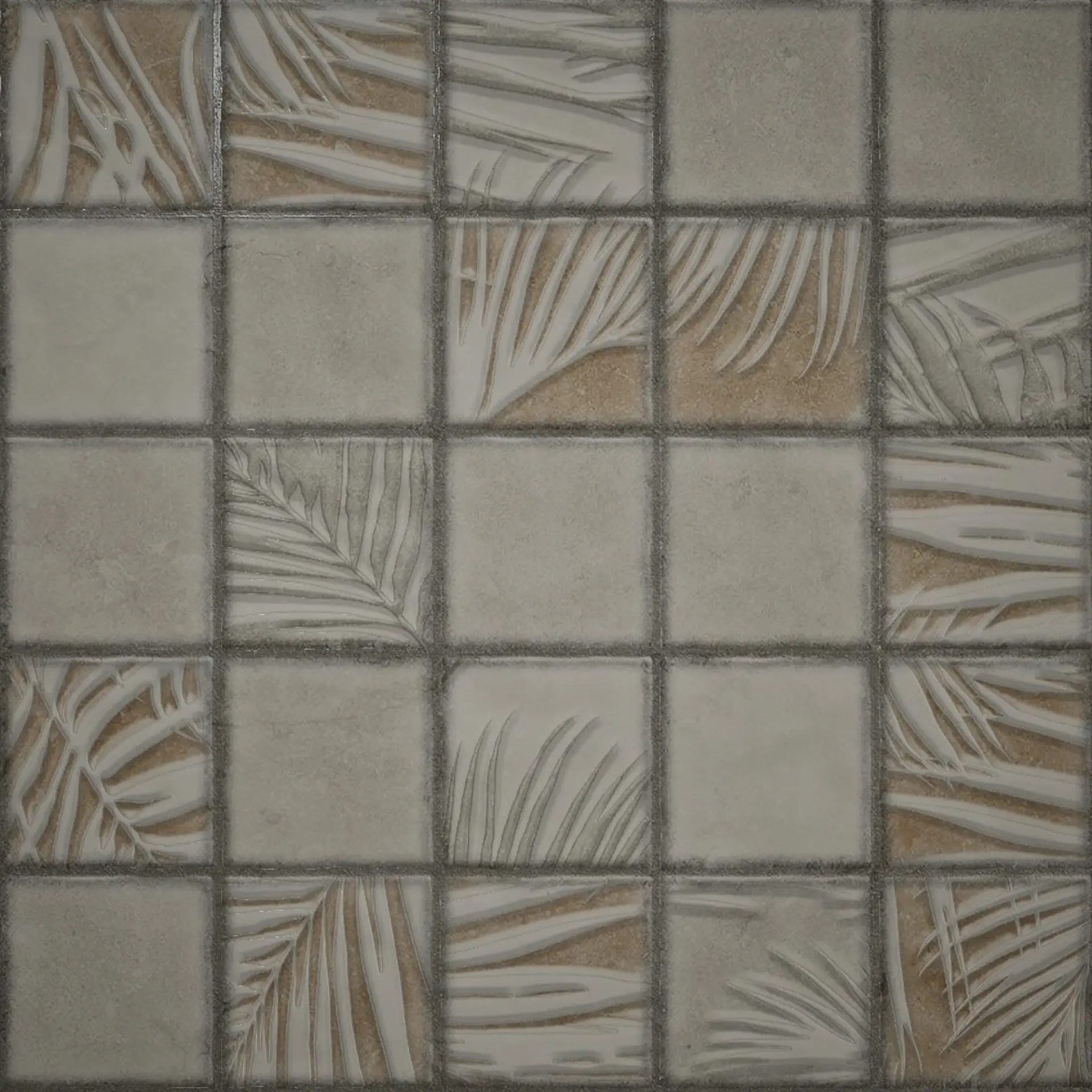
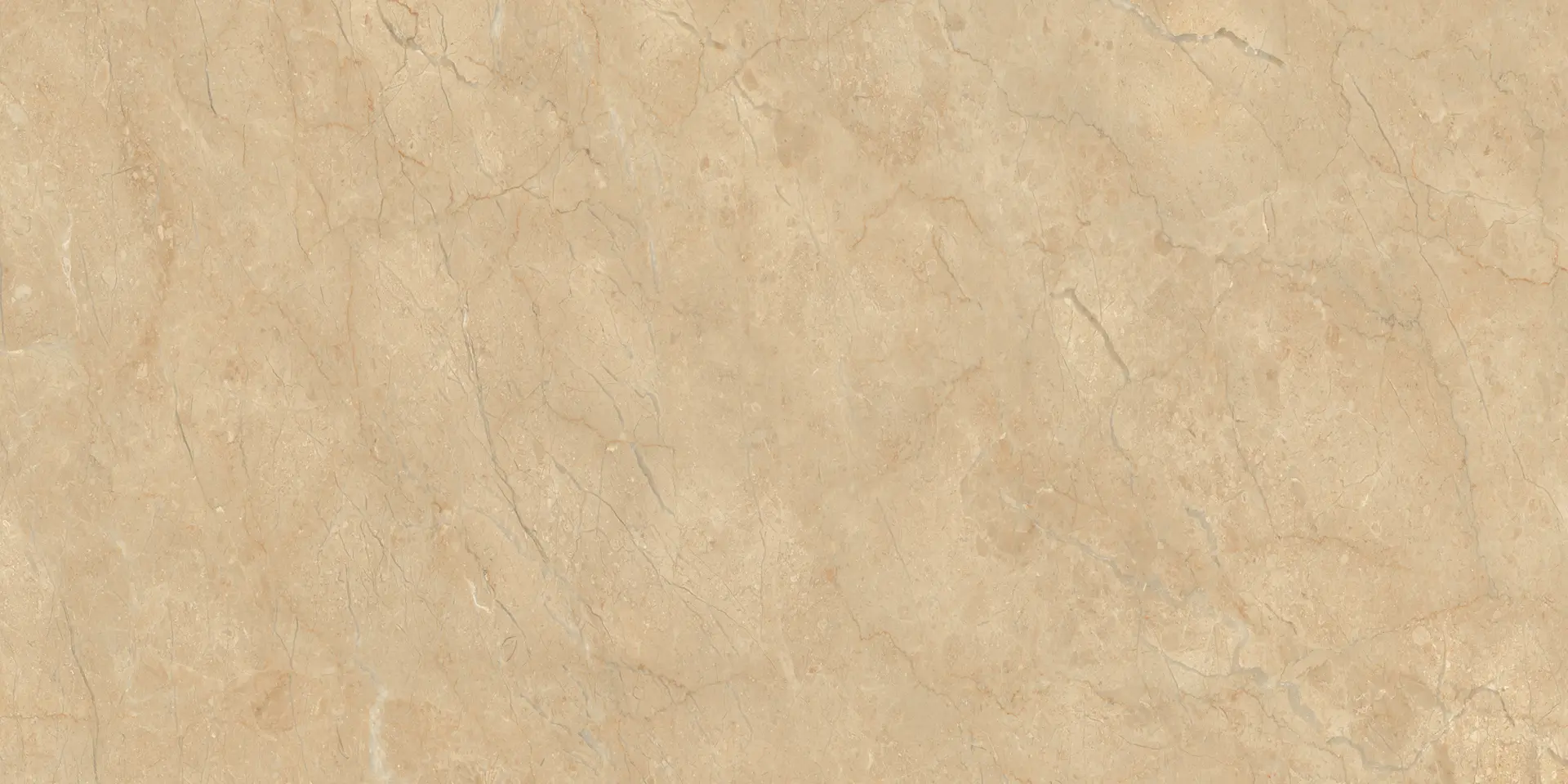
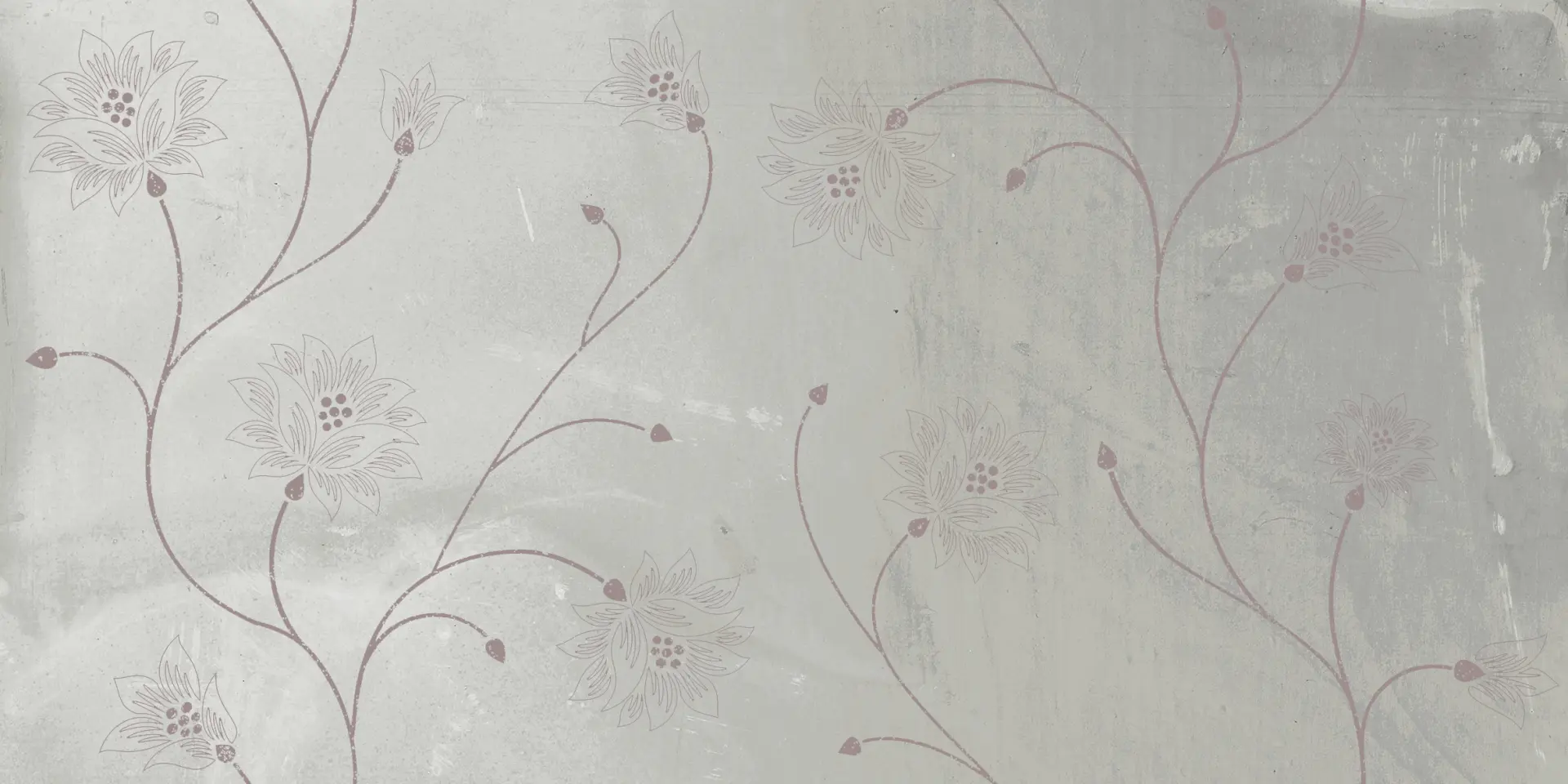
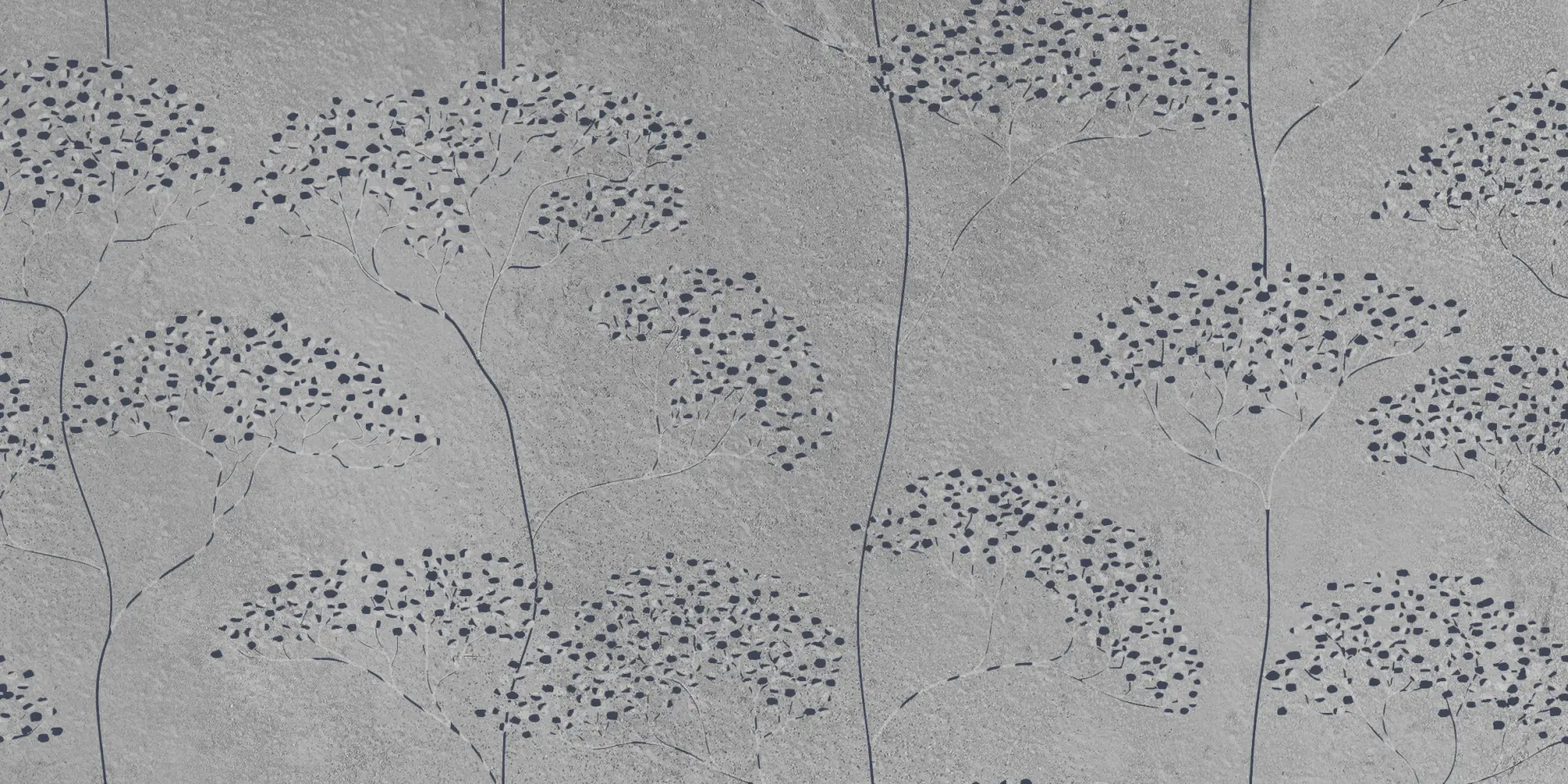
Matt is the better choice behind a bed: the room is about calm, and a soft surface keeps reading lamps from bouncing off the wall. Patterned matt tiles, such as Sklep Orno Art or Textura Mist, give a headboard wall character without shine.
Pooja room
Both have a place. A matt wall keeps reflections of lamps off the idols, so they are clearly seen. A glossy devotional tile, such as our Divyam God, shines in the light of a diya, which many families love in a small niche. The pooja room tiles guide explains layouts.
Exterior walls and elevations
Choose matt or rustic outside. Glossy tiles on a house front reflect harsh sunlight, show every rain streak and look out of place next to stone. Rustic stone-look tiles hide dust and weathering best. See the exterior elevation tiles guide.
Floors
Use a matt or textured floor tile, especially in bathrooms, balconies, kitchens and anywhere that gets wet. Our 300 × 300 mm tiles are 9.5 mm thick and rated for floors; for wet floors, ask about the slip rating of the design you choose.
Commercial spaces
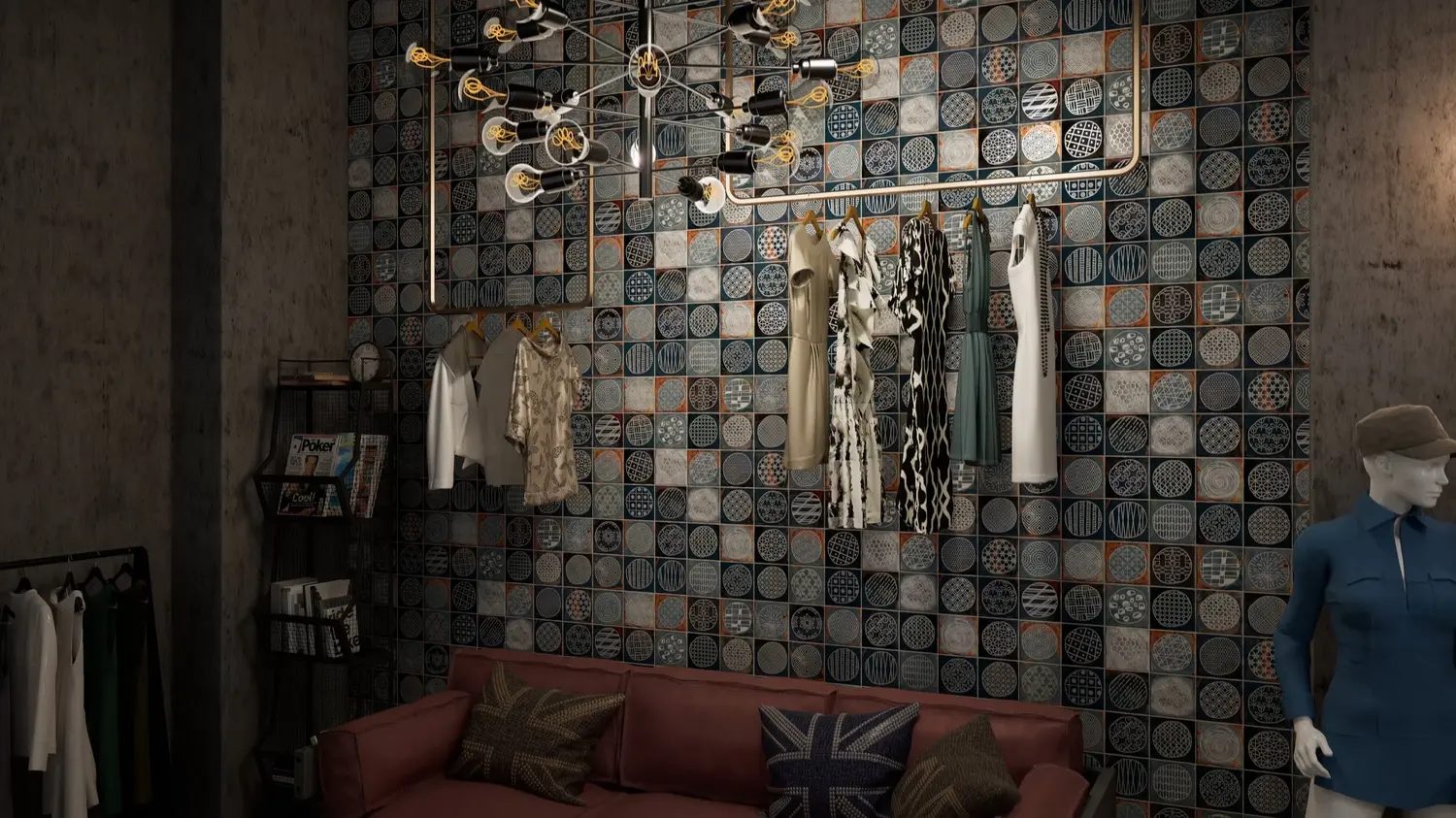
Cafes, restaurants and shops get heavy use and bright lighting. Matt walls hide fingerprints and photograph well under spotlights; glossy accents work on counter fronts and behind displays. Pool areas and spas need matt or textured surfaces on any floor that gets wet.
Mixing finishes
Using two finishes in one room adds depth without adding colour:
- Glossy wall, matt floor: the classic bathroom and kitchen combination: easy-clean walls, a floor that is safer underfoot.
- Matt base, glossy decor: a matt plain tile across the wall and a glossy patterned panel or band that catches the light.
- Rustic accent, matt base: a strip or panel of stone-look tile on a matt wall, such as behind a TV or a bar counter.
- Same colour, two finishes: a wall of matt tiles with a glossy band in the same colour is subtle and very modern.
When mixing, keep the tiles the same size or in simple multiples (300 × 300 mm with 300 × 600 mm, for example), so the grout lines join.
Finish and colour
The same finish behaves differently in different colours, so think about the two together.
- White and cream. Glossy white is bright and clean, and hides hard water marks better than any dark glossy tile, because the white salts barely show. Matt white looks softer and more modern, but shows grey marks from hands and dust a little more.
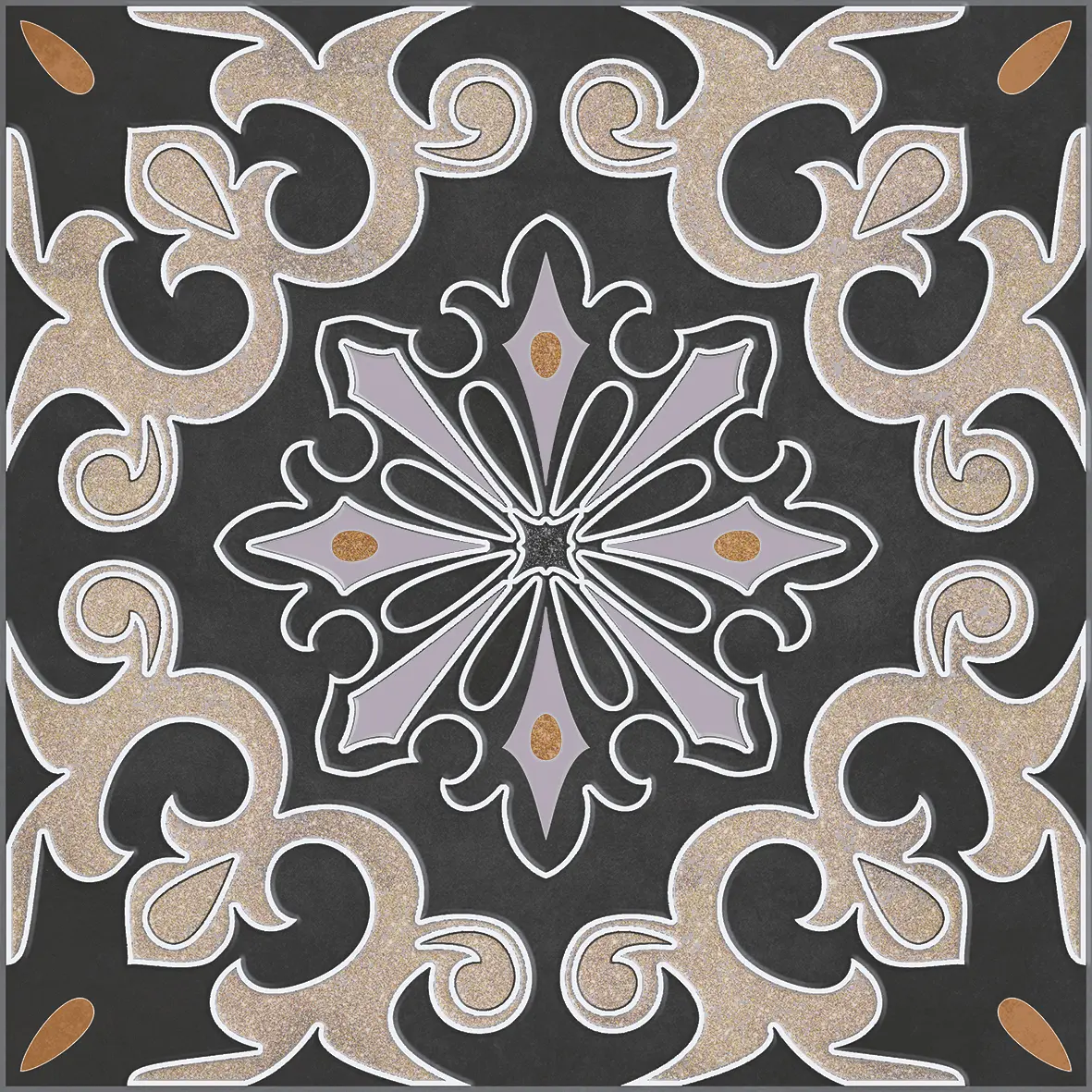
- Black, navy and deep green. Dark glossy tiles look rich, but every water spot, fingerprint and speck of dust shows on them. In a bathroom or kitchen, dark colours are easier to live with in matt, such as our black-ground Vienna Black Moroccan pattern.
- Mid-tones, beige, grey and terracotta. The most forgiving colours in either finish. They hide water marks and dust, which is why they are so common in bathrooms and on exteriors.
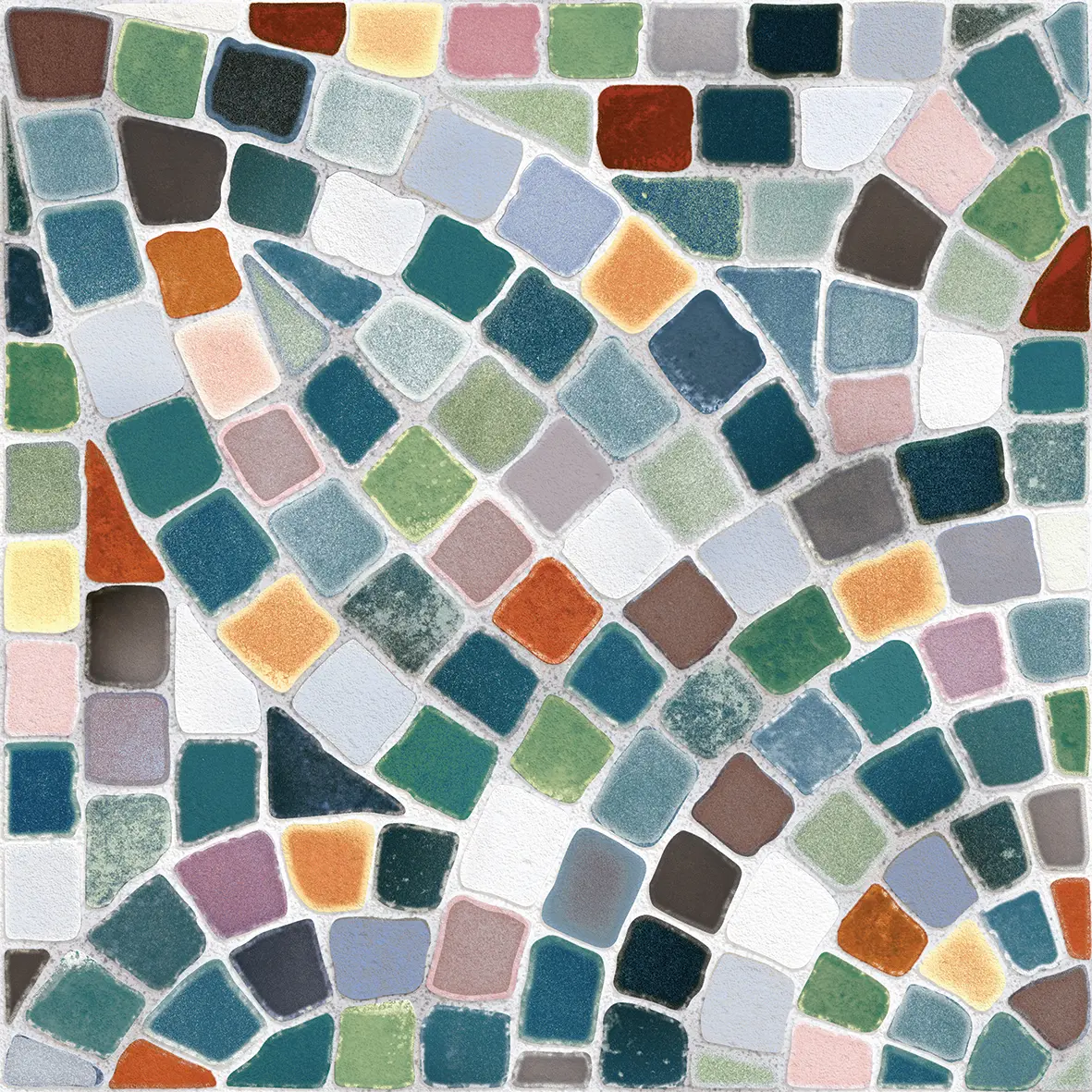
- Patterns. A busy pattern hides marks in any finish, so pattern gives you more freedom to choose glossy in wet areas.
- Marble looks. A glossy finish suits polished marble looks; a matt finish suits honed stone, slate and limestone looks.
Finish and tile size
Larger tiles show their finish more, simply because each reflective or matt surface is bigger and has fewer joints to break it up. A wall of glossy 300 × 600 mm tiles reads almost like a single sheet of glass, so the wall behind needs to be very flat, or the reflections will ripple. Smaller 300 × 300 mm tiles, with more joints, hide small unevenness better in either finish. Our tile sizes guide compares the three sizes.
Finish and climate
Where you live matters too. In hard water areas, matt hides the white spots that dry on glossy tiles. In hot, sunny places, glossy tiles on outside walls reflect glare, and matt or rustic finishes look calmer. In humid coastal cities, any tile in a bathroom needs good ventilation; the finish matters less than keeping the grout dry. In dusty areas, matt and patterned tiles keep a wall looking clean between washes.
Lighting changes everything
A finish looks different under different light, so judge it where it will be used.
- Under a spotlight or a strip light close to the wall, glossy tiles show bright highlights and matt tiles show their texture.
- Warm white light (around 2700 to 3000 K) suits terracotta, wood and beige; cool white suits greys, whites and blues.
- Light that grazes a wall from above or from the side brings out the texture of rustic tiles, and also any unevenness in glossy ones.
Look at samples in daylight and in the evening under your own lamps before deciding.
How to check a tile's finish
- Hold the tile at an angle under a light: a glossy tile shows a sharp reflection of the lamp, a satin tile a blurred glow, a matt tile almost none.
- Run your hand across it: matt tiles feel smooth or very slightly textured; rustic tiles have relief you can feel.
- Drop a little water on it and let it dry: on glossy tiles the mark will show, on matt tiles barely.
- Ask for a sample. We send samples of every design, in its own finish.
A quick decision guide
If you are still unsure, answer these questions in order. The first one that applies usually decides it.
| Question | If yes |
|---|---|
| Is it a floor, or a wall outdoors? | Matt or rustic |
| Is it behind a TV, a bed or opposite a big window? | Matt |
| Is it right behind a hob? | Glossy, or matt with a weekly wash |
| Is the room small and dark? | Glossy, or a glossy accent |
| Is your water hard and the tile dark? | Matt |
| Is it a stone, terracotta or concrete look? | Matt or rustic |
| Is it a polished marble look? | Glossy |
| Is it a mandir niche lit by a diya? | Either: glossy shines, matt shows the idols clearly |
If none of them applies, choose the finish you like the look of in daylight. Both will last as long as the tile.
Our finishes at a glance
Most of our designs are matt, the finish most people choose for feature, bedroom and living room walls. Glossy designs include Angel Satavrio, Divyam God, Sky Lark and Willow Kitchen. Rustic designs include Mudy Stone, Coprica Pencil and Specturm Smoke. Each product page shows its finish with its size and thickness.
Not sure which finish suits your room? Contact us with a photo of the space, or read what makes a tile designer and 8 checks before you buy premium tiles.